Pickleball’s Origin Story: What Year It Was Invented and How It Took Over America
What year was pickleball invented? The answer is 1965, on Bainbridge Island, Washington. Three fathers created it on a summer afternoon to entertain their bored kids. What started as a backyard experiment has since grown into one of the most played sports in the United States.
Key Takeaways
- Pickleball was officially invented in the summer of 1965 by Joel Pritchard, Bill Bell, and Barney McCallum.
- The sport was born out of improvisation, using ping-pong paddles, a wiffle ball, and a badminton court.
- The first permanent pickleball court was built in Bob O’Brien’s backyard in 1967.
- The USA Pickleball Association (USAPA) was founded in 1984 to standardize rules and organize competitive play.
- As of 2023, the sport has over 36 million players across the U.S., according to the Sports and Fitness Industry Association.
- The professional league scene has exploded, with the Major League Pickleball (MLP) now attracting major sponsorships and media deals.
The Summer of 1965: When Pickleball Was Invented
The story of what year pickleball was invented begins on a warm summer afternoon on Bainbridge Island, Washington. Joel Pritchard, a congressman, and his friend Bill Bell returned home from a round of golf. Their families had nothing to do, so they needed entertainment.
The badminton court on Pritchard’s property was the obvious solution. However, no one could find a full set of shuttlecocks. What happened next is the kind of improvisation that defines genuinely great inventions.
The group grabbed ping-pong paddles. They found a plastic wiffle ball. Furthermore, they lowered the badminton net from 60 inches down to 36 inches. Within an afternoon, a new game had taken shape. A few weeks later, Barney McCallum joined the group. The three men began codifying the rules more formally.
The name itself has two competing origin stories. One claims the sport was named after Pritchard’s dog, Pickles, who had a habit of chasing the ball. The other holds that the name came from the “pickle boat” concept in rowing. In rowing, crew members were chosen from the leftovers of other boats. This reflected how the sport combined elements of badminton, tennis, and ping-pong. Joel Pritchard’s wife, Joan, is credited with coining the term. However, both stories have loyal supporters.
The Timeline After Pickleball Was Invented: Key Milestones
Understanding when pickleball was invented requires knowing more than just the year 1965. The decades following that summer tell a story of steady, grassroots expansion. The 2010s and 2020s brought explosive mainstream surge.
Key milestones in pickleball history:
- 1967: The first permanent pickleball court was built in the backyard of Bob O’Brien, a neighbor and friend of Pritchard.
- 1972: A corporation was formed to protect the sport and its equipment patents.
- 1975: The National Observer published one of the first media features covering the game. This introduced it to a national audience.
- 1976: The first known tournament was held at South Center Athletic Club in Tukwila, Washington.
- 1984: The USA Pickleball Association (USAPA) was founded, creating official rules and a governing body.
- 1990: The sport was being played in all 50 states, a milestone that confirmed its national footprint.
- 2009: The first official rulebook was published, standardizing play for both recreational and competitive levels.
- 2022: Major League Pickleball (MLP) launched its first season, bringing franchise-based professional competition to the sport.
The jump from 1984 to today is remarkable. The USAPA reported fewer than 200 courts nationwide when it was founded. By 2023, estimates put the number of dedicated courts above 10,000 across the country. Additionally, countless more informal setups exist in driveways, school gyms, and community centers.
The Equipment That Defined the Game
Part of pickleball’s enduring appeal is its accessibility. The original equipment, a wiffle ball and wood paddles, has evolved significantly. However, the core simplicity remains intact.
Modern pickleball equipment breakdown:
| Item | Recreational Standard | Competitive Standard |
|---|---|---|
| Paddle material | Composite or wood | Carbon fiber or graphite |
| Ball type | Outdoor plastic (26 holes) | USAPA-approved tournament ball |
| Net height | 36 inches at sidelines, 34 at center | Same, strictly enforced |
| Court surface | Asphalt or concrete | Concrete with acrylic coating |
| Paddle weight | 6-14 oz | Typically 7.5-8.5 oz |
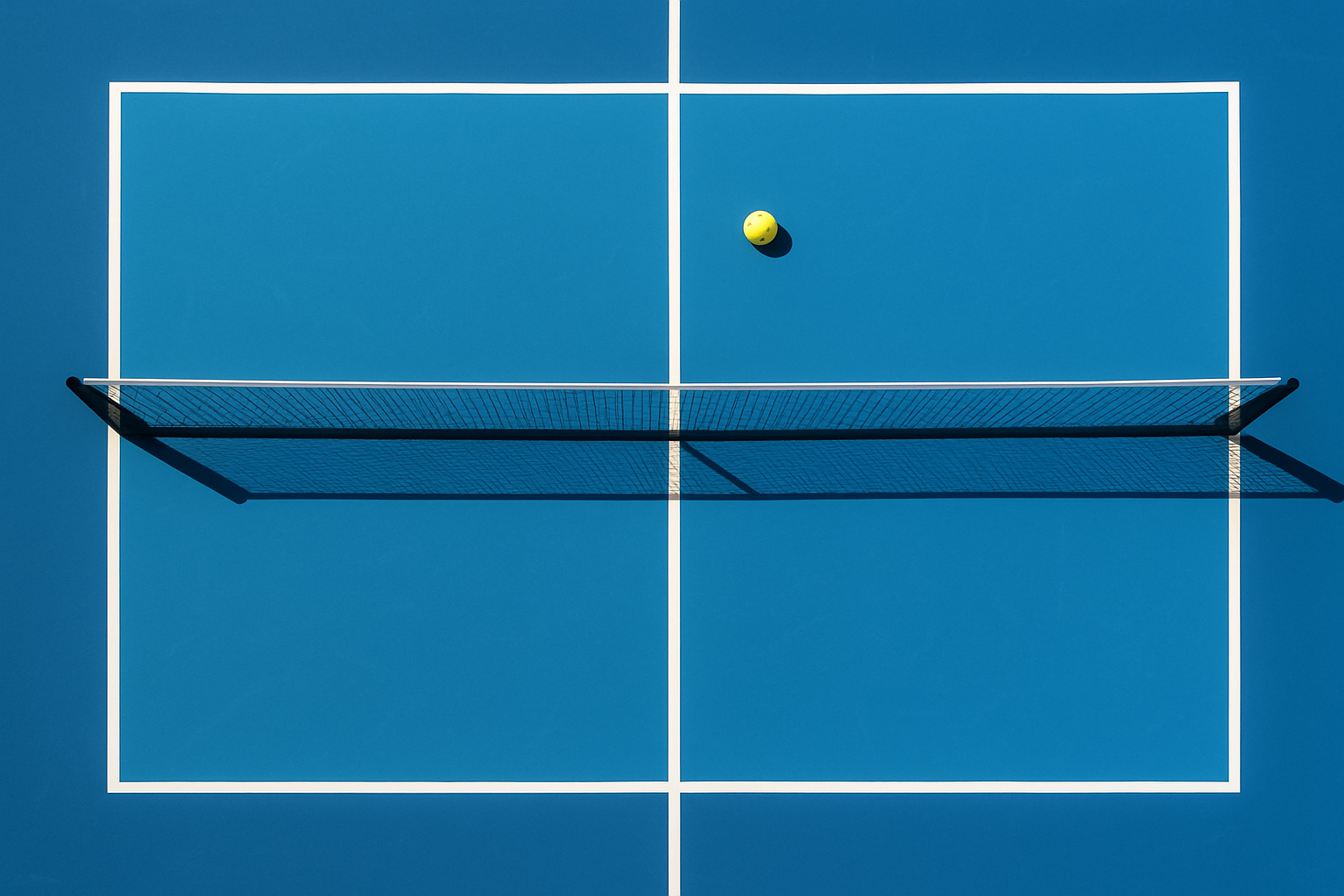
The court itself is one of the sport’s defining features. It measures 20 feet wide and 44 feet long. This is significantly smaller than a tennis court. As a result, many tennis courts across the U.S. have been converted to accommodate multiple pickleball courts.
For a clear visual breakdown of the layout, the pickleball court dimensions diagram is an excellent reference. It shows how the non-volley zone, service boxes, and baselines all fit together.
The “kitchen,” formally called the non-volley zone, extends 7 feet from the net on both sides. It is arguably the most strategically important area on the court. Therefore, it separates pickleball from both tennis and ping-pong in terms of gameplay mechanics.
Why Pickleball Exploded in the 21st Century
While the sport’s foundational decades built a loyal base, the real explosion happened in the 2010s. The growth accelerated dramatically during the COVID-19 pandemic. Gyms closed and people looked for outdoor activities. Pickleball offered the perfect combination. It required minimal equipment. Additionally, it could be played in parking lots and driveways. Most importantly, it was easy to learn within an hour.
The Sports and Fitness Industry Association named pickleball the fastest-growing sport in America for three consecutive years from 2020 to 2022. The player base grew from roughly 3.5 million in 2019 to over 36 million by the end of 2023. This is not a niche trend. It represents a full-scale cultural shift in how Americans engage with recreational sports.
Several factors drove this beyond the pandemic:
- Retirement community adoption: AARP reported that pickleball became a cornerstone activity in senior communities. The sport’s low-impact nature appealed to players over 55.
- Celebrity and athlete investment: Professional athletes including LeBron James, Tom Brady, and Drew Brees invested in or purchased MLP franchises. This brought significant media attention.
- Social media virality: Short-form videos showing impressive rallies and trick shots spread widely across TikTok and Instagram. These attracted younger players.
- Affordable entry cost: A starter paddle and ball set runs as little as $30. In contrast, tennis equipment costs $150 or more.
The professional side of the sport has added an entirely new dimension. Teams compete with distinct identities. Furthermore, branding has become a serious business. For example, j pritchard designed la mad drops mlp uniforms shows how far the sport has come. It has evolved from improvised backyard roots to having professional design work dedicated to team aesthetics.
Competitive Play and Modern Pickleball Skills
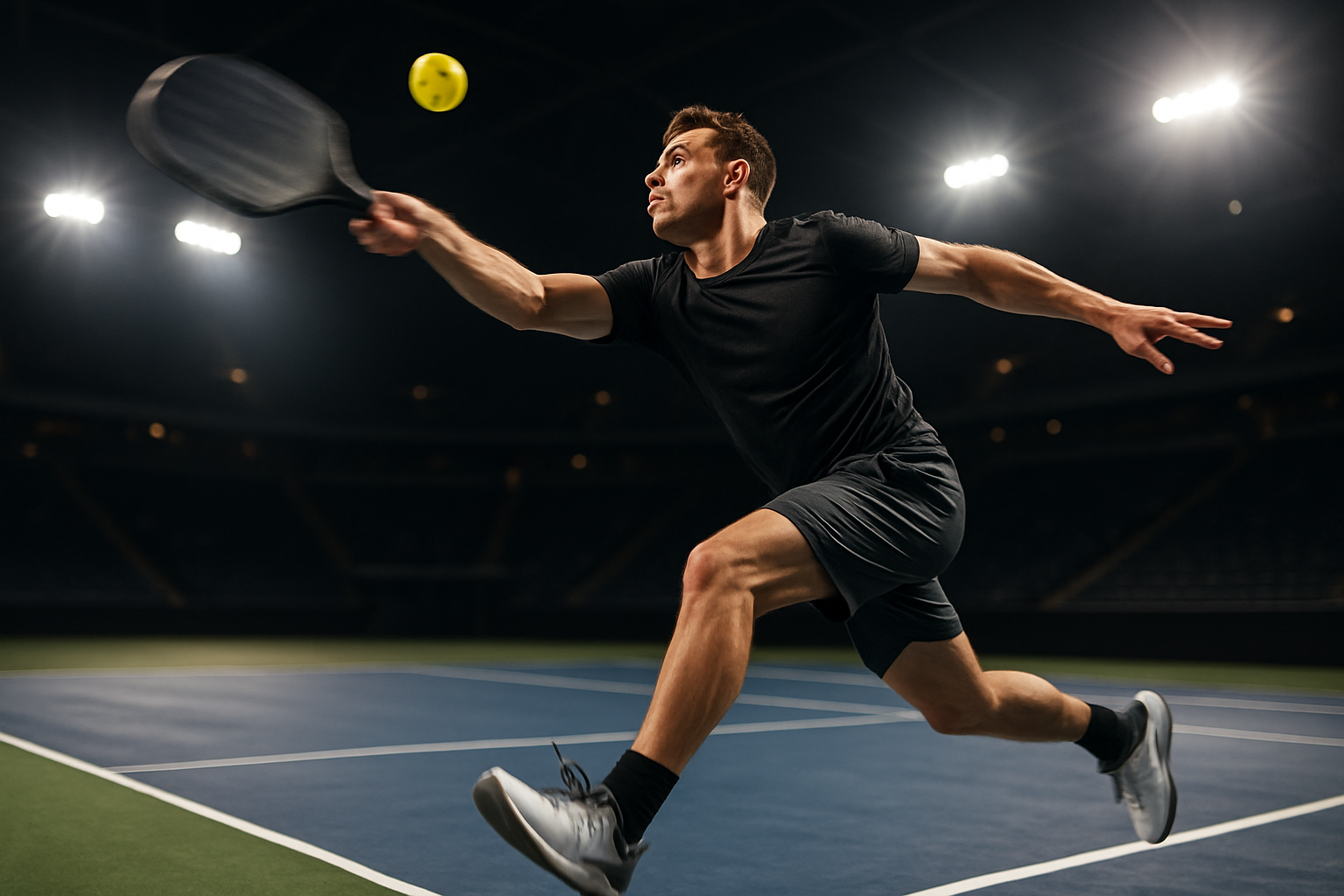
Recreational pickleball is easy to pick up. However, the competitive game demands real athletic skill and tactical intelligence. High-level players develop a distinct toolkit. This includes dinking, third-shot drops, erne shots, and aggressive overhead attacks.
If you want to move beyond casual play, understanding pickleball smash techniques is essential. The overhead smash is one of the most decisive weapons at advanced levels of play. Executing it cleanly requires proper footwork. Additionally, timing and the ability to read your opponent’s lob accurately are crucial.
The physical demands of the game are greater than many newcomers expect. A typical recreational match involves short bursts of lateral movement. Furthermore, rapid directional changes and reaction times can rival those required in tennis. At the professional level, players train full-time. They employ coaches, sports psychologists, and physical therapists.
Skills required at different levels of play:
- Beginner (2.0-2.5): Consistent serve, basic dinking, understanding the kitchen rule.
- Intermediate (3.0-3.5): Third-shot drop, directional control on groundstrokes, net positioning.
- Advanced (4.0-4.5): Erne shots, ATP (around the post), consistent speed-up games.
- Professional (5.0+): Complete tactical game, elite footwork, ability to reset under pressure.
Things to Know
- The sport’s inventors never intended to patent or commercialize it aggressively. Joel Pritchard reportedly wanted it to remain accessible to everyone.
- The official USAPA rulebook is updated annually. For instance, rules around the spin serve were changed as recently as 2023.
- Pickleball is now offered as a physical education activity in hundreds of U.S. middle and high schools. The Physical Education and Wellness Initiative confirms this.
- Many cities have faced community conflicts over pickleball noise. The distinctive “pop” of a composite paddle hitting a hard plastic ball carries further than a tennis racket on a soft ball. Noise ordinances have been challenged in cities including Naples, Florida, and Portland, Oregon.
- The Pickleball Hall of Fame was established to honor contributors to the sport. The founding trio of Pritchard, Bell, and McCallum were inducted posthumously.
- Despite its friendly reputation, injuries are significant. The American Academy of Orthopaedic Surgeons has published reports linking the sport’s rapid growth to an increase in wrist fractures and knee injuries. This is particularly true among older players.
Frequently Asked Questions
Q: What year was pickleball invented, exactly?
Pickleball was invented in the summer of 1965. The game was created by Joel Pritchard, Bill Bell, and Barney McCallum on Bainbridge Island, Washington. The three men improvised the game using ping-pong paddles, a wiffle ball, and a lowered badminton net. This happened on a summer afternoon when their families were looking for something to do.
Q: Who officially gets credit for inventing pickleball?
Joel Pritchard is most commonly cited as the primary inventor. However, Bill Bell and Barney McCallum are co-inventors with equal historical standing. All three men contributed to developing the initial rules and promoting the game in its early years. McCallum is particularly credited with formalizing the early ruleset.
Q: How did pickleball get its name?
The name most likely came from Joan Pritchard, Joel’s wife. She reportedly compared the sport to a “pickle boat” in rowing. An alternative story says the sport was named after the Pritchard family dog, Pickles, who would chase after the ball during early games. Both stories are widely circulated. However, the pickle boat origin is considered more historically plausible by most sports historians.
Q: Is pickleball still growing in the United States?
Yes, as of 2023 it remains the fastest-growing sport in the country with over 36 million players. The growth has been driven by pandemic-era outdoor activity surges, celebrity investment in professional leagues, and the sport’s low barrier to entry in terms of cost and learning curve. Urban parks departments across the U.S. are actively converting tennis courts to accommodate demand.
Q: How is competitive pickleball organized in the U.S.?
The USA Pickleball Association (USAPA) governs amateur and recreational competition. Meanwhile, Major League Pickleball (MLP) oversees the professional franchise-based league. There are also parallel professional organizations including the Professional Pickleball Association (PPA) Tour and the Association of Pickleball Players (APP) Tour. Each circuit runs its own series of events, with prize pools now reaching six figures at top tournaments.
The Bottom Line on What Year Was Pickleball Invented
The answer is simple: 1965. But the real story behind what year was pickleball invented is about what three men did with a slow afternoon and a lot of improvisation. Their backyard experiment quietly turned into a sport played by tens of millions of Americans six decades later.
If you are curious about getting into the game yourself, the best first step is to find a local court through the USAPA’s court finder tool. Grab an entry-level paddle set for under $50. Then show up during open play hours. The community is widely regarded as one of the most welcoming in recreational sports. Most experienced players are happy to walk newcomers through the basics. The sport has come a long way from Bainbridge Island. As a result, it is only getting bigger.