Pickleball Scoring Explained: Rules, Sequences, and Common Mistakes
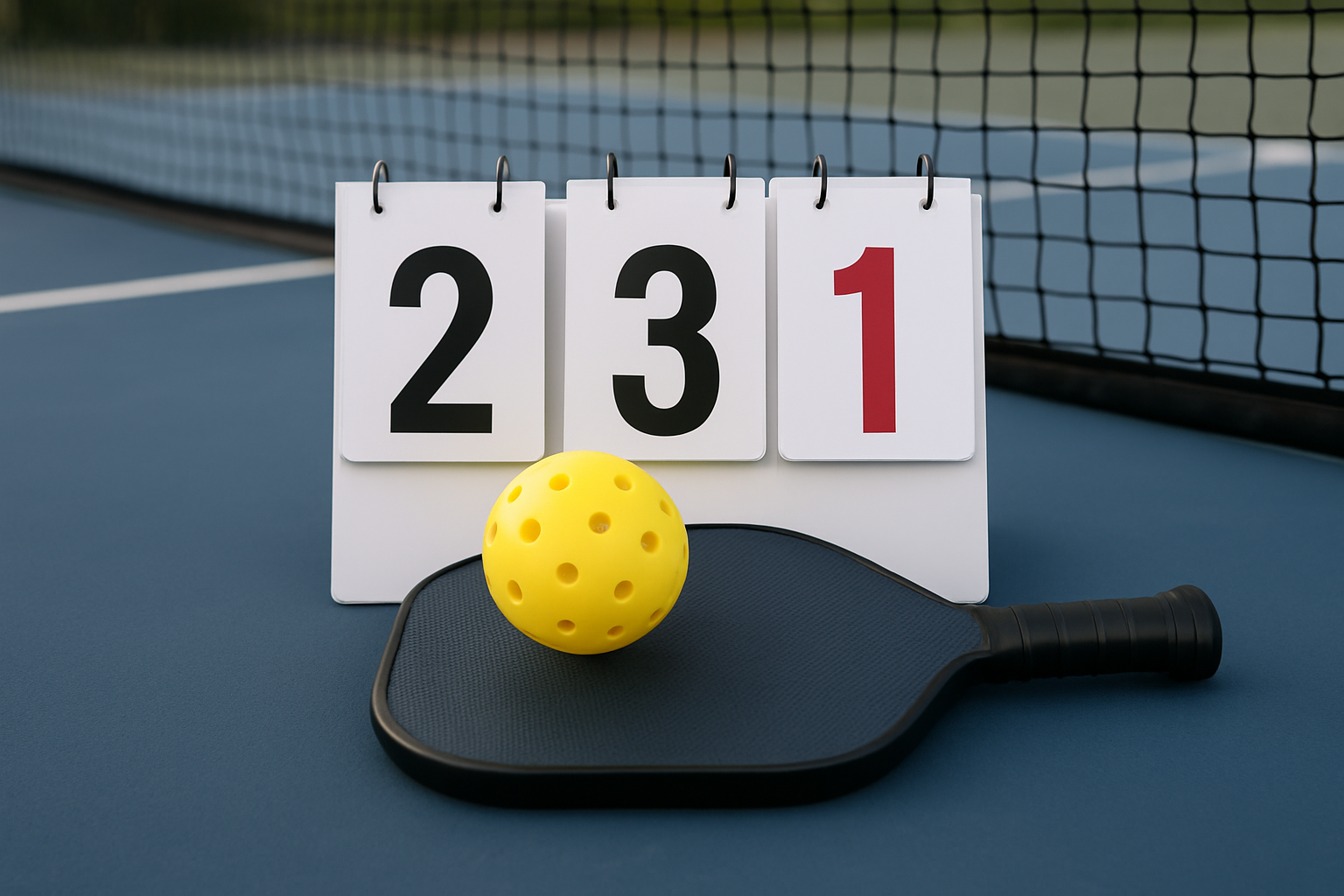
Pickleball uses a three-number scoring system where the server’s score is called first, followed by the receiver’s score, and then the server number. Understanding how to keep score in pickle ball correctly from the start saves you from arguments mid-game and keeps the match moving smoothly.
Pickleball has exploded in popularity across the United States. The Sports & Fitness Industry Association reported over 36 million players as of 2023. Despite its accessible nature, the scoring system trips up beginners and even intermediate players regularly.
The three-part score call creates complexity. So does the two-bounce rule. The side-out mechanic adds another layer. These elements combine into a system that feels foreign if you are coming from tennis, badminton, or table tennis. This article breaks down every layer of scoring clearly. We provide specific examples you can reference during your next game.
Why the Three-Number Score Call Matters in How to Keep Score in Pickle Ball
Most racket sports use a simple two-number score. Pickleball adds a third number: the server number. In doubles play, each team has two players. Either player can serve in a given rally sequence. The server number (1 or 2) tells everyone on the court which partner is currently serving.
Here is what each number represents:
- First number: The serving team’s current score
- Second number: The receiving team’s current score
- Third number: Whether the first server (1) or second server (2) is serving for that team
An example call before a serve might sound like: “4-2-1.” This means the serving team has 4 points. The receiving team has 2 points. The first server on the serving team is currently at the line.
This matters because you do not simply give up the serve immediately after losing a rally. Your partner takes over instead. Only when the second server also loses the rally does the serve pass to the other team. That transition is called a side-out.
How Points Are Actually Earned When Learning How to Keep Score in Pickle Ball
Points in pickleball can only be scored by the serving team. This is one of the most important rules separating pickleball from sports like ping-pong. In ping-pong, both sides can score at any time. If the receiving team wins a rally, they do not earn a point. Instead, they earn the serve.
Rallies end and a point is awarded to the serving team when:
- The ball bounces twice on the opponent’s side
- The opponent hits the ball into the net
- The opponent hits the ball out of bounds
- The opponent violates the kitchen (non-volley zone) rule
- The opponent commits a service fault
Rallies end with a side-out when the serving team makes any of those same errors. No point is scored. Instead, the serve changes.
Singles Scoring vs. Doubles Scoring in How to Keep Score in Pickle Ball
Singles pickleball uses only two numbers in the score call. There is only one server per side. If the score is “5-3,” that means the serving player has 5 points. The receiving player has 3 points. The server number is dropped entirely.
In doubles, the game starts with a unique rule. The starting team gets only one server (not two). This prevents the first-serving team from having a massive early advantage. The starting score is always called “0-0-2.” This signals that the first team is on their second server immediately. When they lose that rally, the serve switches sides.
What Score Do You Play To?
Standard pickleball games are played to 11 points. You must win by 2. Tournament play sometimes uses 15 or 21 as the target score. Both also require a win-by-2 margin. In a typical recreational match, three games make a set. The third game is played to 11 (or sometimes 15, depending on local house rules).
The Serving Sequence Step by Step for How to Keep Score in Pickle Ball
Getting the serving sequence right is where most new players stumble. Here is the full sequence for a standard doubles game. We break it into clear steps:
Step 1: Determine who serves first.
A coin flip or paddle spin typically decides the first-serving team before the match begins.
Step 2: Call the starting score.
The first server always calls “0-0-2” before their first serve. This signals the one-server start rule.
Step 3: Serve and play the rally.
The server stands behind the baseline on the correct side. When the serving team’s score is even, stand on the right side. When it is odd, stand on the left side. The serve goes diagonally into the opponent’s service box.
Step 4: If the serving team wins the rally:
Add one point to the serving team’s score. The same server continues. They switch sides with their partner based on the new score.
Step 5: If the serving team loses the rally:
The serve passes to the serving team’s partner (server 2). No point is scored. The score number changes from 1 to 2.
Step 6: If server 2 also loses a rally:
This is a side-out. The serve passes to the opposing team. They begin with server 1 (unless it is the very start of the game).
Step 7: Repeat on the other side.
The new serving team calls their score. Then they call the opponent’s score. Then they call their server number. The sequence continues.
| Scenario | Result |
|---|---|
| Serving team wins rally | +1 point, same server continues |
| Serving team loses rally (server 1) | No point, partner (server 2) serves |
| Serving team loses rally (server 2) | Side-out, opponents now serve |
| Receiving team wins rally | No point scored, but serve eventually transitions |
| Game reaches 10-10 | Play continues, must win by 2 |
| Opening serve of game | Score called as “0-0-2” (one server only) |
Positioning Rules Tied to Scoring in How to Keep Score in Pickle Ball
One detail many players overlook is critical. Your court position must match your current score. In doubles, the server stands on the right side when their team’s score is even. They stand on the left side when their team’s score is odd. This means you and your partner swap sides every time your team scores a point.
Your partner stays in their current position. Only the server moves. The receiving team does not rotate. They stay in whatever position they held when the serve last came to them.
This positional rule creates a natural check. If you are standing on the wrong side, you have probably miscounted the score. Experienced players use positioning as a way to self-correct without stopping the game.
Common Positioning Mistakes
- Standing on the left side when your team has an even score (or vice versa)
- Both players on the same half of the court at once
- Rotating when your team did not score (receiver side players do not rotate)
- Forgetting to account for side-outs when tracking server 1 vs. server 2
Keeping Score During Fast-Paced Rallies
One of the most practical challenges of learning how to keep score in pickle ball is staying on top of the count during long rallies. Here are habits that competitive recreational players use to stay accurate:
- Always announce the score before every single serve. This is not optional in official play. The server must call the score loudly enough for all four players to hear.
- If there is a dispute, stop play immediately. Do not guess after the point has already been played. The rally should be replayed if players cannot agree on the correct score.
- Use a physical scorekeeper on the sideline for tournament matches or long sessions. Many courts at facilities like the YMCA or LA Fitness rec centers keep a small whiteboard nearby.
- Say the score before you toss or drop the ball. This builds the habit into your muscle memory. It prevents pre-serve distraction from making you skip it.
- Cross-reference positions. If your positioning matches your score, you are likely correct.
Things to Know
- The serve must be hit underhand. The paddle stays below the wrist at the moment of contact. Scoring errors often follow illegal serves that go unchallenged.
- Rally scoring (where both sides can score) is used in some casual or beginner-friendly leagues. It is not the official USA Pickleball Association format.
- Stacking is a legal doubles strategy. Partners intentionally stay on the “wrong” side after a rally. This creates a favorable forehand alignment. It does not change the scoring rules.
- At major tournaments like the US Open Pickleball Championships, the first game to 11 might be followed by a second game to 11. A tiebreaker to 15 then decides the match.
- The kitchen, formally called the non-volley zone, is the 7-foot area on each side of the net. Volleying from inside it is a fault. This costs the serving team their serve or gives opponents a future serve opportunity.
- Electronic scoring devices and referee-controlled scoreboards are becoming standard at USA Pickleball sanctioned events. They reduce human error significantly.
Frequently Asked Questions
Q: What does “0-0-2” mean at the start of a pickleball game?
“0-0-2” means both teams have zero points. The serving team is immediately on their second server, not their first. This special starting rule exists to give neither side an unfair advantage. The first-serving team gets only one chance to score before a side-out occurs. This rule balances out the coin-flip advantage of receiving or serving first.
Q: Can the receiving team score a point in pickleball?
No. In standard pickleball scoring, only the serving team can score points. When the receiving team wins a rally, they earn the serve but not a point. Once they have the serve, they can begin accumulating points. This is why serving consistently is such a critical strategy in competitive play.
Q: What happens if the server calls the wrong score?
If a player serves with an incorrect score call, opponents can call a fault before the next serve. The point may be replayed. USA Pickleball rules state that it is the server’s responsibility to call the correct score. If the score is called incorrectly and neither team catches it before the rally starts, the result stands in casual play. In official matches, a referee can correct it before the serve is struck.
Q: How does scoring work in a pickleball tiebreaker?
A tiebreaker game in pickleball is typically played to 15 points. It still requires a 2-point winning margin. In recreational leagues and many club formats, when a best-of-three match reaches one game apiece, the deciding third game is played to 15. Some formats use 11, so always confirm the house rules before your match begins.
Q: Do players switch sides of the court in pickleball like they do in tennis?
Players do not switch ends of the court during a pickleball game. Tennis players do switch between odd-numbered games. In some tournament formats, teams switch ends at a certain point midway through the deciding game. This often happens at 6 points in an 11-point game. The switch accounts for environmental factors like sun glare or wind. In casual recreational play, this switch is rarely enforced.
The Bottom Line on How to Keep Score in Pickle Ball
Mastering the scoring system gives you a real edge on the court. When you understand the three-number call, the one-server start rule, and the positioning logic tied to your score, the game flows much faster. Disputes disappear entirely. The majority of scoring confusion comes from forgetting the server number or misapplying the even/odd positioning rule. Both become automatic with practice.
The best action step right now is to print or screenshot the serving sequence table from this article. Bring it to your next session. Call every score out loud before each serve, even in casual warm-up rallies. That one habit will cement the entire system faster than reading about it ever will.