Overhand Serves Are Not Allowed in Pickleball: Here’s Why and What Works Instead
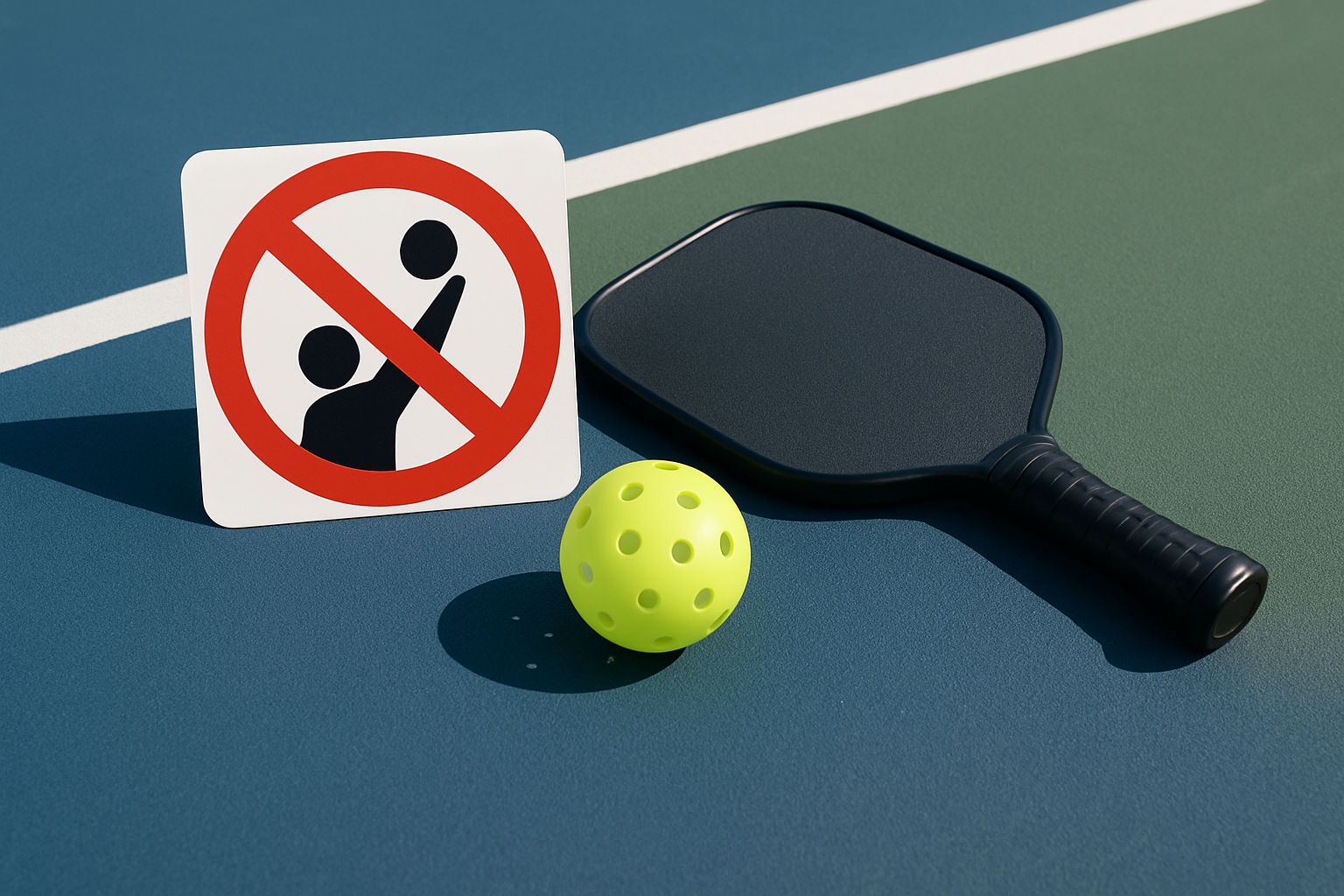
No, you cannot serve overhand in pickleball. The official rules require all serves to be executed underhand, with the paddle below your waist at the moment of contact. This fundamental rule sets pickleball apart from tennis and is one of the key distinctions players must understand before stepping onto the court.
If you’re transitioning from tennis, volleyball, or another racquet sport, can you serve overhand in pickleball might seem like a natural question. The underhand-only requirement might feel limiting at first. But understanding the reasoning behind this rule will elevate your game significantly.
Learning how to execute a legal serve and mastering techniques that work within these constraints is essential. Whether you’re a beginner confused about basic rules or an intermediate player refining your serve strategy, this guide covers everything you need to know.
Key Takeaways
- Can you serve overhand in pickleball? No; the rules mandate underhand serves with the paddle below the waist.
- The underhand serve rule levels the playing field for all skill levels.
- It keeps rallies longer and more competitive.
- Legal serves must land diagonally in the service box and clear the net.
- You can generate power, spin, and placement variety using underhand technique.
- Common mistakes include hitting above waist height and aiming too hard.
- Developing a consistent underhand serve is achievable for all age groups.
Why Pickleball Prohibits Overhand Serves
The underhand-only serve requirement reflects pickleball’s fundamental design philosophy. The sport emphasizes accessibility and inclusivity for recreational players.
When pickleball was invented in 1965, the sport’s creators deliberately chose the underhand serve. They wanted to keep the game slower-paced and more rally-focused. Tennis, by comparison, allows overhand serves exceeding 120 mph. These fast serves immediately pressure the receiver and shorten rallies.
Pickleball’s designers wanted a different approach. They envisioned a sport where beginners and experienced players could enjoy longer, more engaging exchanges together.
How Overhand Serves Would Change the Game
An overhand serve generates greater racquet head speed through a larger arm arc. The server starts with the paddle above the head, accelerates downward, and transfers significant force into the ball. This biomechanical advantage creates steep angles and aggressive power.
Overhand serves would fundamentally change pickleball’s character. They would allow any single player to dominate through serving dominance alone. Pickleball’s underhand requirement prevents this by design.
Accessibility and Inclusivity
The rule also addresses accessibility. Additionally, not all players have the shoulder mobility needed for consistent overhand serves. Older adults, people with certain disabilities, and those recovering from injury can still play competitive pickleball effectively. The serve doesn’t demand explosive power or complex movement patterns.
This inclusivity remains central to pickleball’s identity as a lifetime sport.
The Connection to Net Height
The underhand serve keeps the net lower than tennis. The pickleball net stands at 36 inches at the sidelines and 34 inches at the center. The lower net and underhand-only serves work together to encourage volleys and controlled exchanges near the net.
These short-game skills make pickleball tactically rich and enjoyable for recreational players.
The Official Pickleball Serving Rules Explained
Understanding the exact legal requirements ensures your serve stays within bounds. This knowledge prevents costly faults during matches.
Paddle Position at Contact
Your paddle must be below your wrist at the moment the paddle strikes the ball. “Below your wrist” means the paddle head is lower than your wrist joint. This is the most frequently checked rule during matches.
Even if you’re executing an underhand motion, the paddle can rise above your wrist at contact. In this case, the serve is a fault. Many beginners inadvertently hit upward rather than forward. This naturally brings the paddle above wrist height at impact.
Arm Motion Requirements
Your arm must move in an underhand motion. This doesn’t mean your arm stays rigidly straight. You can bend your elbow and move your arm in a smooth, underhand arc.
The key is that the motion starts low and accelerates forward, not down then up. If officials observe a motion resembling an overhead tennis serve, that’s a fault. A deliberate upward snap at contact is also illegal.
Service Box Target Rules
The serve must land in the diagonal service box. If you’re serving from the right side of your body, the ball lands in your opponent’s right service box. Service boxes are rectangular areas inside the baseline on either side of the center service line.
The serve must clear the net and land entirely within these bounds. Landing on the line is good. Landing outside or on the baseline is a fault.
Net Clearance Requirement
The serve must clear the net without touching it. If the ball touches the net and lands in the proper service box, that’s still a fault. There’s no let serve in pickleball.
This rule encourages more accurate, controlled serves. It discourages heavily powered shots that risk contact with the net.
Key Differences: Can You Serve Overhand in Pickleball vs. Other Racquet Sports
Understanding how pickleball’s serve rules differ from other sports clarifies the reasoning. It shows why the underhand-only approach is standard in pickleball.
Pickleball vs. Tennis
Tennis allows and encourages overhand serves. The sport’s design revolves around serve-and-rally sequences where the server has an immediate advantage. Many professional tennis points are decided within 1-4 shots. A powerful serve creates an unreturnable situation.
Pickleball intentionally removes this advantage by mandating underhand serves. Both sports have evolved differently. Each rule set supports the sport’s unique identity and playing experience.
Pickleball vs. Badminton
Badminton also requires underhand serves, but for slightly different reasons. Badminton serves must be struck below the server’s waist. The shuttlecock must be directed upward.
However, badminton’s court is much smaller than pickleball’s. The game emphasizes explosive, precise net play. Pickleball’s underhand serve rule is less about upward direction. Instead, it focuses on keeping the serve non-dominant in rally structure.
Pickleball vs. Volleyball
Volleyball allows overhand serves and it’s the primary serve type at competitive levels. Volleyball’s tall net (7 feet 11 inches for men’s) makes aggressive serves advantageous. The large court and team structure support this approach.
Pickleball’s lower net, smaller court, and one-on-one format require different dynamics. The underhand requirement supports continuous, skill-based exchanges. It prevents server-centric points from dominating matches.
How to Execute a Legal and Effective Underhand Serve
Mastering the underhand serve takes practice, but the mechanics are learnable for almost anyone. Even beginners can develop consistency quickly.
Starting Position and Stance
Stand with your feet shoulder-width apart, positioned behind the baseline. If you’re right-handed, your left foot should point toward the net. Your right foot should be angled back slightly.
This positioning gives you a stable base. It allows for natural follow-through. Your weight should rest primarily on the balls of your feet, not flat-footed or on your heels.
Hold the paddle in your dominant hand with a comfortable grip, roughly in the continental grip (similar to a hammer hold). Your non-dominant hand should hold the ball at waist height in front of your body. Many players like to hold the ball at about hip level for consistency.
The Serving Motion
Bring the paddle back slightly, keeping your arm loose and relaxed. This isn’t a big wind-up. Many beginners over-prepare by pulling the paddle back too far. Excessive backswing creates inconsistency and doesn’t generate much extra power anyway.
Drop the ball from your non-dominant hand. Simultaneously begin moving your paddle forward in a smooth, underhand arc. Your arm accelerates toward the ball as it falls.
The paddle should meet the ball at approximately knee to mid-thigh height. This position ensures the paddle stays below your waist, meeting the legal requirement. Your arm continues forward in the direction of your target after contact.
Aiming and Placement Strategy
Don’t aim for the far back corner of the service box. Instead, aim for the service box midway between the net and the baseline. A placement 3-4 feet from the net works well.
This strategy gives you a higher margin for error. It keeps the serve deep enough that it doesn’t sit up at net height. It also puts pressure on the receiver without demanding extreme spin or power.
A common beginner mistake is pressing too hard. Hard serves often go out or sit up for the opponent to attack.
Adding Spin and Variation
Once your basic serve is consistent, you can add topspin by brushing the ball upward more aggressively at contact. You can add sidespin by brushing the ball at a slight angle.
These variations come from paddle angle and brush path, not from illegal motion. A flat serve (minimal spin) is fastest and deepest. A topspin serve dips down quicker. A sidespin serve curves during flight.
Vary these three options during matches to keep opponents guessing about placement and depth.

Common Serving Mistakes That Result in Faults
Even experienced players occasionally make these errors. Knowing them helps you avoid costly mistakes during competitive play.
Hitting Above Waist Height
The single most common serving fault is letting the paddle rise above the wrist at contact. This often happens when players try to add power by swinging upward instead of forward.
The fix is to focus on a smooth, forward motion without an upward snap. Your arm naturally rises after contact, but the contact point itself must stay below your wrist.
Inconsistent Toss
Dropping the ball unevenly makes it hard to develop a reliable serve. Practice tossing the ball with your non-dominant hand so it falls reliably to the same spot. A low, controlled drop (from waist height) is easier to time consistently than a high toss.
Consistency improves rapidly when you focus on this fundamental element.
Excessive Backswing
Some players wind up too much before serving. They think this generates power. In reality, an exaggerated backswing introduces variables and makes timing inconsistent.
Your serve doesn’t require a large wind-up. Keep the paddle arm relaxed. Let your body’s forward momentum drive the serve naturally.
Aiming Too Hard
Trying to place the ball with too much precision or power causes errors. Beginners often over-tighten their grip and press hard. This results in wide serves or ones that miss the service box entirely.
Instead, serve at about 70-75% effort. Focus on getting the ball in play. Take a free point when the opponent misses the return.
Net Contact
Hitting the net on your serve is a fault with no second chances. This happens when servers try to add topspin too aggressively. It also occurs when servers don’t get sufficient net clearance.
If you’re consistently hitting the net, aim higher over the net. Focus on a flatter, simpler serve path until you develop better control.
Practical Serving Strategies Within Pickleball Rules
Understanding the rules is one thing. Using them strategically is another.
Serve and Stay Back
After your serve lands, don’t rush the net immediately. Move to the baseline near the center court, close to the baseline hash mark. This gives you the best position to handle the return.
Rushing too aggressively forward puts you in a vulnerable mid-court position. The return can catch you off-guard in this location.
Vary Placement
Alternate between wide serves near the sideline and serves toward the center. This prevents your opponent from standing in a predictable position. A serve to the sideline pulls them off the court slightly.
A serve to the center is harder to attack on the forehand side for right-handed players. Varying placement creates uncertainty and opens up court opportunities.
Depth vs. Accuracy Trade-off
A deeper serve (near the baseline) is harder to attack aggressively. However, it sits at the baseline where it’s closer to going out. A shorter serve (closer to the net) is easier to volley back.
The shorter serve gives you more margin for error. Choose based on the opponent’s tendencies. Against strong baseline returners, go deeper. Against aggressive net players, go short.
Consistency Over Power
Professional pickleball statistics show that consistency is the most important serving trait. Power is secondary. Getting 90% of your serves in puts pressure on opponents without giving them free points.
Serves don’t win points directly in pickleball. They just start the point. A high in-rate serve is worth far more than a powerful serve that rarely lands in the box.
Things to Know
- The paddle must be below your wrist at contact. This is verified by officials and is the most commonly disputed rule. Your arm motion can move your forearm upward. But the paddle head itself must remain below your wrist joint when you strike the ball.
- You get two serves in pickleball (except on the first serve of the game). If you miss your first serve, you get a second chance. Only after missing twice does the serve pass to your opponent (in doubles) or you lose the point (in singles). This differs from tennis and gives you room for experimentation.
- The serve is not designed to be a weapon in pickleball. Unlike tennis, where strong serves are match-winners, pickleball serves just open the point. The sport is built around longer rallies decided by net skills, not server dominance. Accepting this changes how you approach serving.
- Topspin underhand serves are legal and effective. You don’t need a special motion or illegal technique to add spin. Brushing the ball upward during your underhand motion creates topspin. This makes your serve dip sharply and land short, pulling your opponent forward.
- Slow serves are often more effective than fast ones. A slow, precise serve landing 3-4 feet from the net is harder to attack than a fast serve in the deep service box. Control beats power in pickleball serving strategy.
- The diagonal service box requirement is easy to forget. If you’re serving from the right baseline, the ball must land in your opponent’s right service box (on your left as you face the net). Some beginners serve into the wrong service box, which is a fault.
Frequently Asked Questions
Q: What happens if I accidentally serve overhand in pickleball?
That serve is a fault, and you lose the point (in singles). In doubles, the serve passes to your partner. The serving motion is strictly underhand, so any overhead motion violates the rules. There’s no warning or second chance; the serve is simply not legal. Many players transitioning from tennis make this mistake early on before the rule becomes muscle memory.
Q: Can I jump or move while serving in pickleball?
You cannot jump during your serve in pickleball, but you can step forward slightly as you complete the motion. Your feet must stay behind the baseline at the moment you contact the ball. After contact, you can step forward and move toward the net. This differs from tennis, where moving sideways or forward slightly during the serve is standard. The rule reinforces that the serve should be a simple, controlled motion.
Q: Is it better to serve fast or slow in pickleball?
Slow, accurate serves are typically more effective than fast serves in competitive pickleball. A slower serve that lands deep forces your opponent to approach from the baseline. This is harder to attack aggressively. A fast serve often results in either missing the service box or sitting up at net height. Most professional pickleball players prioritize placement and consistency over serve speed. This reflects the sport’s design as rally-focused rather than server-dominated.
Q: Can I serve with my eyes closed or while distracted?
Yes, there’s no rule requiring you to look at your target or maintain focus. However, this would be practically foolish because consistency suffers without visual focus. Pickleball rules don’t dictate mental state or attention level. They only dictate the mechanics of the serve itself. In tournaments, you must serve within a reasonable time (usually 10 seconds).
Q: If my serve touches the net and still lands in the service box, is it a “let” like in tennis?
No, there is no “let” serve in pickleball. If your serve touches the net at any point, it’s a fault. This holds regardless of where it lands. This rule removes the luck factor of net touches. It encourages more precise, controlled serves. It’s one of the clearest differences between pickleball and tennis. It’s important to remember this distinction if you’ve played tennis before.
The Bottom Line on Can You Serve Overhand in Pickleball
Can you serve overhand in pickleball? Absolutely not. The underhand-only rule is fundamental to how pickleball is designed and played. It keeps the sport accessible and ensures rallies are longer and more engaging. It prevents any single player from dominating through sheer serve power.
Understanding this rule helps you appreciate pickleball’s unique character. The sport balances athleticism with inclusivity in ways that tennis does not.
The good news is that mastering an effective underhand serve is entirely achievable. You don’t need exceptional strength, coordination, or prior racquet sport experience. With consistent practice, proper technique focus, and strategic thinking about placement and depth, you can develop a serve that puts opponents in difficult positions.
Your next step is to take a bucket of balls to a pickleball court. Practice the motion described in this guide. Start with your feet in proper stance. Focus on a smooth, forward underhand motion with the paddle below your wrist. Aim for the diagonal service box 3-4 feet from the net. Serve at about 70% effort, focusing on consistency. Within a few hours of deliberate practice, your serve will feel natural and confident.