Pickleball Net Height: Official Dimensions and Setup Requirements
If you’re wondering what is the height of a pickleball net, the answer is straightforward: 34 inches. A pickleball net must measure 34 inches high at the edges and center. The net sits 21.75 feet from each baseline and extends 20 feet across the court width.
Key Takeaways
- Official pickleball net height is 34 inches at the center and edges, lower than a tennis net by 4 inches
- The net must be strung between posts positioned exactly 21.75 feet from the baseline on each side
- Portable nets are affordable alternatives that meet regulation heights, ranging from $50 to $300 depending on quality
- Proper net height affects gameplay significantly, changing spin, trajectory, and serve difficulty
- Most courts use either fixed posts or portable nets, each with specific installation considerations
- A sagging or incorrectly positioned net can be legally challenged during competitive play
Understanding Official Pickleball Net Height Specifications
The height of a pickleball net is one of those details that might seem minor. However, it matters significantly once you start playing regularly. Get this dimension wrong, and every serve, volley, and net approach shot becomes frustrating.
The Professional Pickleball Association (PPA) and Major League Pickleball (MLP) enforce strict regulations. The net must measure 34 inches at the sidelines and center. The only variation allowed occurs at the edges. These edges can vary slightly due to the net’s natural sag when properly tensioned.
This precision matters because pickleball is fundamentally different from tennis. The net sits lower overall. The court is smaller. The paddle contact point changes how the ball behaves. When you understand why these measurements exist, you’ll appreciate how they shape the sport’s tactics and skill requirements.
The net itself must be made from dark material, usually black. The mesh opening must be small enough that a ball cannot pass through easily. This prevents confusion about whether a ball clipped the net or passed cleanly underneath. The net must stretch exactly 20 feet from sideline to sideline. This measurement gives you a clear boundary for width. Any net shorter than 20 feet doesn’t cover the full court. Any longer creates confusion about legal playing space.
How Pickleball Net Height Compares to Other Sports
Tennis players switching to pickleball often notice the net immediately. A tennis net stands 42 inches at the edges and 36 inches at the center. That 6-inch difference in the center might not sound dramatic. However, it fundamentally changes the angles and strategies you use.
Lower nets in pickleball favor net-rushing tactics. Quick volleys near the non-volley zone (the kitchen) become more effective. The reduced height also makes it easier for recreational players to clear the net without excessive power. This is partly why pickleball appeals to older adults and those recovering from injuries.
Volleyball, another net sport, uses a net height of 96 inches for men and 84 inches for women. That’s nearly triple the pickleball measurement. The sheer height difference means you’re playing a completely different game. Approach angle, vertical jump requirements, and shot trajectory all differ dramatically.
Badminton nets sit at 30 inches at the edges. So pickleball actually sits 4 inches higher than badminton. Badminton’s lower net encourages dropping shots and overhead smashes. Meanwhile, pickleball’s slightly higher net creates a balance between aggressive play and defensive positioning.
Understanding these comparisons helps you appreciate how the 34-inch measurement was selected. Pickleball designers wanted a net that challenged players without requiring extreme athleticism. They made the sport accessible across age groups. They created distinctive tactical opportunities. The height of a pickleball net reflects these design goals perfectly.
Official Pickleball Court Dimensions and Net Positioning
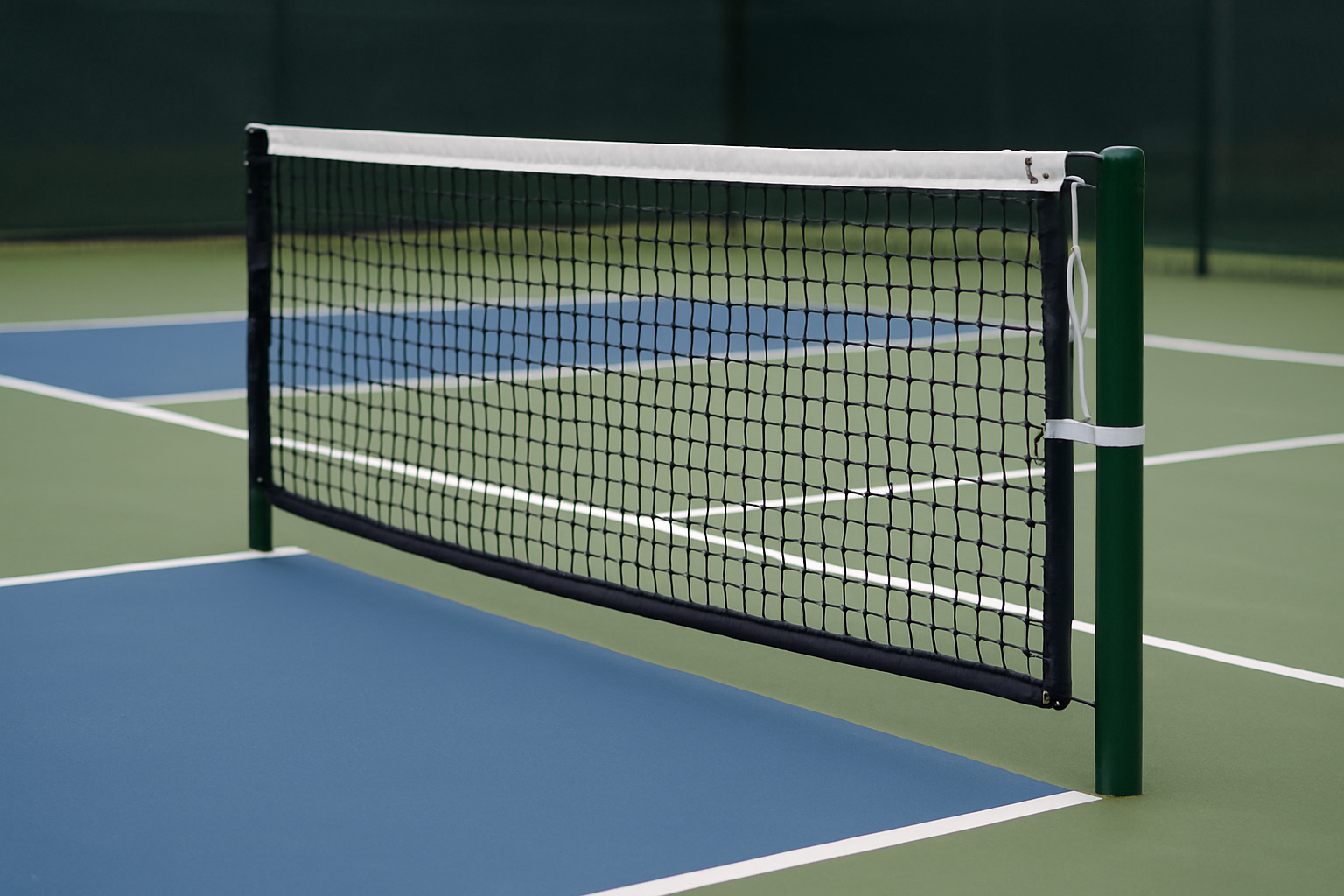
The pickleball court measures 44 feet long by 20 feet wide. The non-volley zone (kitchen) extends 7 feet from the net on both sides. The net divides the court into two equal 22-foot-deep halves. Your baselines sit exactly 21.75 feet from the net. This gives you the 7-foot kitchen area plus an additional 14.75 feet of playing space behind it.
These distances matter because they affect how you serve, approach the net, and position yourself defensively. A regulation net must be centered on the court. It must be positioned perpendicular to the baselines. Any angle or off-center placement creates unfair advantages for one side. This is why tournament officials check net positioning before matches begin.
The net posts should be placed 12.5 inches outside the sidelines on each end. This positioning keeps the posts out of the playing area. It supports the full 20-foot width properly. If you’re setting up a portable net on a residential driveway or parking lot, ensuring proper positioning takes a few extra minutes. It prevents disputes about ball handling during play.
The height measurement is taken at three points: both edges and the center point. All three must measure 34 inches when the net is properly strung. A slight sag of up to 1 inch is permitted. However, anything more disqualifies the net for competitive play. This specification prevents players from installing nets that sag dramatically in the middle. Such sagging would create an unfair advantage for lobs and high shots.
Types of Pickleball Nets and Installation Methods
Portable nets have revolutionized pickleball accessibility. These nets fold down for storage and setup takes under five minutes. The most affordable models cost between $50 and $100. They work perfectly for recreational play. They include legs that telescope to the exact 34-inch height, a net stretched across the width, and no tools required. Popular brands like Veloplay, Franklin, and Sport Squad produce quality portable nets that last multiple seasons.
Mid-range portable nets ($150 to $250) include better materials and enhanced stability in wind. They feature more durable netting. These hold up better to daily use in parks or community centers where nets are moved frequently. They often include reinforced corners, thicker poles, and better net tension systems.
Professional fixed-installation nets ($300 to $1,500) bolt permanently to courts. These use stainless steel or aluminum posts anchored in concrete. Fixed nets never sag because they’re engineered with cable systems. These systems maintain perfect tension. Tennis facilities converting to pickleball sometimes install fixed nets. They do this instead of portable ones, though this requires construction and professional installation.
For residential setups, most people use portable nets on driveways or in backyards. These nets must be secured properly. This prevents toppling when players near the net aggressively. Weights or ground stakes keep them stable. Checking the height after setup ensures compliance with regulations.
Things to Know About Pickleball Net Height
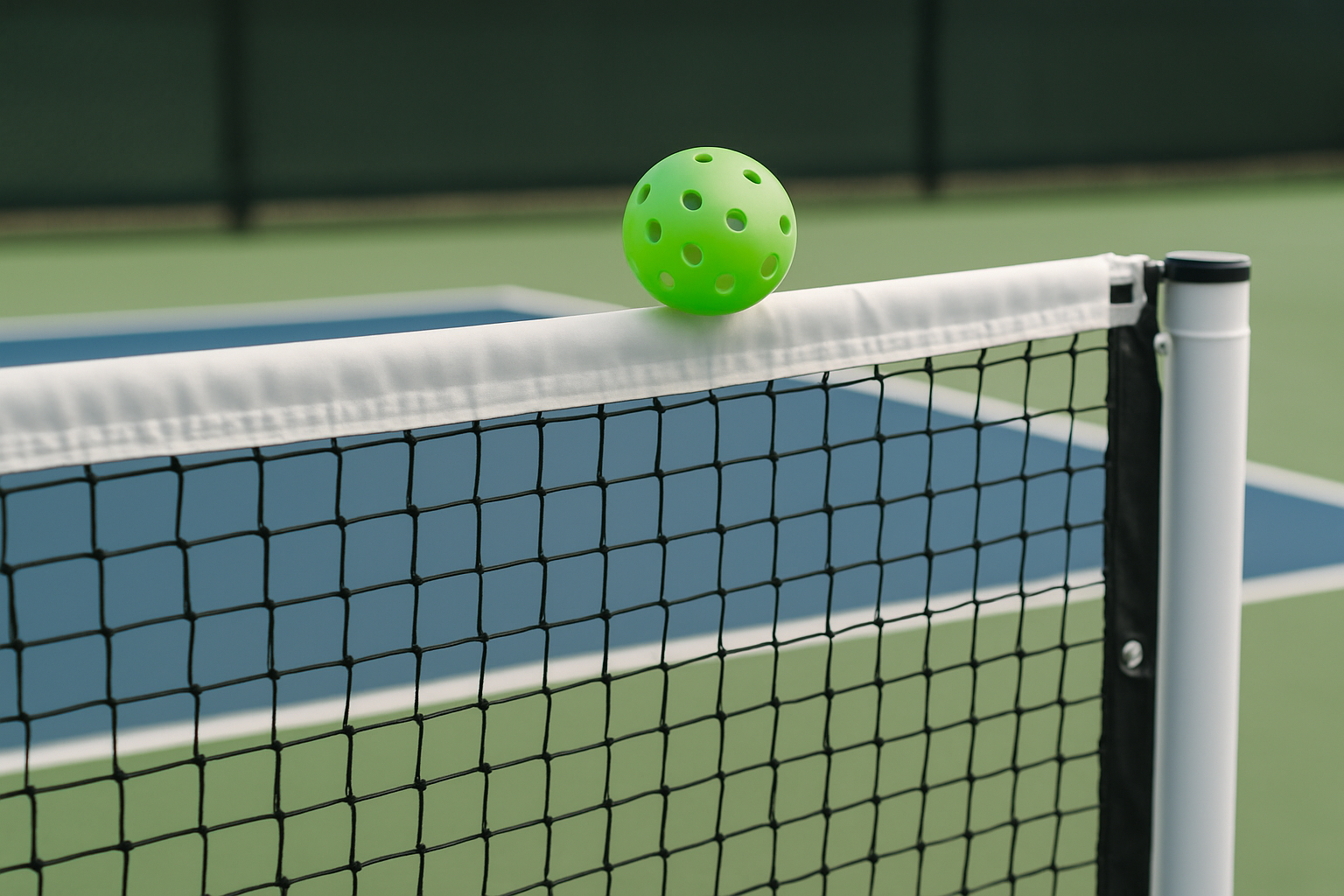
- The net’s center height of 34 inches is measured from the court surface directly below the center point, not from the tape or binding
- Net sag of more than 1 inch from the center measurement violates official regulations during competitive tournaments
- Portable nets sometimes shift slightly during play. Check height before important matches to prevent disputes
- The mesh opening size is regulated to prevent balls from passing through. This ensures consistent play on damaged nets
- Most recreational players never notice the distinction between 34 and 36 inches. However, serious competitors develop net awareness at higher net heights
- Wind and temperature changes can affect net tension on portable nets. This requires occasional readjustment during extended play sessions
How Net Height Affects Your Game and Strategy
The relatively low height of a pickleball net directly influences shot selection. Drives and volleys play a bigger role in pickleball than in tennis. The lower net makes these aggressive shots viable for average players. A drive hit from the baseline or near the net at moderate speed can clear the 34-inch height easily. In tennis, you’d need more clearance.
Lobs become a crucial defensive tool specifically because of this height. When opponents pressure you at the net, a well-placed lob over their heads travels only 3 feet higher than the net at its peak. This tight clearance makes lobs technically demanding. Yet they’re essential for advanced players.
Third-shot drops, signature pickleball shots hit softly from the baseline to land in the opponent’s kitchen, rely partly on the net height. The lower net makes these drops more forgiving. Your margin for error increases. A ball clearing the net by 6 inches looks reasonable in pickleball. In tennis, such a shot would be risky.
Serve returns change too with this height. In pickleball, serves must be hit underhand and diagonally into the opponent’s service box. The lower net means less height variation between different serve types. Aggressive servers can’t generate extreme angles like in tennis. Returns don’t require the same explosive footwork.
Net approach shots reward aggressive play more in pickleball. Once you’re at the net in pickleball, you’re closer to the net. This is because of the smaller court and kitchen zone. The 34-inch height means your paddle contact point is often well above the net. This gives you multiple attacking angles. Understanding this geometry helps you approach the net confidently. It prevents treating it as a danger zone.
Measuring and Adjusting Net Height Correctly
If you’re setting up a portable pickleball net, proper height adjustment is straightforward. Most portable nets have telescoping legs with height markings. Start by extending the legs to the 34-inch mark on each side. Then use a measuring tape to verify the center point measures exactly 34 inches.
For fixed nets, height measurement uses a rigid straightedge placed on top of the net. A measuring tape drops vertically from the straightedge to the court surface. Take readings at both edges and the center point. Confirm uniform height. Any deviation over 1 inch requires net adjustment.
Temperature affects net tension. On cold days, metal contracts, sometimes reducing net height slightly. Conversely, heat expands materials and can increase tension. Check height before tournament play. This prevents surprises. Most facilities check nets in the morning before matches begin.
Wind creates the biggest challenge for portable nets. Strong winds can lift the net or shift posts sideways. This changes the effective height. Weights positioned around the base of portable net legs counteract this movement. Some players use sandbags or concrete blocks (each weighing 25-40 lbs) at each corner.
If your portable net sags excessively after a season of use, the netting material has stretched. Replacement nets cost $30 to $100 depending on the net model. Rather than adjusting height repeatedly, replacing the netting restores proper tension. It eliminates future adjustments.
Regulations for Competitive versus Recreational Play
Tournament rules enforced by the Professional Pickleball Association mandate that net height be verified before matches. Authorized officials use standardized measuring equipment. They check all three height points. If any measurement falls outside acceptable range, the net cannot be used. It must be corrected first.
Casual recreational play allows more flexibility. Backyard games often use nets with slight sag or minor height variations. Nobody’s tracking exact measurements. The focus remains on fun rather than technical compliance. However, once you start organizing league matches or invitational tournaments, strict measurement becomes necessary.
Some facilities use electronic height verification systems. These use lasers to detect net height with precision. These systems catch problems invisible to the naked eye. They ensure complete fairness across multiple matches played on the same court.
During matches, players can request height verification if they suspect a net is out of regulation. The match pauses while officials measure. If the net violates regulations, it must be adjusted. Play resumes only after correction. This protects both competitors’ interests. It prevents disputes about whether particular shots were legitimate.
Practice sessions don’t require exact height compliance. However, serious players benefit from practicing with properly adjusted nets. Your muscle memory adapts to the net’s position. Practicing with an out-of-regulation net means relearning shot trajectories. You’ll need to adjust once you move to compliant courts.
Frequently Asked Questions
Q: Can I use a tennis net for pickleball if I adjust the height?
Tennis nets are 42 inches high at the edges and cannot be lowered to 34 inches. Even if you attempted to lower the netting, tennis nets use different materials and mesh sizes. The court dimensions also differ, making a tennis net impractical for pickleball. Portable pickleball nets cost far less than converting existing tennis equipment.
Q: Does the height of a pickleball net change for doubles versus singles?
Net height remains exactly 34 inches regardless of whether you’re playing singles or doubles. The court dimensions stay the same. The net width stays 20 feet. The positioning relative to baselines never changes. Doubles simply uses more court width with four players instead of two.
Q: What happens if my portable pickleball net is slightly too tall?
A net measuring 35 or 36 inches is out of regulation and should be adjusted. Most portable nets allow you to retract the telescoping legs slightly. This reduces height. If adjustment doesn’t work, contact the manufacturer about replacement leg sections. For competitive play, this correction matters. For recreational practice, a net 1-2 inches too tall won’t dramatically affect your game.
Q: How often should I check my pickleball net height during a match?
Official tournament rules require height verification before matches begin. However, they don’t require checking during match play unless a player requests it. For serious league play or invitational tournaments, officials verify once before the first match. For casual recreational play, checking at the start of your session suffices. If you notice the net looks different during play, pause and verify before continuing.
Q: Can I make a pickleball net myself with the correct 34-inch height?
DIY nets can meet the 34-inch height requirement but require proper materials and construction. You’ll need dark netting with appropriate mesh size, sturdy posts or cords anchored at the correct positioning, and a way to maintain consistent 34-inch height across the 20-foot width. Most people find that purchasing an affordable portable net ($75-$150) takes less time, requires no tools, and ensures compliance with standard specifications.
Final Take on Pickleball Net Height Standards
Understanding the height of a pickleball net transforms how you approach the game. Whether you’re setting up a portable net in your backyard, joining a community league, or competing in tournaments, knowing that 34 inches is the standard ensures fair play. It helps you develop proper techniques. The net height isn’t arbitrary. It’s designed to balance accessibility with competitive skill development. This makes pickleball welcoming to beginners while remaining challenging for advanced players.
Your next step is simple: measure your net if you already have one. Or invest in a quality portable net if you don’t. Portable nets have become affordable enough that recreational players can have regulation-compliant equipment at home. Once your net is properly set up and verified at 34 inches, you’ll notice how the court’s geometry influences shot selection, positioning, and strategy. From there, your game will improve naturally as you understand the tactical advantages the regulation height creates.