Are Pickleball and Tennis Courts the Same? Key Differences Explained
No, pickleball and tennis courts are not the same. While they share similar hard-surface materials and can occupy the same physical space, they differ significantly in dimensions, net height, court markings, and how they’re used.
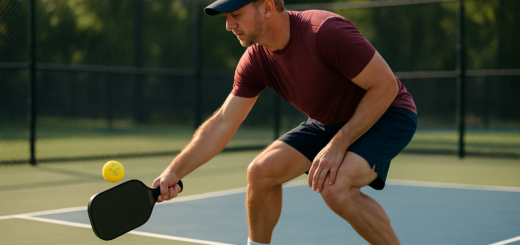
If you’ve ever walked onto a tennis court to play pickleball, you already know something feels off. The lines don’t quite match. The net sits too high. The scale of the whole thing seems wrong for the game. That feeling isn’t just in your head. The two court types are built around entirely different games, and understanding those differences matters whether you’re a recreational player, a facility manager, or someone thinking about converting an existing court.
Are Pickleball and Tennis Courts the Same Size?
The numbers tell the story clearly. A standard pickleball court measures 44 feet long by 20 feet wide, used for both singles and doubles play. A tennis court stretches to 78 feet long and 27 feet wide for singles, expanding to 36 feet wide for doubles.
According to Robinssport’s 2024 dimensions guide, a tennis court occupies 2.8 times more space than a pickleball court.
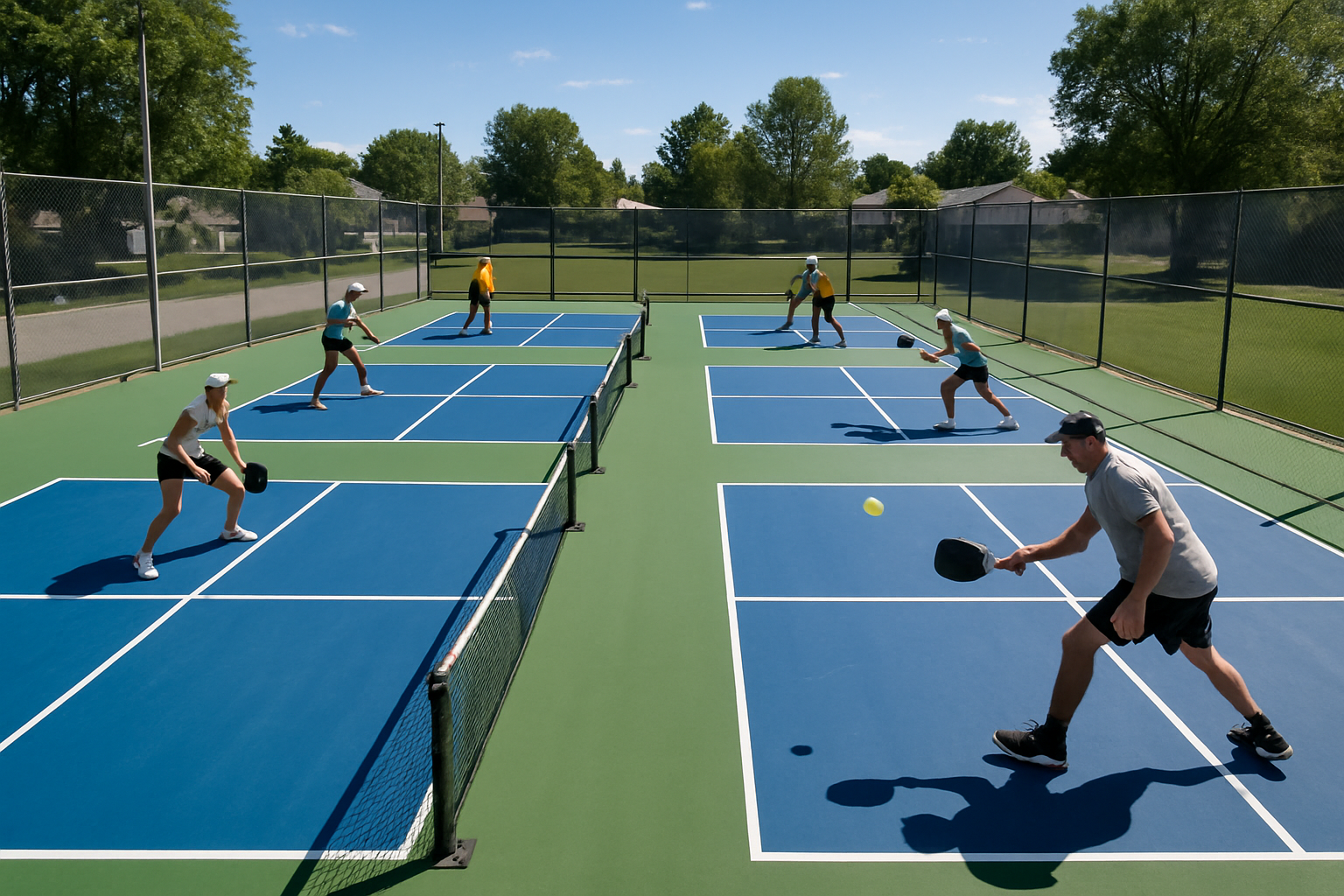
That size difference is why courts can be converted so efficiently. A single tennis court can accommodate up to four pickleball courts within the same footprint. This conversion potential has fueled one of the most dramatic facility shifts in American recreational sports. More than 8,000 tennis courts were transformed for pickleball use by 2024, with an average of 14 pickleball courts being built or lined each day across the country.
The smaller court size in pickleball also changes the game fundamentally. Players cover less ground. Rallies rely more on precision than footspeed. The sport becomes accessible to a wider age range. That accessibility is directly tied to the court’s compact dimensions, not just the equipment or rules.
Here’s a quick side-by-side breakdown:
| Feature | Pickleball Court | Tennis Court |
|---|---|---|
| Length | 44 ft | 78 ft |
| Width (Doubles) | 20 ft | 36 ft |
| Width (Singles) | 20 ft | 27 ft |
| Net Height (Center) | 34 inches | 36 inches |
| Net Height (Posts) | 36 inches | 42 inches |
| Non-Volley Zone | Yes (7 ft each side) | No |
| Space Ratio | 1x | 2.8x |
Are Pickleball and Tennis Court Net Heights and Lines Different?
Beyond size, the net specifications differ in ways that affect play more than most people expect. A pickleball net sits at 36 inches at the posts and 34 inches at the center. A tennis net sits at 42 inches at the posts and 36 inches at the center.
However, if you play pickleball on a tennis net without lowering it, shots that should clear the net simply won’t. This skews your entire sense of trajectory and power.
The court lines are an entirely different story. Tennis courts have service boxes, a center service line, and baseline markings built around a much larger playing area. Pickleball courts include a non-volley zone, commonly called the kitchen, which runs 7 feet from the net on each side.
For example, if you want to understand what are the kitchen rules in pickleball, those rules are entirely specific to pickleball’s court layout and don’t map onto any tennis court structure.
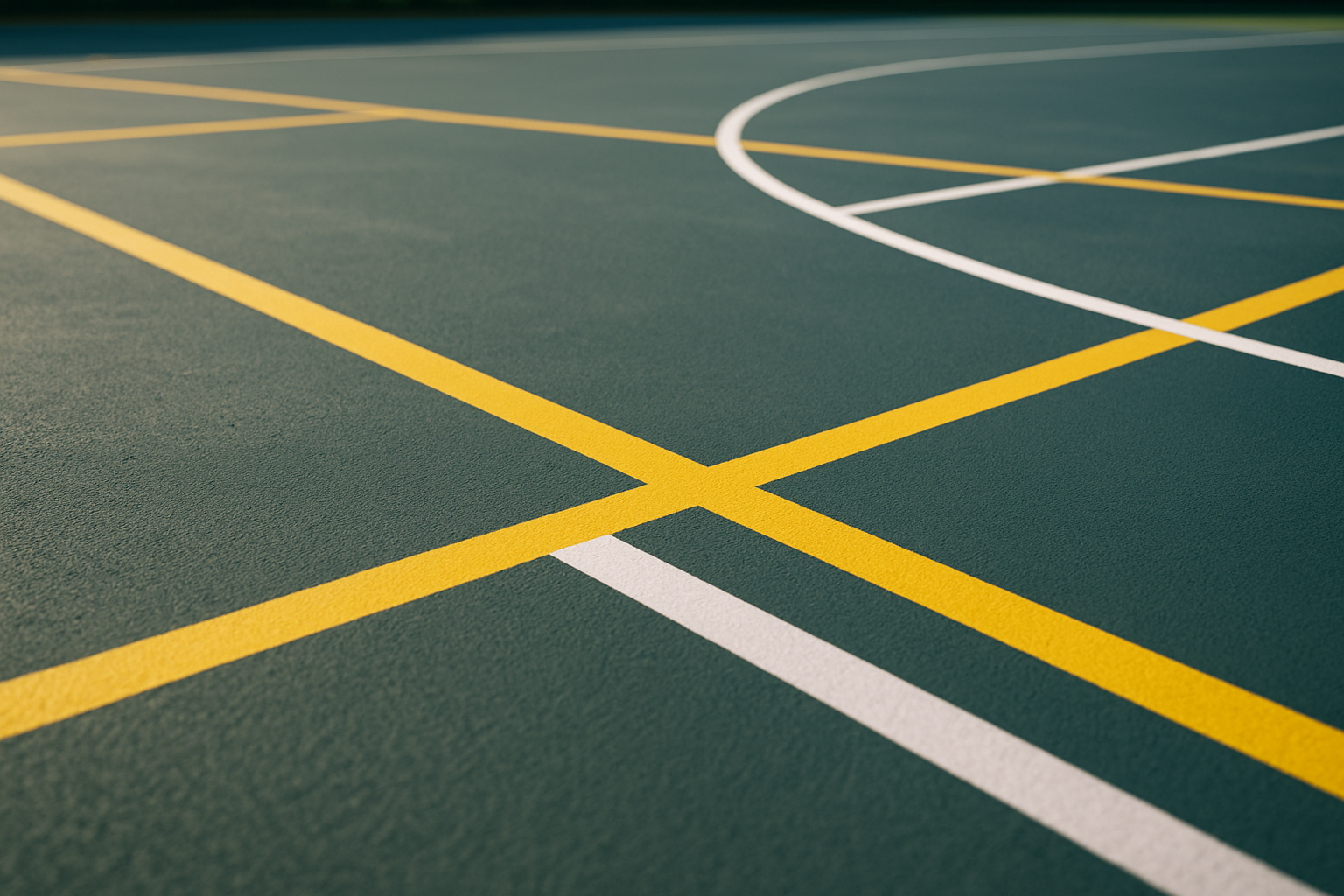
When facilities convert tennis courts to pickleball use, they need to add new lines without necessarily removing the old ones. This is where things get visually complicated. A court covered in overlapping lines from two different sports can be disorienting, especially for new players.
Proper conversion involves painting dedicated pickleball lines in a contrasting color. Players can then identify the correct boundaries quickly. Anyone managing a conversion project should review how to paint a pickleball court to get the line placement and color contrast right from the start.
Are Pickleball and Tennis Courts Made of the Same Materials?
Here’s where you do find genuine common ground. Both pickleball and tennis courts are typically built on hard surfaces, most commonly asphalt or concrete coated with acrylic paint. The surface texture is similar. The maintenance needs overlap enough that shared-use facilities are genuinely practical rather than just a compromise.
Both sports can also be played on outdoor or indoor surfaces. Furthermore, both benefit from the same anti-slip coatings and UV-resistant paint products. Clay and grass surfaces used in tennis have not found any meaningful adoption in pickleball, but the dominant hard-court format transfers between the two sports cleanly.
This shared surface compatibility is one reason conversion projects have been so straightforward from a construction standpoint. You’re not tearing out one type of substrate and replacing it. You’re repainting existing asphalt or concrete and adjusting a net system. That relatively low cost of conversion has played a direct role in pickleball’s infrastructure boom.
Why Pickleball’s Growth Drives Court Conversion at Scale
The scale of pickleball’s expansion in the United States has made the tennis court conversion conversation unavoidable. According to the Sports and Fitness Industry Association (SFIA) 2025 data, approximately 22.7 million active pickleball players now exist in the U.S. This reflects a 14.7% increase from 19.81 million in 2024.
That growth rate of 223% over three years dwarfs tennis’s roughly 10% growth over the same period. In 2024, pickleball achieved something that had never happened before in American racquet sports: it overtook tennis in monthly participation for the first time.
Moreover, the number of places to play pickleball grew by more than 50% in 2024. According to the SFIA and Pickleheads 2024 State of Pickleball Report, facilities now number over 16,210 with more than 70,641 pickleball courts across the country.
The financial side of this shift is significant. The New York Times reported that one converted business brought in seven times as much revenue just one year after completing a tennis-to-pickleball conversion. In addition, the Global Pickleball Market is projected to reach $9.1 billion by 2034, up from $2.2 billion in 2024, growing at a compound annual growth rate of 15.3% from 2025 through 2034.
For facility managers and venue owners, these numbers reframe the conversion question. It’s no longer purely a question of accommodating a trend. It’s a question of revenue, utilization rates, and long-term competitive positioning.

What Converting a Court to Pickleball Actually Involves
The practical work of converting tennis courts for pickleball use involves more than just drawing new lines. Net systems, court spacing, safety buffers between courts, and surface condition all need to be addressed.
According to Hesacore’s breakdown of the main differences between pickleball and tennis courts, the two court types differ enough that a casual conversion without proper planning leads to a substandard playing experience.
Key steps typically include:
- Measuring and marking the 44 x 20 ft playing area within the tennis court space
- Painting the non-volley zone lines 7 feet from each side of the net
- Installing a pickleball net at the correct height (34 inches center, 36 inches posts), or adjusting an existing tennis net with a center strap
- Using a contrasting line color, often yellow or blue, to separate pickleball markings from existing white tennis lines
- Verifying adequate spacing between adjacent courts to prevent collisions
If your facility plans to host organized events, getting the court setup right is essential. Running structured play requires accurate court specs. Additionally, anyone planning how to run a pickleball tournament will find that regulatory-compliant court dimensions are a baseline requirement for sanctioned events.
The cost of a basic conversion, using temporary portable nets and paint, is relatively modest compared to building a dedicated court from scratch. Permanent conversions with post-mounted nets and resurfaced playing areas carry higher costs but deliver a significantly better player experience.
How the Games Themselves Reflect Their Distinct Court Designs
Understanding why are pickleball and tennis courts the same is a question worth asking because the sports themselves evolved differently. Tennis developed in the 19th century on much larger playing areas, designed for powerful serves and long baseline rallies. In contrast, pickleball was invented in 1965 on a badminton-sized court, deliberately designed to be accessible in compact spaces.
The court dimensions in each sport aren’t arbitrary. They shape the pace, the strategy, and the physical demands of the game. Pickleball’s smaller court and kitchen rule create a game centered on dink shots, controlled placement, and net play. Tennis rewards explosive lateral movement and powerful groundstrokes that simply wouldn’t be practical on a court the size of a pickleball surface.
As detailed by Fresh Pickle’s comparison of court differences, the two games share DNA in terms of net play and scoring concepts. However, their court layouts encode fundamentally different athletic priorities. Treating one surface as a direct substitute for the other without modification produces a worse experience in both directions.
Dedicated Pickleball Courts vs. Converted Tennis Spaces
As the sport matures, more facilities are moving beyond conversion and building dedicated pickleball courts from the ground up. These courts are sized specifically for pickleball, with proper spacing between courts, purpose-built net systems, and surface materials optimized for the game’s lower-bouncing plastic ball.
Dedicated courts eliminate the visual clutter of overlapping line systems. Furthermore, they reduce confusion for players at all skill levels. They also allow facilities to optimize court density, lighting placement, and spectator areas in ways that a converted tennis court cannot.
The Courtslytics breakdown of pickleball vs. tennis court dimensions highlights why these spatial differences matter for both player safety and game quality when designing new facilities.
For parks, recreation centers, and private clubs deciding how to allocate space, the case for dedicated pickleball courts has grown stronger each year. With more than 70,000 pickleball courts now operating across the U.S. and demand still rising, the infrastructure investment is increasingly well-supported by consistent utilization data.
Things to Know
- A tennis net is too tall for pickleball right out of the box. The center of a tennis net sits at 36 inches, while pickleball requires 34 inches at the center. Even a 2-inch difference affects shot trajectory enough to change how the game plays, so always verify net height before starting a match on a converted court.
- Overlapping court lines are one of the biggest sources of confusion on dual-use courts. When pickleball lines are painted over existing tennis lines in the same color, players regularly misread boundaries mid-rally. Facilities that use a contrasting color for pickleball markings see significantly fewer disputes and a better overall experience.
- The kitchen has no equivalent in tennis. That 7-foot non-volley zone on each side of the net is unique to pickleball and fundamentally shapes how the game is played. Players coming from a tennis background often underestimate how much this zone changes positioning and strategy.
- Not all conversions fit four pickleball courts. While a standard tennis court can technically accommodate four pickleball courts, adequate side and end buffer zones for player safety may reduce that number to two or three depending on the site layout and local facility standards.
- Surface texture matters more in pickleball than most players realize. Pickleball uses a lightweight plastic ball that bounces lower and reacts more sharply to surface irregularities than a tennis ball. Courts with cracked or uneven surfaces that are tolerable for tennis can create unpredictable bounces in pickleball.
- Portable nets make temporary conversion straightforward, but they introduce variability. Post tension, center strap adjustments, and net sag can all shift during play. If your facility hosts regular games or events, a permanently installed net system delivers more consistent results.
Key Takeaways
- Pickleball and tennis courts are not the same: a tennis court is 2.8 times larger than a pickleball court, and the two sports have different net heights, line configurations, and zone rules.
- One tennis court can fit up to four pickleball courts, which is why facility conversions have become so common and cost-effective across the United States.
- Net height must be adjusted for pickleball use. A standard tennis net sits 2 inches too high at the center for proper pickleball play.
- As of 2025, there are over 70,641 pickleball courts operating across more than 16,210 U.S. facilities, reflecting a 50% growth in available venues in a single year.
- Converting a court correctly requires more than just new lines. Proper net systems, contrasting line colors, and adequate court spacing all affect playability and safety.
- Dedicated pickleball courts built from the ground up offer a better long-term player experience than converted spaces, especially as the sport continues to grow and demand for quality facilities increases.
Frequently Asked Questions
Q: Can you play pickleball on a tennis court without making any changes?
You can play a casual game on a tennis court, but the experience will be noticeably compromised without at least lowering the net and marking temporary boundaries.
The tennis net is 2 inches too high at the center, which affects how shots travel and clears the net. Without pickleball boundary lines, players have to estimate where the court edges are, which makes consistent play difficult. Therefore, for anything beyond a casual introduction to the game, at minimum a center strap to lower the net and temporary court tape for lines is recommended.
Q: How many pickleball courts fit on one tennis court?
A standard tennis court can accommodate up to four pickleball courts within the same footprint.
However, the practical number at many facilities is two or three once you account for adequate safety buffer zones between courts and along the outer edges. Tight conversion setups that squeeze in four courts with minimal spacing can create safety concerns when players move quickly near the boundaries of adjacent courts.
Q: What is the non-volley zone and does tennis have anything similar?
The non-volley zone, known as the kitchen, is a 7-foot zone on each side of the net where players cannot volley the ball, and tennis has no equivalent rule or zone.
In tennis, players can approach the net and volley from any position. In contrast, pickleball’s kitchen fundamentally changes net strategy, requiring players to let the ball bounce before hitting from within that zone. This single rule is one of the biggest tactical differences between the two sports, and it is enforced by specific court markings that exist only on a pickleball court.
Q: Is it expensive to convert a tennis court to pickleball?
A basic conversion using portable nets and court paint is relatively affordable compared to building a new court from scratch, though costs vary by scope and surface condition.
A temporary conversion with portable nets and paint can cost a few hundred to a few thousand dollars depending on the number of courts and labor involved. A permanent conversion with post-mounted nets, professional resurfacing, and new line painting runs considerably higher. Given that some converted businesses reported seven times more revenue after switching to pickleball according to New York Times reporting, the return on investment case for a quality conversion is strong.
Q: Do pickleball and tennis courts use the same surface materials?
Yes, both sports are most commonly played on hard surfaces made from asphalt or concrete with an acrylic coating, which is why conversion between the two is physically straightforward.
The key difference is in how each sport’s ball interacts with the surface. Pickleball’s plastic ball is lighter and bounces lower, making it more sensitive to surface texture and cracks. Although a slightly worn tennis court surface may still play acceptably for tennis, that same surface can produce inconsistent bounces in pickleball. Resurfacing as part of a conversion project is often worth the added investment for a quality result.
The Bottom Line on Are Pickleball and Tennis Courts the Same
Pickleball and tennis courts share the same surface materials and can occupy the same physical space, but they are built around different dimensions, different net heights, and entirely different gameplay rules. The 2.8x size difference alone makes them distinct facilities. The kitchen zone, line configurations, and net specifications add further separation that affects every aspect of how each game is played.
If you’re a player looking for the best experience, seek out dedicated pickleball courts where the specifications are correct from the start. If you manage a facility weighing a conversion, invest in proper line painting, the right net system, and adequate spacing between courts. The demand for quality pickleball infrastructure is only growing, and getting the setup right protects both your players and your long-term investment in the sport.