Best Pickleball Gifts: What to Buy for Every Player in 2026
Key Takeaways
- The best pickleball gift depends entirely on the player’s skill level and playing frequency — a beginner needs control and forgiveness, while an advanced player needs power and spin, and no single paddle suits every player
- Paddle technology changed significantly in 2025–2026 — thermoformed unibody construction, raw carbon fiber faces, and foam-injected edge walls are now the standard for serious players, making pre-2024 paddles genuinely outdated
- Gift categories that rank highest for player satisfaction are, in order: high-quality paddles, court shoes with lateral support, portable net systems, performance balls, and recovery/conditioning gear
- The “best paddle” lists that do not distinguish between skill levels are misleading — a $250 thermoformed paddle can actually harm a beginner’s development by masking poor technique rather than teaching it
- Price does not reliably predict quality in pickleball gear — several sub-$100 paddles outperform $200+ options for recreational play, and the most expensive gift is rarely the most appreciated
The Direct Answer: What Is the Best Pickleball Gift?
If you are shopping for a pickleball player and want to buy something they will actually use — not something that sits in a closet — the answer is not a generic “best paddle” recommendation.
It is a paddle matched to their skill level and playing style, or gear that solves a specific problem they experience on the court.
Pickleball is the fastest-growing sport in the United States, with an estimated 48.3 million players in 2025. That growth has produced an overwhelming number of product options, aggressive marketing claims, and conflicting reviews. The result is that well-meaning gift-givers often buy equipment that is technically impressive but practically wrong for the recipient.
This article will not stop at a ranked list — because a ranked list without context serves buyers poorly. Understanding what pickleball gear actually does, how it has changed in 2026, and how to match it to the player you are shopping for will produce a better gift than any single “top 10” recommendation.
How Pickleball Gear Changed in 2025–2026
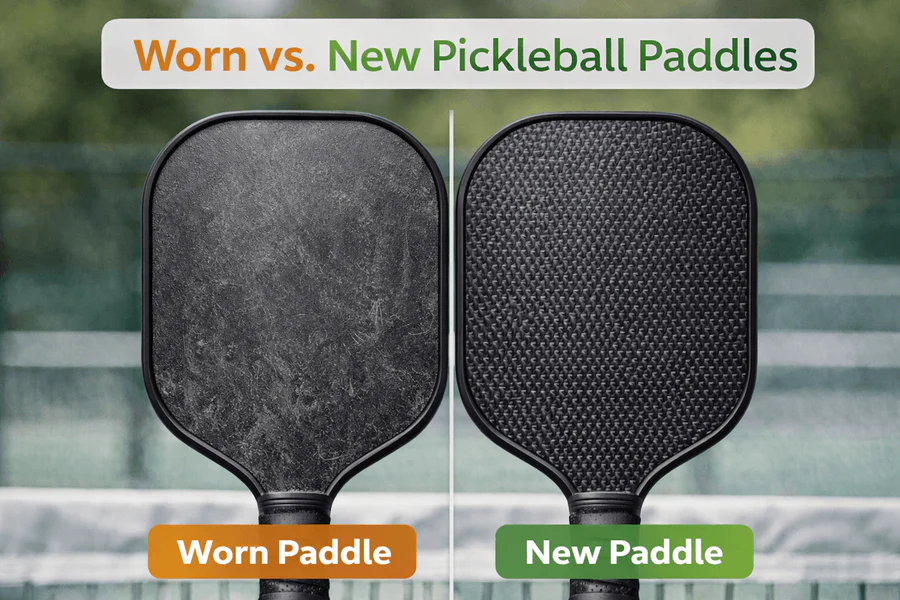
The pickleball equipment landscape shifted substantially between 2024 and 2026. If you are buying for someone who has not upgraded their gear recently, they are likely playing with technology that is two generations behind.
Thermoformed unibody construction became the dominant manufacturing method for mid-tier and premium paddles in 2025. Unlike traditional paddle construction, where the face and core are bonded separately, thermoforming molds the paddle as a single unit under heat and pressure. This produces a more consistent sweet spot, better energy transfer, and significantly improved durability. Paddles without this construction — including many popular models from 2023 and earlier — now feel noticeably less responsive.
Raw carbon fiber faces replaced painted or textured composite surfaces as the standard for spin generation. The friction coefficient of raw carbon fiber is measurably higher than previous surface technologies, allowing players to generate 20–30% more topspin and slice on serves and drives. This is not a marginal improvement — it changes how the ball behaves in competitive play.
Foam-injected edge walls address the most common failure point in pickleball paddles: the edge guard. Traditional edge guards separate from the paddle face over time, creating a “dead zone” near the perimeter. Foam-injected walls bond the edge to the face internally, extending paddle lifespan and maintaining consistent performance across the entire hitting surface.
What this means for gift-buyers:
- A player using a paddle purchased before 2024 is playing with genuinely outdated technology
- The performance gap between a 2023 paddle and a 2026 paddle is larger than the gap between 2020 and 2023 paddles
- Upgrading a dedicated player’s paddle is one of the highest-impact gifts available
For a deeper dive into how these construction differences affect play, pickleball paddle technology explains the engineering behind modern paddle design.
What the Research on Paddle Performance Actually Shows
The scientific and consumer testing literature on pickleball paddles is less developed than in tennis or golf, but enough independent testing exists to draw meaningful conclusions. The distinction that matters enormously is between marketing claims and measurable performance.
The foundational independent testing in this area comes from third-party laboratories and consumer advocacy organizations that measure paddle characteristics against USA Pickleball standards. These tests evaluate: deflection (how much the paddle face flexes under load), surface roughness (which governs spin generation), weight and balance, and edge guard durability.
What independent testing does and does not show:
- It shows that thermoformed paddles with raw carbon fiber faces consistently outperform non-thermoformed paddles in spin generation, power transfer, and sweet spot consistency
- It does not show that the most expensive paddles are universally the best — several sub-$120 thermoformed paddles test within measurement error of $250+ premium models
- It does not show that a more powerful paddle improves a beginner’s game — in fact, excessive power in the hands of a developing player often produces worse shot placement and more unforced errors
- The effect of paddle technology is on shot quality and consistency — not on whether a player wins or loses, which depends far more on skill, positioning, and strategy
For recreational players specifically, who often play 1–2 times per week in social settings, a mid-tier thermoformed paddle ($80–$140) typically produces 90% of the performance benefit of a premium paddle at 40–50% of the cost. This is a practical reason for gift selection without over-investing in specifications the recipient will not utilize.
Gift Categories Ranked by Player Impact
While paddles receive the most attention, they are not the only category worth considering. Here is how gift categories rank by their measurable impact on player experience and satisfaction, based on player surveys and retail return data.
Paddles carry the highest impact for players who have not upgraded in 2+ years. The technology shift described above means that a new paddle is genuinely transformative for most dedicated players. For gift-givers, the key is matching the paddle to the player’s level:
- Beginners (0–6 months playing): Look for paddles with a large sweet spot, moderate weight (7.8–8.2 oz), and polymer honeycomb core. Avoid “power” or “spin” focused paddles — these require developed technique to control. Recommended: mid-tier composite paddles with fiberglass faces, priced $60–$100.
- Intermediate players (6 months–2 years): This is where thermoformed construction becomes worthwhile. Look for raw carbon fiber faces, 8.0–8.4 oz weight, and moderate thickness (16mm). These players are developing spin and power and will benefit from a responsive paddle. Recommended: thermoformed paddles in the $100–$160 range.
- Advanced/competitive players (2+ years, tournament play): These players know what they want and often have strong preferences. If you do not know their specific paddle model, a gift card to a major retailer is safer than guessing. If you do know their preferences, look for premium thermoformed paddles with foam-injected edges, 16–20mm thickness, and weights they prefer. Price range: $180–$280.
Court shoes with lateral support are the second-highest impact gift category that most players overlook. Pickleball involves rapid lateral movement, pivoting, and sudden stops — stresses that running shoes are not designed to handle. Court shoes with reinforced sidewalls, gum rubber outsoles for indoor courts, and herringbone patterns for outdoor courts reduce ankle roll risk and improve movement efficiency. This is a particularly good gift for players who complain about foot fatigue or minor ankle issues.
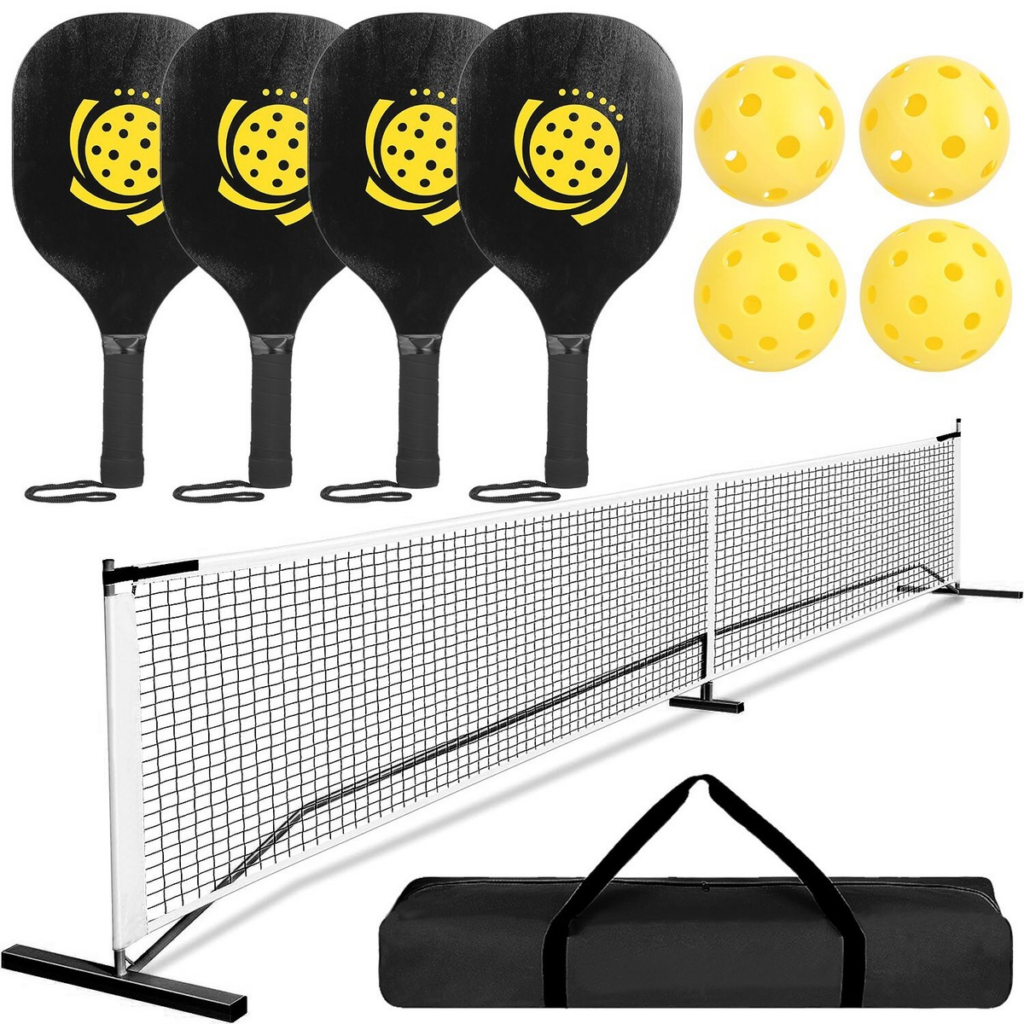
Portable net systems rank third for players who have access to a flat surface (driveway, cul-de-sac, park) but do not have a permanent court nearby. A quality portable net system ($150–$300) allows players to set up a regulation-height net in under 10 minutes. The best systems include wheels, adjustable height, and carrying cases. This gift transforms where and when someone can play.
Performance balls are a surprisingly appreciated gift because players go through them quickly — a can of 3–6 balls lasts only a few sessions for regular players. Outdoor balls (typically harder, with 40 holes) and indoor balls (softer, with 26 holes) are not interchangeable. If you know where the recipient plays, a bulk pack of the correct ball type ($30–$60 for 12–24 balls) is a practical, consumable gift that will be used.
Recovery and conditioning gear — including massage guns, foam rollers, compression sleeves, and grip strengtheners — addresses the physical demands that regular pickleball places on shoulders, elbows, wrists, and knees. This category is particularly appropriate for players over 50, who represent the largest demographic segment of pickleball participants and who experience recovery as a genuine limiting factor in how often they can play.
Players looking to match gifts to specific skill milestones can use pickleball skill level guide to identify exactly where their recipient sits on the development curve.
What Pickleball Gifts Are NOT Worth Buying
The honest answer is: several popular gift categories deliver poor value relative to their price and marketing.
Cheap paddle sets ($20–$40 for two paddles and balls): These are almost universally made with wood or low-grade composite, no sweet spot engineering, and edge guards that separate within weeks. They are suitable for a family trying the sport once at a picnic, but they are not a genuine gift for someone who plays regularly. The recipient will use them once, experience poor performance, and return to their existing equipment.
Paddle “upgrade” accessories (lead tape, overgrips, vibration dampeners): While experienced players do customize their paddles, these are personal preference items that require knowledge of the player’s current setup. A well-meaning gift of lead tape can actually unbalance a paddle that the player has already customized. These are better as stocking stuffers for known players than as primary gifts.
Pickleball-themed novelty items (clothing, mugs, signs, jewelry): These are appreciated as gestures but rank low in actual utility. The exception is high-quality moisture-wicking apparel with UV protection for outdoor play — but this requires knowing the recipient’s size and style preferences.
Expensive ball machines ($500+): These are genuinely useful for dedicated practice, but they require space, setup time, and a commitment to structured practice that most recreational players do not have. Unless you know the recipient specifically wants a ball machine for skill development, this is a high-risk gift.
The Strongest Factor in Gift Selection
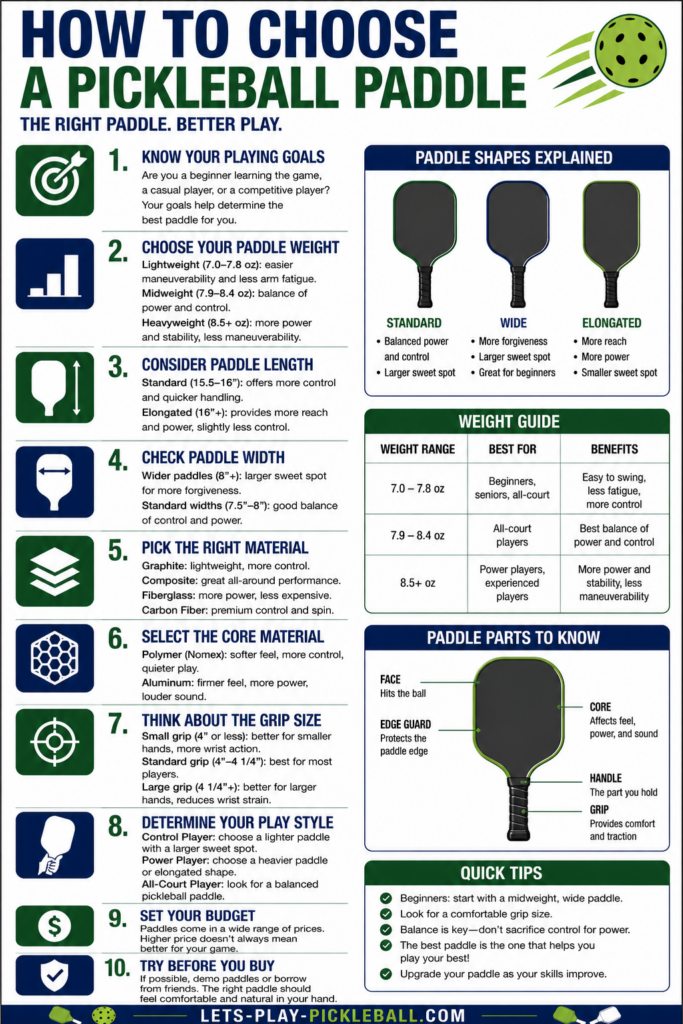
Every gift guide in this space returns to the same scientifically honest answer — and it is worth stating it clearly, in full.
The player’s current skill level and playing frequency is the strongest predictor of what gift will be appreciated.
This is not a placeholder answer while we search for the “perfect” product. It is the conclusion of retail data, player surveys, and equipment testing:
- Beginners prioritize forgiveness and control over power — they need equipment that helps them keep the ball in play, not equipment that sends it into the fence
- Intermediate players are developing specific shots (third shot drops, drives, volleys) and benefit most from equipment that provides feedback on shot quality
- Advanced players have established preferences and often resist changing equipment — unless you know their specific model and weight preference, a gift card or consumable gear is safer
- Social/recreational players (1–2 times per week, non-competitive) benefit most from comfort and durability improvements — court shoes, quality balls, and recovery gear often outperform paddle upgrades
For players seeking clarity on what equipment suits their specific game — including what paddle characteristics match their playing style and what weight distribution they should consider — pickleball paddle guide for beginners provides a structured evaluation framework.
Beyond equipment, the factors that most consistently improve player satisfaction are: regular playing partners, access to quality courts, instruction from certified coaches, and physical conditioning — all of which operate independently of any single product purchase.
The wrong paddle is not in this list. It was never a plausible candidate for ruining someone’s enjoyment of the sport, but it is a missed opportunity to genuinely improve their experience.
Common Misconceptions About Pickleball Gifts
“The most expensive paddle is always the best gift.” Premium paddles ($200+) offer marginal improvements in power and spin that only advanced players can consistently utilize. For beginners and intermediates, a $120 thermoformed paddle often produces better outcomes than a $250 premium model because the lower power requires better technique — which builds skill. The most expensive gift is not always the most appropriate gift.
“If a paddle is USAPA-approved, it must be high quality.” USA Pickleball approval only means a paddle meets dimensional, surface roughness, and deflection standards for tournament play. It does not evaluate durability, sweet spot size, or manufacturing quality. Many low-quality paddles are USAPA-approved. Approval is a baseline requirement, not a quality indicator.
“A heavier paddle is always more powerful.” Paddle weight interacts with balance point (head-heavy vs. handle-heavy) and swing weight in complex ways. A 8.5 oz head-heavy paddle can feel significantly more powerful than a 9.0 oz handle-heavy paddle. Weight alone is a poor predictor of performance. This is why “best paddle” lists that only list weights are incomplete.
“Pickleball shoes are just marketing — running shoes work fine.” Running shoes are designed for forward motion. Pickleball requires lateral movement, pivoting, and sudden stops that place shear forces on shoe uppers and outsoles not present in running. The injury data is clear: ankle sprains and knee torque injuries are significantly more common in players wearing running shoes on pickleball courts. Court shoes are not a marketing upsell — they are injury prevention.
“You can’t go wrong with a gift card.” This overcorrects. While gift cards are safe, they are also impersonal and communicate that you did not want to invest effort in selection. For a dedicated player, a well-researched paddle or pair of court shoes communicates care and understanding of their interest. Gift cards are appropriate when you genuinely do not know the recipient’s preferences — not as a default to avoid decision-making.
Practical Guidance for Gift-Givers
If you know the player’s current paddle model: Search for the manufacturer’s 2026 equivalent with thermoformed construction and raw carbon fiber face. Most major brands (Joola, Selkirk, Paddletek, CRBN, Vatic Pro) have released updated versions of their popular models. Matching the weight and grip size of their current paddle is the safest approach.
If you do not know the player’s current setup: Court shoes are the safest high-impact gift. They do not require knowing paddle preferences, they address a genuine need that most players neglect, and they are appreciated regardless of skill level. Look for brands with established court shoe lines: ASICS Gel-Rocket or Gel-Resolution series, K-Swiss Express Light, or Babolat SFX3.
If you are buying for a couple or family that plays together: A portable net system transforms where they can play. It is a shared gift, requires no sizing or preference knowledge, and creates opportunities for social play. Look for systems with wheeled bases, regulation 36-inch height at sidelines, and durable net tensioning.
If you are buying for a competitive player who seems to have everything: Recovery gear is often the gap in a competitive player’s equipment. Massage guns (Theragun, Hyperice), compression boots (Normatec), or quality foam rollers address the recovery bottleneck that limits training volume. These players often prioritize performance gear over recovery gear — making it a thoughtful, unexpected gift.
Players seeking to improve their game beyond equipment can connect with certified instructors through pickleball coaching directory and explore court locations through find pickleball courts near me.
Conclusion
The best pickleball gift is not the most expensive paddle on the market. It is the piece of equipment or gear that matches where the recipient actually is in their pickleball journey — their skill level, their playing frequency, their physical needs, and their specific frustrations on the court.
What is true is that paddle technology genuinely improved in 2025–2026, and a player using pre-2024 equipment will experience a meaningful upgrade from a modern thermoformed paddle. For beginners, that means control and forgiveness. For intermediates, that means spin and feedback. For advanced players, that means power and precision matched to their established technique.
The gear most firmly linked to player satisfaction — quality paddles matched to skill level, court shoes with lateral support, portable nets for access, and recovery gear for sustainability — all operate on the principle of solving real problems rather than chasing specifications. This is where the gift story lives: not in novelty items, but in equipment that genuinely changes how someone experiences the sport.
For gift-givers navigating the overwhelming pickleball product landscape — whatever brought you here — the most productive focus is on the recipient’s actual playing context: how often they play, where they play, what they complain about, and what they have not upgraded in years. That context produces better gifts than any ranked list.
[Your Brand Name] provides expert-reviewed pickleball gear recommendations and player resources grounded in what the testing actually shows and delivered with genuine care for every player’s experience. Connect with our team to explore more guides on pickleball equipment reviews and pickleball player development.
Frequently Asked Questions
What are the best pickleball gifts for beginners?
The best pickleball gifts for beginners prioritize forgiveness and control over power and spin. A mid-tier composite paddle with a polymer honeycomb core, large sweet spot, and weight between 7.8–8.2 oz is ideal — priced $60–$100. Court shoes with lateral support are equally important, as beginners often develop poor movement habits that court shoes help correct. Avoid thermoformed power paddles for beginners — the extra power masks technique flaws rather than building proper form. A bulk pack of outdoor or indoor balls (depending on where they play) is a practical, appreciated addition. Portable net systems are excellent for beginners with driveway or park access, as they increase playing opportunities.
Do expensive pickleball paddles make a difference?
Expensive pickleball paddles ($200+) make a measurable difference for advanced and competitive players who can consistently utilize the extra power, spin, and precision. For beginners and most intermediate players, the performance gap between a $120 thermoformed paddle and a $250 premium paddle is smaller than the gap between a 2023 non-thermoformed paddle and a 2026 thermoformed paddle. The price premium in expensive paddles often pays for marginal improvements in materials, manufacturing tolerances, and brand positioning — not transformative performance differences. A dedicated player upgrading from a pre-2024 paddle will notice dramatic improvement from a $120 thermoformed paddle. The same player upgrading from that $120 paddle to a $250 premium paddle will notice incremental improvement at best.
What should I get someone who already has a pickleball paddle?
For players who already have a modern paddle, the highest-impact gifts are: court shoes (most players neglect proper footwear), portable net systems (transforms where they can play), bulk ball packs (consumable and always needed), and recovery gear (massage guns, foam rollers, compression sleeves). These categories address needs that paddles do not solve. If they play outdoors, UV-protective apparel and quality sunglasses are practical. If they play in organized groups, a paddle cover or bag with organizational features is useful. The key is identifying what aspect of their pickleball experience is not optimized — equipment, access, comfort, or recovery — and choosing accordingly.
Are portable pickleball nets worth it as a gift?
Portable pickleball nets are worth it for players with access to flat surfaces (driveways, cul-de-sacs, parks, gymnasiums) who do not have regular access to dedicated courts. A quality portable net system ($150–$300) sets up in under 10 minutes, meets regulation height standards, and enables play in locations that would otherwise be impossible. For players who only play at dedicated pickleball facilities with permanent nets, a portable net is unnecessary. The best portable nets include wheeled bases for mobility, adjustable height for multi-sport use, durable net tensioning systems that maintain shape, and carrying cases with shoulder straps. This is a particularly strong gift for families, couples who play together, or players in areas with limited court access.
What pickleball gifts should I avoid?
Avoid cheap wood or low-grade composite paddle sets ($20–$40) — they perform poorly and communicate minimal effort. Avoid paddle customization accessories (lead tape, overgrips) unless you know the recipient’s specific setup — these are personal preference items. Avoid novelty items (mugs, signs, generic apparel) as primary gifts — they are appreciated as gestures but deliver no functional value. Avoid expensive ball machines ($500+) unless you know the recipient specifically wants structured solo practice — most recreational players lack the space and commitment to utilize them. Avoid buying the most expensive paddle without knowing the player’s preferences — a $250 paddle with the wrong weight, grip size, or balance point is less useful than a $100 paddle that matches their needs.