Pickleball Rules for Beginners: Everything You Need to Know to Start Playing in 2026
Key Takeaways
• Pickleball is played on a 20’ x 44’ court with a net at 36 inches at the sidelines and 34 inches at the center — the same dimensions for both singles and doubles
• The two-bounce rule is the most strategically important rule: after the serve, both teams must let the ball bounce once before volleying, creating neutral rallies and rewarding patience over pure power
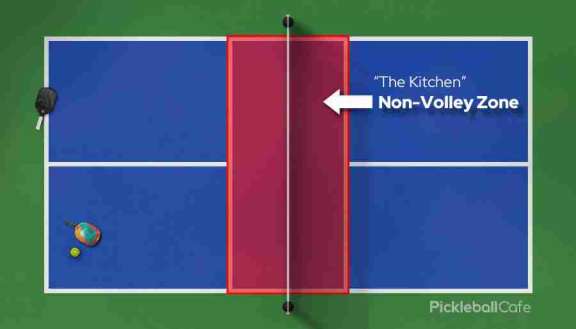
• The non-volley zone (the “kitchen”) is a 7-foot area on each side of the net where you cannot volley the ball out of the air — this is where most beginners commit their first fault
• Only the serving team can score points in standard play; games are played to 11 points, win by 2, with doubles using a three-number scoring call (serving score, receiving score, server number)
• The 2026 USA Pickleball rule changes include the starting score now called as “0-0-0” instead of “0-0-2,” along with clarifications on paddle-under-net and blowing-the-ball situations
• The drop serve remains a legal and popular alternative to the traditional volley serve, removing some underhand strictness and helping beginners develop consistent serves
The Direct Answer: Pickleball Rules Are Simpler Than They Look
Pickleball is the fastest-growing sport in America for a reason — it is genuinely easy to learn, requires minimal equipment, and delivers immediate fun from your very first rally. But the rules have enough quirks that even experienced players consistently get burned by the same three or four violations. The kitchen fault. The two-bounce rule. The serve that is technically illegal but nobody calls.
If you are stepping on a court for the first time (or the fiftieth), this is the breakdown you needed before your first real rally. Understanding what the rules actually require — and what they do not — will get you playing with confidence and avoiding the arguments that derail recreational games.
That said, this guide will not stop at the basics. Because the relationship between pickleball rules, strategy, and beginner development is genuinely more nuanced than a simple rule list conveys. Understanding why the rules exist — and how they shape the way the game is actually played — serves new players far better than memorizing a checklist.
What Pickleball Is and What You Need to Play
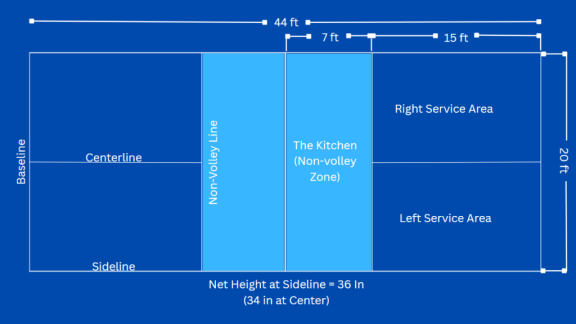
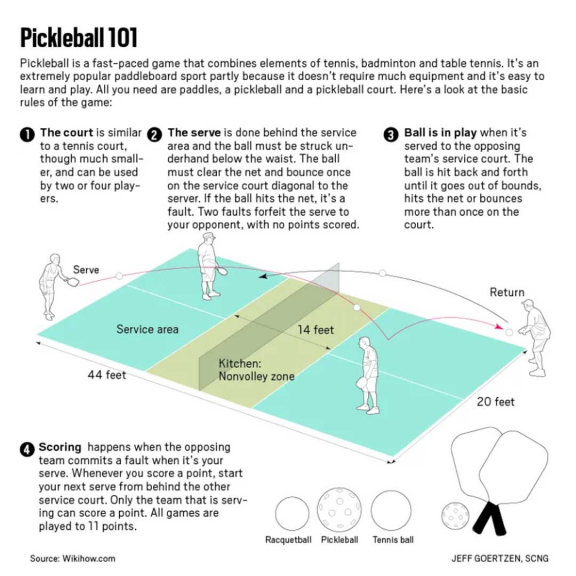
Pickleball is a paddle sport that combines elements of tennis, badminton, and table tennis. It is played using a perforated plastic ball on a 20-foot by 44-foot court with a tennis-type net. The court is divided by a centerline into right and left service courts, with a non-volley zone (the kitchen) on each end of the net.
You need three things to play:
• A pickleball paddle — solid, no strings, with a flat face
• A perforated plastic ball — designed for indoor or outdoor play
• A court — 20’ x 44’ with a net at 36” at the sidelines and 34” at the center
The court surface is typically concrete or asphalt outdoors, or a gymnasium floor indoors. The net divides the court into two equal halves, each with a 7-foot non-volley zone (kitchen) extending from the net, followed by the service areas beyond it.
Pickleball can be played as singles or doubles — doubles is by far the most common format at recreational levels. The same court dimensions and core rules apply to both.
Pickleball Kitchen Rules – What you Should Know | PPA Tour
How Scoring Works in Pickleball
Scoring in pickleball can be very confusing to beginners. The first rule of etiquette is that the server — and only the server — should announce the score before each serve.
Only the serving team can score points in standard play. You earn a point when the other team commits a fault. The receiving team must get the “side down” and earn the serve back before they can start scoring.
Games are typically played to 11 points, win by 2. In tournament play, games can go to 15 or 21, but the win-by-2 requirement remains.
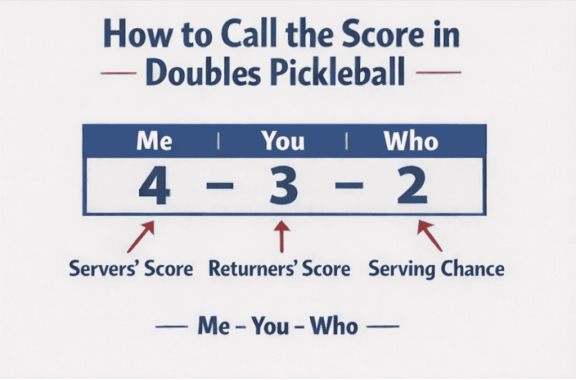
Doubles scoring call: The score is announced as three numbers — the serving team’s score, the receiving team’s score, and the server number (1 or 2). So “5-3-2” means the serving team has 5 points, the receiving team has 3, and it is the second server’s turn.
The starting score exception: At the beginning of each new game, the first serving team only gets one serve. As of the 2026 USA Pickleball rule changes, the starting score is now called as “0-0-0” instead of the previous “0-0-2.” This change simplifies the opening sequence for new players.
When a side scores a point, the same server switches to the other side of the court and serves again. When a server loses a rally (commits a fault), the serve passes to their partner (server 2). If server 2 also loses a rally, a “side out” occurs and the serve goes to the opposing team.
Singles scoring: The server calls out only two numbers (their score, opponent’s score). The server serves from the right/even court when their score is even (0, 2, 4…) and from the left/odd court when their score is odd (1, 3, 5…).
Pickleball Scoring Explained (Doubles, Singles & Rally Formats)
The Pickleball Serving Rules
The serve is where most first-time players unknowingly break the rules. Here is what the official pickleball serving rules require:
1. The serve must be hit underhand, with the paddle contacting the ball below the waist.
2. The paddle head must be below the wrist at contact.
3. The server’s arm must be moving in an upward arc when the ball is struck.
4. The server must stand behind the baseline, between the centerline and the sideline. At least one foot must be behind the baseline on the playing surface or the ground behind it.
5. The serve must land in the diagonal service box across the net, clearing the non-volley zone (kitchen) including the kitchen line.
6. You get one serve attempt — unless the ball clips the net and lands in the correct service area (a “let”), in which case you re-serve.
The drop serve: A legal alternative where you drop the ball from any height (no throwing) and let it bounce before hitting it. The drop serve has become popular because it removes some of the underhand-below-the-waist strictness of the traditional volley serve, making it easier for beginners to develop a legal, consistent serve. None of the underhand arc, waist-height, or wrist-position rules apply to drop serves.
Important 2026 update: USA Pickleball clarified that “blowing the ball” (if it gets stuck on top of the net) is no longer an acceptable action, and removed the allowance for a paddle going under the net to hit a ball — though these are rare situations, the rulebook now addresses them explicitly.
What Is the Two-Bounce Rule in Pickleball?
The two-bounce rule (sometimes called the double-bounce rule) is the most strategically important rule in the game.
Here is what it means: after the serve, both teams must let the ball bounce once before volleying (hitting it out of the air).
• The serve bounces in the receiving team’s service court.
• The return of serve bounces in the serving team’s court.
• After both bounces have occurred, both teams are free to volley or let the ball bounce.
Simple in writing. Surprisingly hard to remember mid-rally when you want to attack.
Why does the two-bounce rule exist? It prevents serve-and-volley dominance. Without it, the serving team could rush the net immediately and crush the return. The rule forces a more neutral start to each point and is one of the main reasons pickleball rewards patience and positioning over pure athleticism.
This is also why the third shot drop became the cornerstone shot of advanced doubles play — after the serve and return have both bounced, the serving team must hit a soft, arcing shot that lands in the opponent’s kitchen to neutralize the point and work their way to the net.
The Kitchen Rules: What You Can and Cannot Do in the Non-Volley Zone
The kitchen is where most beginners commit their first fault, and where the rulebook gets genuinely nuanced.
The core rule: you cannot volley the ball while standing in the non-volley zone or touching the kitchen line. That includes your paddle, your clothing, and any part of your body. If you step on the line while volleying, it is a fault.
Here is where it gets tricky. If you volley the ball and your momentum carries you into the kitchen after the shot? Still a fault. You cannot use forward momentum as an “I did not mean to” defense. The rule is about where you were when the ball was struck and what your body does immediately after.
What you CAN do: step into the kitchen any time the ball bounces first. Kitchen volleys are the violation; kitchen groundstrokes are completely legal. You can stand in the kitchen all day if you want you just cannot hit the ball out of the air from there.
The non-volley zone extends 7 feet from the net on each side. It is marked by the “kitchen line” parallel to the net. Mastering kitchen rules is essential because the most strategic place to be in pickleball is at the net but you must get there legally.
What Counts as a Fault in Pickleball?
A fault ends the rally. Here is a quick rundown of the most common violations under standard pickleball rules:
• Hitting the ball out of bounds
• Hitting into the net
• Volleying before the two-bounce rule is satisfied
• Volleying from the kitchen (non-volley zone)
• The serve landing in the kitchen or outside the service box
• A player or their clothing/paddle touching the net
• Hitting the ball twice (double hit)
• The ball bouncing twice on one side before being returned
• The ball hitting a player or their clothing before it bounces
One fault newer players consistently miss: if the ball hits you or your clothing (even before it bounces), it is a fault, whether you are in bounds or not. The rally is dead.
Line Calls and Sportsmanship
Pickleball, like most racquet sports, relies on the integrity of the players in calling shots in or out. The rule of etiquette suggests that players will call the lines as honestly and fairly as they can.
• Players call the lines on their side of the net; opponents do the same on their side.
• Opponents should never make a call on the other side of the net unless they are asked.
• If a team cannot decide on a line call, the benefit always goes to the opponent.
• If a team asks for an opinion from an opponent, that decision is final.
A ball touching any part of the sideline or baseline is considered in. Remember: it is only a game. Keeping this in mind will prevent conflict on the court.
Singles vs. Doubles: What Changes?
The core pickleball rules are the same for singles and doubles, with these key differences:
Doubles: – Both players on the serving team have the opportunity to serve and score points until they commit a fault (except for the first service sequence of each new game). – The score is called as three numbers. – Players switch sides after winning a point on serve. – Stacking and poaching are tactical options.
Singles: – There is only one server per side. – The score is called as two numbers (no server number). – The server serves from the right when their score is even, left when odd. – The server continues serving (switching sides) until they lose a rally, then it is a side out.
The Most Common Rule Violations Beginners Make
The honest answer: kitchen faults and two-bounce violations account for the vast majority of beginner mistakes.
Beyond those, here is what catches new players off-guard:
• Serving out of turn in doubles — losing track of server 1 vs. server 2 is universal among newcomers
• Foot faults on the serve — standing on the baseline counts; you must be fully behind it
• Hitting a ball that was going out — you do not have to hit every ball. If it is clearly sailing long, let it go
• Calling the wrong score — not a “violation” per se, but it causes more arguments than any actual rule
• Forgetting the first-server exception — at the start of a new game, only one partner serves before the side out
Practical Tips for Beginners Learning the Rules
If you are struggling to track the score: Say it out loud before every serve. It keeps everyone honest and cuts down on disputes.
If you keep hitting kitchen faults: Pay attention to where your feet are when you volley. Feel your momentum. After a few matches, it becomes second nature. The best way to internalize the kitchen rule is to play.
If you want to develop a reliable serve: Start with the drop serve. It removes the underhand arc and wrist-position complexity, letting you focus on getting the ball in play consistently.
If you are playing your first games: Focus on getting the serve in, letting the ball bounce twice before volleying, and staying out of the kitchen when hitting the ball out of the air. Everything else is strategy; these three rules keep you legal.
If you want to improve beyond the rules: The third shot drop is the shot that separates beginners from intermediate players. After your serve and the return have both bounced, hit a soft, arcing shot that lands in your opponent’s kitchen. This lets you and your partner move to the net legally and take control of the point.
For a deeper dive into pickleball strategy, equipment reviews, and court finder tools, explore the resources at Pickleball Archive.
Frequently Asked Questions
What are the basic pickleball rules for beginners?
The basic pickleball rules are: serve underhand into the diagonal service box, let the ball bounce once on each side before volleying (the two-bounce rule), do not volley while standing in the non-volley zone (the kitchen), and score points only when you are serving. Games go to 11, win by 2. In doubles, call the score as three numbers: serving team’s score, receiving team’s score, and server number (1 or 2).
What is the kitchen rule in pickleball?
The kitchen rule states that players cannot volley (hit the ball out of the air) while standing in or touching the non-volley zone, which is the 7-foot area on each side of the net. You can enter the kitchen to hit a ball that has bounced, but stepping in during or immediately after a volley is a fault. Your momentum cannot carry you into the kitchen after a volley either.
How does the two-bounce rule work in pickleball?
After the serve, both teams must let the ball bounce once before hitting it out of the air. The serve must bounce in the receiving team’s service court, and the return of serve must bounce before the serving team can volley. After both bounces have occurred, the ball can be volleyed freely (except from the kitchen). This rule prevents serve-and-volley dominance and creates longer, more strategic rallies.
Can you hit a pickleball before it bounces?
Yes, once the two-bounce rule has been satisfied (serve bounces, return bounces), either team can volley the ball out of the air, as long as the player hitting it is not standing in the non-volley zone. From the kitchen, every ball must be allowed to bounce first.
What is the score called in pickleball doubles?
In doubles, the score is announced as three numbers: the serving team’s score, the receiving team’s score, and the server number (1 or 2). For example, “4-2-1” means the serving team has 4 points, the receiving team has 2, and it is the first server’s turn. As of 2026, the starting score at the beginning of a new game is called “0-0-0.”
Where can I find pickleball courts near me?
Check your local parks and recreation department, community centers, tennis facilities, and dedicated pickleball clubs. Many tennis centers are adding pickleball lines to existing courts. For comprehensive court listings, equipment guides, and playing resources, visit Pickleball Archive.
About This Guide
This guide was written for players stepping onto a pickleball court for the first time in 2026. It reflects the current USA Pickleball Official Rulebook and the 2026 rule changes, with practical explanations designed to get you playing correctly and confidently from day one. For ongoing updates, strategy deep-dives, and equipment recommendations, bookmark Pickleball Archive.