What “Side Out” Means in Pickleball and Why It Changes the Whole Game
When a serving team loses a rally, the serve transfers to the opposing team. This transfer of serve is called a side out in pickleball, and it is one of the most important concepts in the sport’s traditional scoring system.
Key Takeaways
- A side out occurs when the serving team loses a rally, giving the serve to the opposing team.
- In traditional scoring, only the serving team can score points, making side outs strategically critical.
- Rally scoring, now common in some competitive formats, eliminates the side out dynamic entirely.
- Recognizing when a side out is coming can shift how aggressively or defensively you play each rally.
- In doubles play, each team typically gets two serves (one per partner) before a side out is called.
- New players often confuse a side out with a fault. They are related but not identical situations.
The Traditional Scoring System and Where Side Outs Fit
Pickleball originally borrowed its scoring format from badminton, which means points can only be earned by the serving team. This system is called side-out scoring (also written as rally-by-rally or traditional scoring), and it creates a very specific structure where every rally has different stakes depending on who is serving.
Here is how the flow works:
- The serving team hits the ball into play.
- If the serving team wins the rally, they earn one point and continue serving.
- If the receiving team wins the rally, no point is scored. Instead, the serve passes to the other team.
- That transfer of the serve is the side out.
Because points can only accumulate on your side when you are serving, regaining the serve through a side out is essentially the first step toward closing the gap or extending your lead. You cannot score until you have the serve, which is why creating side out opportunities is as valuable as winning outright points.
How Side Outs Work in Singles vs. Doubles
The side out dynamic plays out slightly differently depending on whether you are playing singles or doubles.
In singles play, there is only one server per team. If you lose a rally while serving, the serve goes directly to your opponent. That is a clean, straightforward side out every single time.
In doubles play, the situation has one important wrinkle. Each team typically gets two serves, one per player, before a side out is declared. The exception is the very first service sequence of a game. At the start of a doubles match, the team that serves first only gets one serve before a side out is called. This rule was designed to reduce the first-server advantage at the beginning of a game.
| Format | Serves Before Side Out | Exception |
|---|---|---|
| Singles | 1 | None |
| Doubles (mid-game) | 2 (one per partner) | None |
| Doubles (game start) | 1 | First server of the game only |
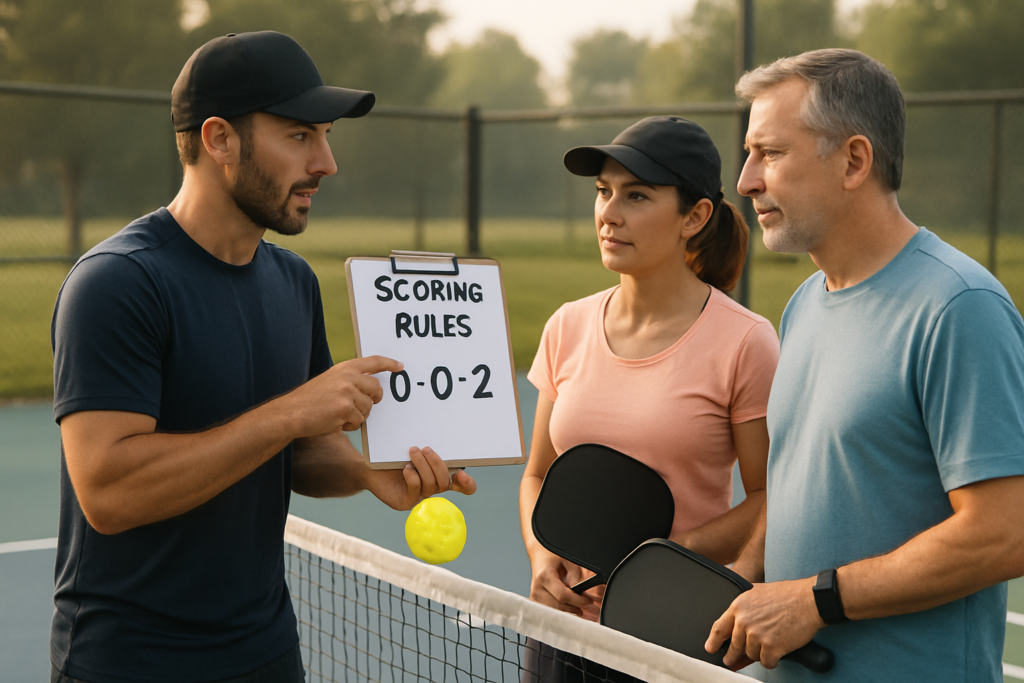
This doubles structure is also why you hear players call out three-number scores like “4-2-2” during a game. The third number indicates which server is currently serving: server one or server two. When server two loses a rally, the side out is called and the serve goes to the opposing team.

Why Side Outs Matter Strategically
Understanding what does side out mean in pickleball is not just a rulebook exercise. It genuinely changes how smart players approach each rally.
Because scoring is tied directly to serving, the momentum of a match can shift dramatically even if the score barely moves. A team might be down 5-8, but if they string together four consecutive side outs, they can turn that deficit into a lead without the scoreboard showing the opponent ever faltering.
Here are the strategic implications worth understanding:
As the serving team:
- You want to apply pressure early in the rally to avoid giving the opponent a side out opportunity.
- Risky shots carry higher consequences because a mistake hands the serve back without a point.
- Playing conservatively to extend rallies can be smarter than going for winners when you already have momentum.
As the receiving team:
- Your primary goal in many rallies is not just to win the point but to earn a side out first.
- Returning serve reliably is critical. A weak return puts you on defense and reduces your odds of forcing a side out.
- Attacking the server consistently can create repeated side outs, even without scoring, which shifts psychological momentum.
The Mental Weight of a Side Out
Experienced players will tell you that strings of side outs feel just as demoralizing as giving up points. If you are the serving team and keep turning the ball over before scoring, the pressure builds quickly. Your opponents gain confidence even though the scoreboard does not yet reflect the change in momentum.
This is partly why high-level doubles teams work so hard on their third-shot drop. After serving, you are vulnerable. Getting the third shot right helps your team advance to the kitchen line, reduces your error rate, and limits the receiving team’s chances of forcing a side out.
Side Out Scoring vs. Rally Scoring: A Real Difference
The concept of a side out only fully applies under traditional side-out scoring. Rally scoring, which is now used in many recreational leagues and some competitive formats, operates on a completely different logic.
Under rally scoring:
- A point is awarded after every rally, regardless of who served.
- The team that wins the rally earns the point and takes the serve.
- There is no “side out” because every rally has identical stakes.
Rally scoring speeds up games significantly. A game to 11 points can be finished in well under 15 minutes in some cases. Traditional side-out scoring creates longer, more strategic games because multiple rallies might pass with no points scored on either side.
| Scoring Type | Points Awarded | Side Out Exists? | Game Pace |
|---|---|---|---|
| Traditional (Side Out) | Serving team wins only | Yes | Slower, more strategic |
| Rally Scoring | Every rally winner | No | Faster, more predictable |
Some leagues use rally scoring specifically to accommodate more courts and more players in a scheduled time block. Others prefer traditional scoring because it rewards the ability to hold serve under pressure, which many veteran players see as a core skill of the game.
If you are playing in a new setting or league, always confirm which scoring format is being used before the match starts. The answer changes your entire approach to serving and receiving.

Things to Know
- The very first serve of a doubles game results in a one-serve side out. Many beginners do not realize this and get confused when the first rally ends and the score stays at zero.
- A fault by the serving team causes a side out, but not all faults are equal. A foot fault on the serve, hitting into the net, or serving out of bounds all produce a side out under traditional scoring.
- “Side out” is sometimes used casually by recreational players to mean any rally loss, even under rally scoring. Technically, the term only applies when serve changes hands.
- When you are on a side out as the receiving team, you become the serving team immediately. Knowing this beforehand helps you and your partner get into the right court positions quickly.
- The third number in a doubles score call (e.g., “6-4-1”) tells you it is the first server’s turn. When that server loses a rally, the second server takes over. Only after both lose does the side out happen.
- Some players use the term “sideout” as one word and others write it as two words or hyphenated. All three versions refer to the same concept.
Common Misconceptions About Side Outs
A few misunderstandings circulate among newer pickleball players, and clearing them up can prevent mid-game arguments.
Misconception 1: Losing a rally always causes a side out. This is only true if the server loses the rally. If the receiving team makes an error, the serving team scores a point. No side out occurs.
Misconception 2: Side outs apply to every scoring format. As covered above, rally scoring has no side out mechanism. If your local league uses rally scoring, this term becomes largely irrelevant during gameplay.
Misconception 3: The receiving team “wins” on a side out. Not exactly. A side out gives the receiving team the serve, which is valuable. But they do not score a point just from a side out. They must then win a rally while serving to actually score.
Misconception 4: In doubles, a side out happens after every lost rally. This is a frequent stumbling block. In doubles, the first server passes to the second server before a side out is declared. Beginners sometimes forget this and call out incorrect scores as a result.
Frequently Asked Questions
Does a side out count as a point for the receiving team?
No, a side out does not award a point to the receiving team under traditional scoring.
It simply transfers the serve to the other team. The receiving team must win a rally while serving before they can add to their score. Think of a side out as an opportunity, not a reward.
How is a side out called in an official match?
The server calls the score, including the server number, before each serve, and a side out is recognized when neither server on the serving team remains.
In recreational play, players usually self-officiate and verbally acknowledge the side out by calling “side out” before the new serving team takes position. In tournament play, a referee handles score calls and side out declarations.
Can a side out happen mid-point?
No, a side out can only happen at the conclusion of a rally, not while one is in progress.
Once a rally starts, it plays out to completion. A fault, winning shot, or error ends the rally, and then the side out is assessed based on who committed the fault or who won the exchange.
Why do beginners struggle so much with the three-number scoring system?
The third number (server number) adds a layer that does not exist in most other recreational sports, which makes it genuinely confusing at first.
Most beginners are used to two-number scores. Adding a server designation requires players to track not just the score but also which partner is currently serving. Practicing the score call out loud during casual games speeds up the learning curve considerably.
Is the side out rule the same at all levels of competitive pickleball?
At most professional and sanctioned levels, traditional side-out scoring is still standard for singles and doubles matches, though this varies by organization.
USA Pickleball maintains traditional scoring as its official format for most events. However, some professional leagues and exhibition formats experiment with rally scoring for broadcast-friendly pacing. Always check the official rules for the specific event you are participating in.
The Bottom Line on What Does Side Out Mean in Pickleball
A side out is the moment when one of the most important currencies in pickleball changes hands: the serve. Under traditional scoring, the serving team holds the only path to scoring points, which means every rally carries different weight depending on which side of the net you are starting on. Knowing when you are trying to force a side out versus hold serve shifts how you think about risk, shot selection, and court positioning.
Your action step is simple: the next time you play, keep track of how many side outs happen in a single game and notice how the score responds afterward. You will quickly see why experienced players treat earning the serve as just as important as scoring a point.