Pickleball Doubles Strategy: Positioning, Stacking, and Shot Patterns That Win Matches
Mastering pickleball doubles strategy comes down to two core principles: controlling the kitchen line and keeping your opponents off-balance with smart shot selection. When you and your partner move as a unit, communicate clearly, and apply pressure at the right moments, you dramatically increase your chances of winning every rally. Strong pickleball doubles strategy is what separates winning teams from the rest.
Key Takeaways
- The non-volley zone (kitchen) line is the most powerful position on the court — get there fast and stay there.
- You and your partner should move laterally together as a connected unit, maintaining a consistent gap between you.
- The third-shot drop is the single most important shot in doubles play; mastering it unlocks the entire transition game.
- Stacking is an advanced positioning tactic that lets you control which side each player covers, regardless of serve rotation.
- Targeting the opponent’s feet during fast exchanges at the net is more effective than going for outright winners.
- Communication before and during every point reduces errors and eliminates the “yours or mine” hesitation that costs teams easy points.
Why the Kitchen Line Changes Everything in Pickleball Doubles Strategy
If you watch any high-level doubles match, one pattern becomes immediately obvious: the team controlling the non-volley zone (NVZ) line almost always wins the rally. The kitchen line gives you a shorter, more manageable angle on your volleys. Additionally, it forces your opponents to hit upward and lets you put away balls that would otherwise be unreachable from the backcourt.
The goal for both you and your partner should be to reach the kitchen line as quickly as possible after the serve and return. However, this is easier said than done. The serving team must let the return bounce (the two-bounce rule), which means they start at a positional disadvantage on almost every point.
Here is why the race to the kitchen matters so much:
- Angle control: Volleys from the NVZ line travel shorter distances, giving opponents less reaction time.
- Dinking ability: Once you are at the kitchen, you can engage in dink rallies that force errors from players who are less patient.
- Psychological pressure: Standing at the line projects dominance and forces opponents into lower-percentage shots.
- Poaching opportunities: When both partners are at the net, the more aggressive player can poach middle balls for easy put-aways.
Many recreational players make the mistake of camping in no-man’s land, roughly mid-court, where they are vulnerable to both power drives at their feet and soft shots that drop just over the net. Therefore, commit to the line or stay back. Do not hover in between.
The Third-Shot Drop: Your Ticket to the Net
The third-shot drop is the foundation of sound pickleball doubles strategy. It represents the third shot of any rally—the serving team’s first return after the serve and the return of serve. Its purpose is simple: hit a soft, arcing shot that lands in the kitchen. This forces your opponents to hit upward and gives you time to move toward the net.
Without a reliable third-shot drop, your team stays pinned at the baseline while opponents control the kitchen. With it, you create a transition opportunity on nearly every point.
How to Execute the Third-Shot Drop in Doubles Strategy
- Start low: Keep your paddle below the ball, bending your knees rather than bending at the waist.
- Use a continental grip: This gives you flexibility to adjust the paddle face without gripping too tightly.
- Swing from the shoulder, not the wrist: Wristy shots are inconsistent. A pendulum motion from the shoulder gives you repeatable results.
- Aim for a spot 12 to 18 inches past the net on your opponents’ side, landing just inside the kitchen line.
- Move forward immediately after contact. Do not wait to see where the ball lands before taking your first step.
A common mistake occurs when players go for a hard drive on the third shot when nervous. The drive can work as a variation, but use it strategically. It should not be your default when the drop feels difficult.
Stacking: What It Is and When to Use It in Doubles Strategy
Stacking is a positioning tactic where both players start on the same side of the court (or one side of the center line) during the serve or return. Then they shift to their preferred sides after the ball is struck. It sounds complicated, but the underlying reason is straightforward. You and your partner each have a dominant side (usually forehand), and stacking lets you keep those dominant shots covering the most court possible throughout the match.
When Stacking Makes Sense
- One player has a significantly stronger forehand than the other.
- Your team wants to keep a left-handed player on the left side, so both forehands cover the middle.
- You want to exploit a specific opponent’s weakness by directing more shots to a particular side.
Stacking does come with trade-offs. Moreover, if you and your partner are not yet comfortable with the movement pattern, stacking can create confusion. Sharp opponents will expose gaps quickly. Practice the movement pattern during drills before deploying it in competitive play.
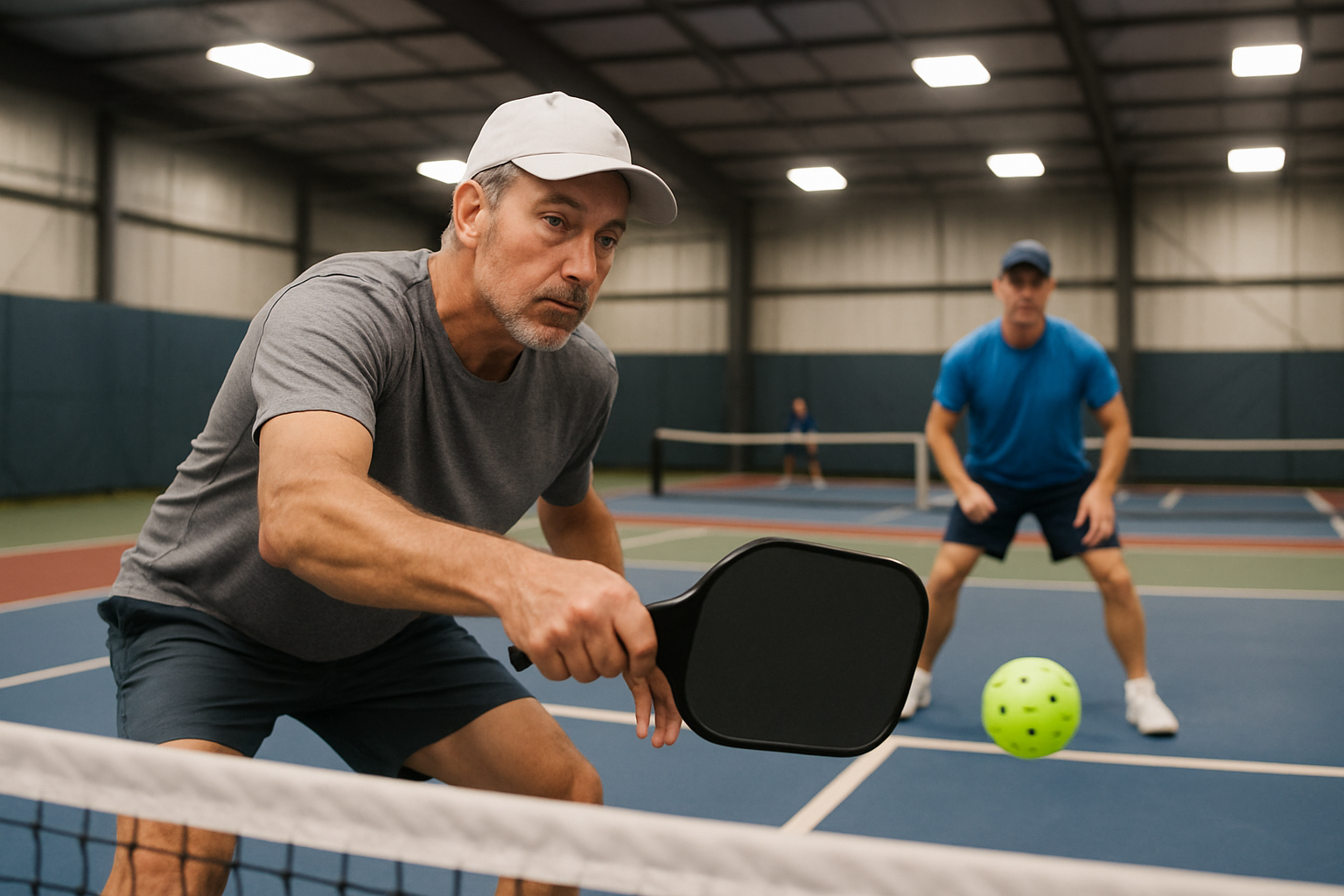
Shot Selection: Where to Hit and Why in Doubles Strategy
Even the best positioning falls apart if your shot selection is poor. In doubles, the following shot patterns give you the highest probability of winning points.
| Shot | Best Situation | Risk Level |
|---|---|---|
| Dink to the opponent’s backhand | Opponents at the kitchen | Low |
| Drive at the feet | Opponent mid-court transition | Medium |
| Third-shot drop | Your team at baseline after serve | Low-Medium |
| ATP (around the post) | Wide ball near sideline | High |
| Lob over backhand side | Opponents leaning forward at net | Medium-High |
| Speed-up to the shoulder | Breaking a long dink rally | Medium |
The Speed-Up and Reset Pattern
One of the most effective sequences in doubles involves speeding up a dink to your opponent’s shoulder or hip. Then reset if they defend it back softly. The speed-up creates a fast exchange where errors are likely. If your opponent manages a clean reset, do not panic. Drop your shot back into the kitchen and restart the dink rally. Patience is a weapon.
Targeting the Middle
The middle of the court is your friend in doubles. Shots aimed between the two opponents create communication breakdown, especially on teams that have not practiced together. A ball straight down the center forces a decision. When that decision is not made quickly, the ball drops untouched.
Make it a habit to hit at least one third of your dinks and drives toward the center. You will be surprised how many free points you accumulate simply by forcing the “yours or mine” moment.
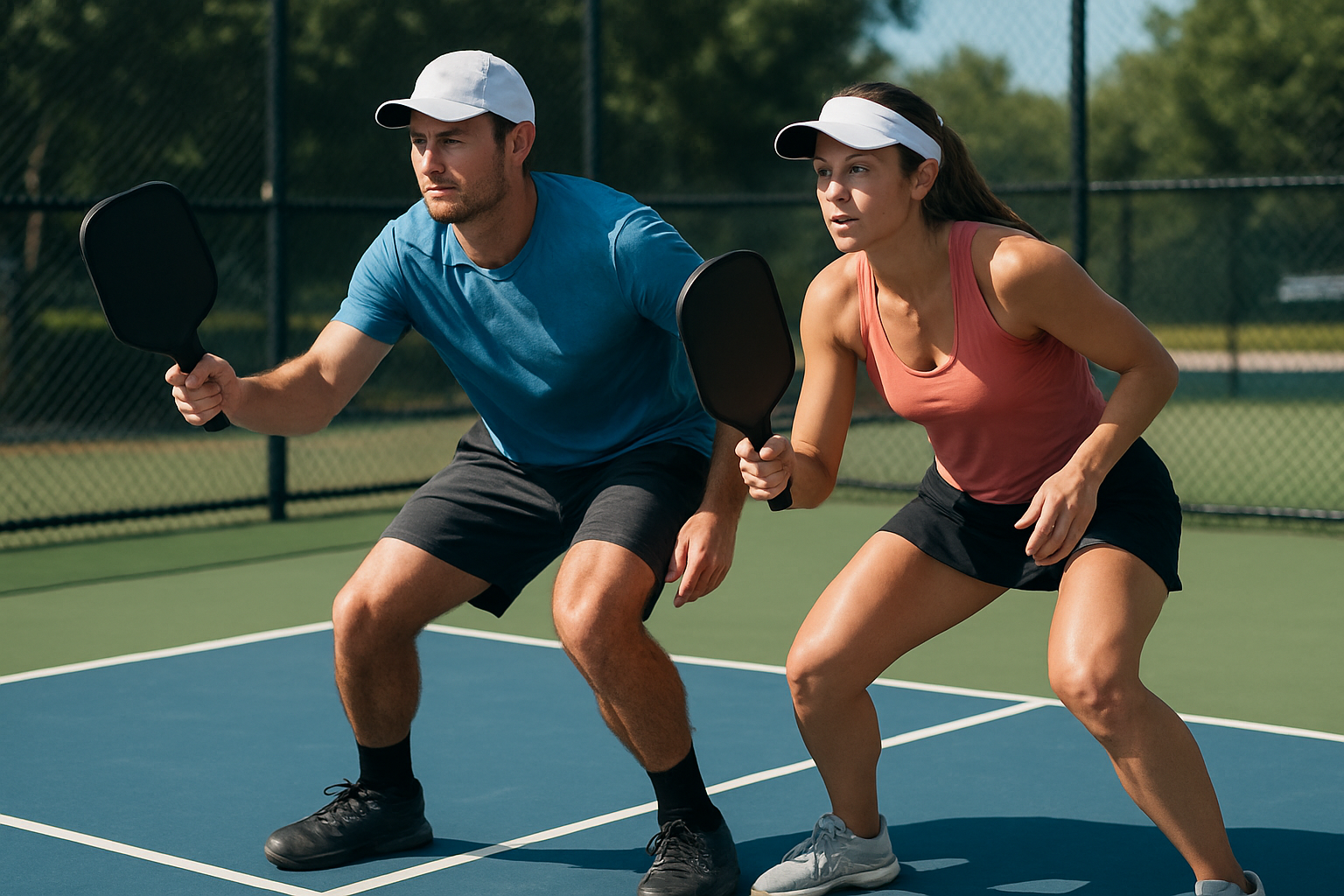
Movement and Communication Between Partners in Doubles Strategy
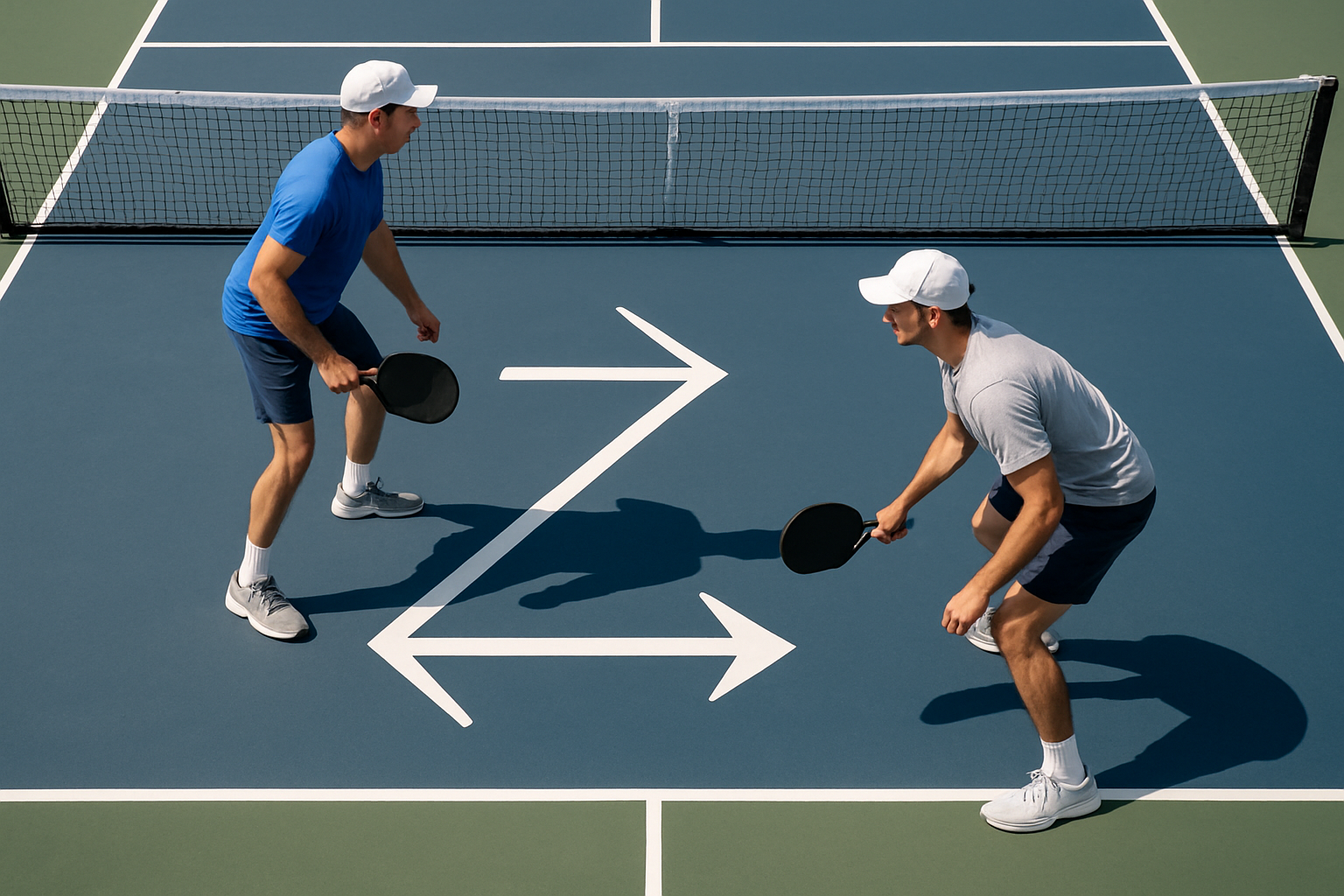
Doubles pickleball is a team sport, and movement coordination is as important as individual skill. You and your partner should move as if connected by a rope roughly 10 to 12 feet long. When one player shifts left, the other shifts left. When one player moves back to chase a lob, the other should recognize that and adjust their position accordingly.
Defending the lob effectively is one area where coordination breaks down for many teams. In addition, learning strategies covered in pickleball lob defense can help you avoid collisions. This prevents the dreaded situation where both players freeze. When an opponent floats a ball deep over your heads, clear verbal calls like “mine, switch” help ensure one player takes it cleanly.
Communication Habits That Separate Good Teams from Great Teams
- Call “mine” or “yours” loudly on every ball that could be taken by either player.
- Before each serve, briefly discuss whether you plan to stack, drive, or drop on the third shot.
- Between points, give one piece of constructive feedback or reinforcement to your partner. Keep it short.
- Use hand signals behind your back during your partner’s serve to indicate whether you plan to poach on the return.
Consistent communication reduces mental fatigue. When both players know the plan, neither has to waste energy making split-second decisions that could have been pre-decided.
Things to Know
- The return of serve is undervalued. A deep, aggressive return pushed toward the opponent’s backhand corner pins the serving team at the baseline. This gives your team time to settle at the kitchen. Treat it as an offensive shot.
- Dink rallies are not passive. The goal during a dink exchange is to maneuver your opponent out of position until they are forced to hit up. This gives you an attackable ball.
- Your paddle position matters even when you are not hitting. Keep your paddle up and in front of you between shots. Dropping it to your side costs you precious milliseconds on fast exchanges at the net.
- Poaching requires a clear signal. Poaching only works when your partner knows it is coming. Use a hand signal or agree on a trigger (such as any ball to the middle) before the point starts.
- Physical conditioning plays a role. Doubles matches can involve quick lateral bursts, sudden changes of direction, and repetitive shoulder rotations. For example, following guidelines in pickleball injury prevention offers practical tips for protecting your joints and muscles before problems start.
- Overuse of the lob is a tell. Lobbing too often trains opponents to expect it. They will start sitting back further, effectively reducing the pressure your net game creates.
Frequently Asked Questions
Q: What is the most common positioning mistake in doubles pickleball?
The most common mistake is staying in no-man’s land, the mid-court area, instead of committing to either the kitchen line or the baseline.
Players often stop halfway through their transition to the net after a third-shot drop. They leave themselves vulnerable to drives at their feet and short balls they cannot reach. Therefore, commit fully to moving forward after your transition shot lands.
Q: How do you handle a strong banger in doubles?
Reset their drives softly into the kitchen rather than trading pace, which forces them to deal with a low, unattackable ball.
Bangers rely on you matching their power, which creates unforced errors. A controlled, angled reset turns their strength into a liability. It does this by neutralizing pace and drawing them into a dinking game where patience, not power, decides the rally.
Q: Should both players always move to the kitchen line together?
Yes, moving together as a unit is the standard tactic, though one player may need to hold back briefly if the transition shot is weak.
If your third-shot drop pops up high, your partner should hold position or back up slightly rather than charging forward into an unfavorable volley. Read the quality of your own shot before committing to movement.
Q: When should you speed up a dink instead of continuing the rally?
Speed up when you get a ball above net height and your opponent is leaning or out of position.
Hitting a speed-up from below the tape is a low-percentage play. Wait for the ball to float above the net, ideally at shoulder height or higher. Then direct it sharply toward your opponent’s hip or non-paddle shoulder. Timing and placement matter far more than raw power here.
Q: How do beginners build effective doubles positioning habits?
Start by drilling the “move to the kitchen together” habit on every single point until it becomes automatic, then layer in third-shot drops and communication.
Beginners often focus on individual shot mechanics before learning positioning, which limits their development as a doubles player. Shadow drills, where you and your partner practice movement patterns without hitting, build the spatial awareness that underlies every advanced tactic.
The Bottom Line on Pickleball Doubles Strategy
Winning consistently in doubles is not about hitting harder or moving faster than everyone else. It is about making fewer positional errors, communicating more clearly, and applying the right shot in the right situation more often than your opponents. The principles of pickleball doubles strategy covered here—kitchen line control, the third-shot drop, stacking, shot selection, and coordinated movement—are the building blocks of every effective doubles team regardless of skill level.
Your next step is to pick one concept from this article and focus on it exclusively for your next three sessions. Whether that is perfecting the third-shot drop, committing to verbal calls on every ball, or running a simple stacking drill with your partner, deliberate practice on one element at a time compounds quickly into a well-rounded doubles game.