How to Run a Pickleball Tournament: Formats, Scheduling, and Setup
Organizing a successful event requires learning how to run a pickleball tournament with careful attention to planning. You need to focus on four core areas: format selection, venue preparation, player registration, and day-of logistics. Get these right, and you will host an event that players want to return to every season.
Key Takeaways
- Choose your tournament format early, since it affects bracket size, court count, and total playing time.
- Secure your venue at least 60 days in advance and confirm the number of usable courts before finalizing registration limits.
- Use dedicated tournament management software to handle draws, scoring, and communication in one place.
- Collect entry fees, waivers, and skill ratings during registration to avoid delays on event day.
- Have at least one certified referee or experienced rules official on-site to resolve disputes fairly.
- Build buffer time into your schedule; matches almost always run longer than estimated.
Choosing the Right Format for Your Pickleball Tournament
The format you pick shapes everything else about your event. Therefore, understanding your options is essential. The three most common formats for pickleball tournaments are single elimination, double elimination, and round robin.
Single elimination is straightforward: one loss and you are out. It runs fast and easy to schedule, which makes it popular for large draws. However, players who travel hours to compete may only get one or two matches before heading home.
Double elimination gives every player a second chance. Losers drop into a consolation bracket and can still fight their way to the final. Additionally, this format is generally considered fairer. Yet it requires more court time and careful scheduling to avoid bottlenecks in the late rounds.
Round robin has each player or team face every other competitor in the pool. It guarantees more matches per participant. In turn, this improves the experience for recreational players. The drawback is that it scales poorly for large draws unless you split entrants into multiple pools before a knockout stage.
For most local and regional events, a combination works best: pool play in the morning using round robin, then single or double elimination in the afternoon based on pool standings. This approach keeps players engaged throughout the day while keeping the schedule manageable.
Securing Your Venue and Preparing Courts for Your Pickleball Tournament
Your venue determines your registration cap. Therefore, confirm court availability before you open sign-ups. A minimum of four courts is typical for a small local event; larger regional tournaments may need 10 or more.
When scouting a site, check these critical factors:
- Surface condition: Cracks, uneven patches, or slippery sections are safety hazards and can affect court legality.
- Court dimensions and markings: Regulation pickleball courts are 20 feet wide by 44 feet long. If you are setting up temporary lines on a multi-use surface, review how to paint a pickleball court to ensure your markings are accurate before match day.
- Net height: Nets must be 36 inches at the sidelines and 34 inches at the center. Bring a measuring tape and extra nets as backup.
- Lighting and shade: Outdoor venues need adequate lighting for late-afternoon matches. Indoor gyms need overhead lighting that does not create glare.
- Parking and restrooms: Players will not return to an event that made them walk half a mile from their car or wait in line for a single restroom.
Also confirm your facility’s policy on food vendors, spectators, and noise. Some parks have noise ordinances that could cut your event short if music or loud PA systems are involved.
Setting Up Registration and Skill Categories for Your Pickleball Tournament
A well-organized registration process saves you hours of headaches on tournament day. Use an online platform like Pickleball Brackets or Tournament.App so players can register, pay, and submit skill ratings without emailing you individually.
Skill divisions are usually based on the USA Pickleball rating system, which runs from 2.0 (beginner) to 5.5+ (elite competitive). Common divisions at local tournaments include 3.0, 3.5, 4.0, and 4.5+. Be precise about cutoffs in your registration form. Mismatched skill levels frustrate players and create lopsided draws.
Other registration essentials include:
- Entry fees: Set a fee that covers your costs including court rentals, balls, medals, and software fees. Many local tournaments charge between $25 and $60 per player depending on the number of events entered.
- Liability waivers: Require every participant to sign a waiver before competing. Most platforms let you embed this directly in the registration form.
- Age divisions: Senior divisions (50+, 60+, 70+) are increasingly popular and can meaningfully grow your draw.
- Event limits: Decide whether players can enter multiple events (singles, doubles, mixed doubles) and cap accordingly to manage your schedule.
If this is your first tournament and you want to understand the broader recreational landscape, reviewing what is open play in pickleball can help you see how casual formats differ from structured competition. This often surprises first-time organizers.
Scheduling Matches and Managing Day-of Logistics for Your Pickleball Tournament
Once registration closes, build your schedule using your management software. Input all draws, then run a time estimate. As a general rule, each pickleball match takes between 20 and 40 minutes depending on format (best of 3, games to 11, etc.). Add at least a 10-minute buffer between rounds to account for late arrivals and court changeovers.
Assign a volunteer or staff member to each court as a scorekeeper and timekeeper. Brief them before the event starts. Post the day’s schedule visibly at the venue. Furthermore, use group text or email blasts to notify players of upcoming matches at least 20 minutes in advance.
Have a clear protocol for disputes. Players will disagree on line calls, foot faults, and kitchen violations. Anyone running a tournament should have at least working knowledge of what are the kitchen rules in pickleball, since the non-volley zone generates more arguments than any other part of the game. A printed rulebook or official reference card at each court helps resolve most conflicts quickly.
Additional day-of checklist items:
- Extra balls (at least two per court in the assigned color and type)
- First aid kit and contact number for the nearest urgent care
- PA system or megaphone for calling courts
- Awards or medals ready before the final rounds begin
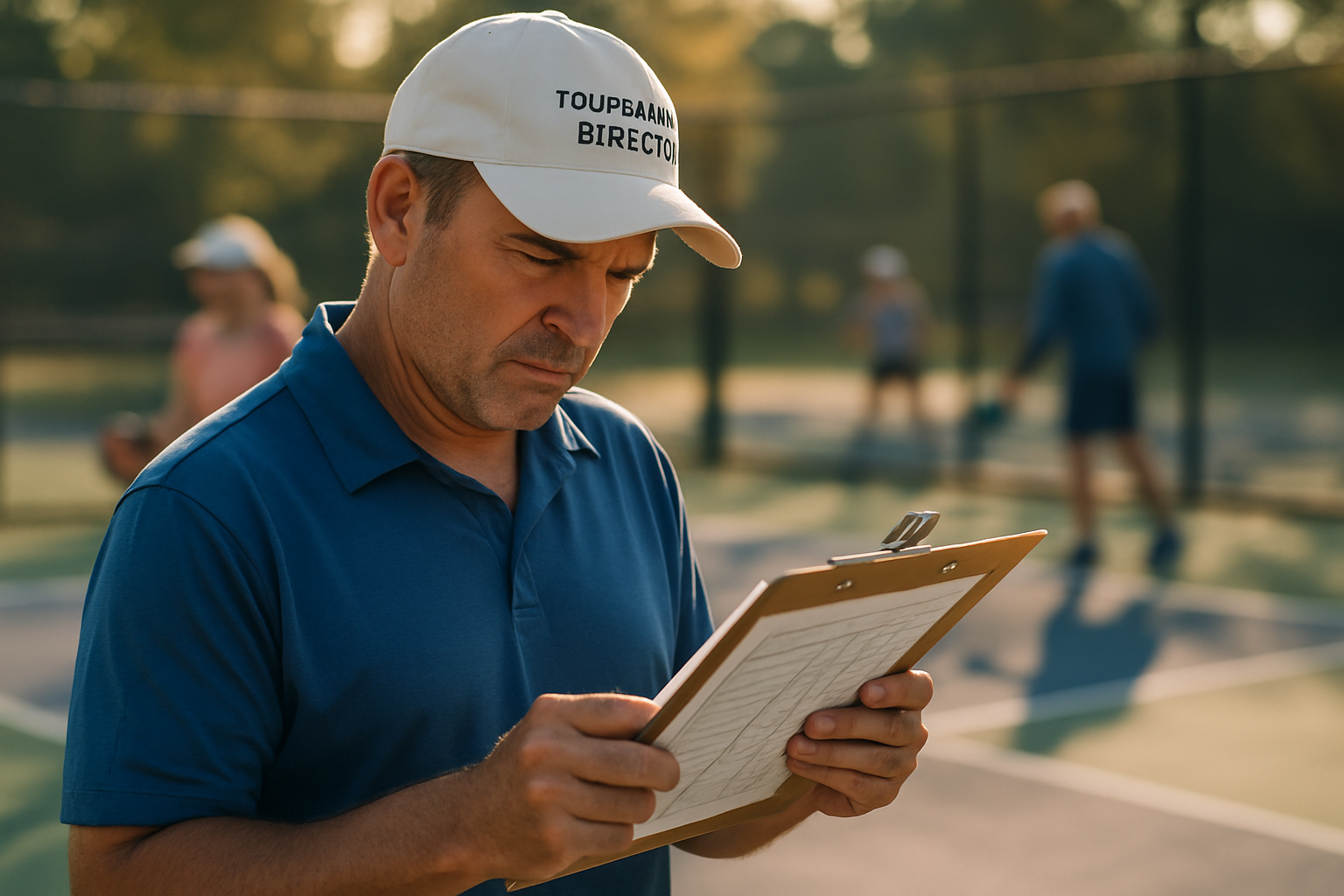
- A designated tournament director who is reachable at all times
Things to Know
- USA Pickleball offers a sanctioned tournament program that provides insurance, rating updates, and official recognition. Sanctioning adds credibility but also comes with rulebook compliance requirements.
- Weather contingency plans are essential for outdoor events. Have a rain delay policy written out and communicated before tournament day.
- Players expect clear communication. Sending a detailed day-of-event email 48 hours before the tournament dramatically reduces the number of questions you will field on-site.
- Medals and trophies matter more than many organizers expect. Even recreational players at low-level tournaments appreciate tangible recognition for their effort.
- Volunteer recruitment is often the hardest part of running a pickleball tournament. Reach out to your local pickleball club at least three weeks out and specify exactly what roles you need to fill.
Frequently Asked Questions
Q: How many courts do I need for a pickleball tournament with 64 players?
A minimum of six to eight courts is recommended for 64 players competing in a single-day event.
With fewer courts, wait times between matches become excessive and your schedule will run over. If you have only four courts available, cap registration at 32 players or plan a two-day format.
Q: Do I need a USA Pickleball sanctioning to run a tournament?
No, sanctioning is optional, but it provides liability insurance, official ratings processing, and a structured rulebook.
Unsanctioned events are perfectly legal and common at the local level. They give you more flexibility on format and rules, which can be useful for recreational or charity events.
Q: What software is best for managing pickleball tournament brackets?
Pickleball Brackets and Tournament.App are the two most widely used platforms in the United States.
Both handle registration, draws, scoring, and schedule publishing. Pickleball Brackets is free for basic use; Tournament.App charges a small fee per player but offers more communication features.
Q: How much should I charge for entry fees?
Entry fees typically range from $25 to $60 per player per event, depending on prizes, location, and number of matches guaranteed.
Factor in all your fixed costs first, then set a fee that keeps the event financially sustainable. Charity tournaments often charge a premium with donors making up the difference.
Q: How far in advance should I start planning a pickleball tournament?
For a small local event, 60 to 90 days of lead time is the practical minimum.
Regional or multi-day events need at least four to six months to secure a venue, recruit volunteers, build marketing, and fill the draw. Starting earlier than you think necessary almost always pays off.
The Bottom Line on How to Run a Pickleball Tournament
Learning how to run a pickleball tournament comes down to making decisions early and communicating them clearly. Pick your format before you open registration. Confirm your venue before you set your player cap. Build your schedule with realistic time buffers. Players will forgive a minor hiccup; they will not forgive a disorganized day that wastes their weekend.
Your first event will reveal what to improve for the second one. Start with a manageable draw size, gather feedback from players and volunteers after the event, and refine from there. The pickleball community in the U.S. is growing fast, and well-run local tournaments are a key reason players stay engaged with the sport long-term.