Pickleball Paddle Grip Size: How to Measure, Choose, and Customize for Your Game
Getting your pickleball paddle grip size right is one of the most overlooked factors in improving your game and protecting your body. The correct grip circumference reduces strain on your elbow and wrist. It also improves shot control and lets you change grips quickly during fast exchanges at the kitchen line.
Most adult players fall somewhere between 4.0 inches and 4.5 inches in grip circumference. The 4.25-inch size is the most common fit across a wide range of hand sizes. Whether you are a beginner picking up your first paddle or an experienced player chasing better performance, understanding how grip size works will save you from unnecessary discomfort and help you play with more confidence.
Why Pickleball Paddle Grip Size Affects More Than Just Comfort
Grip size is not just about how the paddle feels in your hand. It directly influences your mechanics, your risk of injury, and even your ability to generate spin. Choosing the wrong size, even by just an eighth of an inch, creates problems that compound over time.
A grip that is too small forces you to squeeze the paddle harder than necessary. That extra tension travels up your forearm and contributes to conditions like tennis elbow and wrist pain. Conversely, a grip that is too large restricts your wrist mobility. It also reduces your ability to generate spin and makes quick grip changes feel awkward during fast net exchanges.
Think about what happens when you execute a soft whats a dink in pickleball at the kitchen. That shot relies heavily on wrist stability and touch. A grip that does not fit properly makes that precision much harder to achieve consistently.
The difference between grip sizes is subtle, but the effect on your game is significant. Players who compete regularly report that dialing in their grip size was one of the single most impactful adjustments they made. Often, it proved more impactful than switching to a more expensive paddle.
The Standard Pickleball Paddle Grip Size Range
Pickleball paddles typically come in grip sizes ranging from 4.0 inches to 4.5 inches. They are sold in increments of one-eighth of an inch. The most common sizes you will see on the market are:
| Grip Size | Best Fit |
|---|---|
| 4.0″ | Players with small hands or youth players |
| 4.125″ | Small to medium hands, players prioritizing wrist action |
| 4.25″ | Most common; medium hands, balanced control and stability |
| 4.375″ | Medium to large hands, moderate power preference |
| 4.5″ | Large hands, power-focused players |
Most manufacturers ship their paddles in the 4.0 to 4.25 inch range. That is where the majority of adult players are most comfortable. The 4.25-inch size stands out as the sweet spot for most people. It balances control with enough stability to handle power shots without the paddle twisting in your hand.
If you have small hands, a grip between 4.0 and 4.125 inches typically gives you the most wrist freedom. This size works best for touch shots. If you lean toward a power-first game and have larger hands, sizing up toward 4.375 or 4.5 may feel more natural. It reduces the amount of work your forearm has to do on hard drives.
How to Measure Your Pickleball Paddle Grip Size at Home
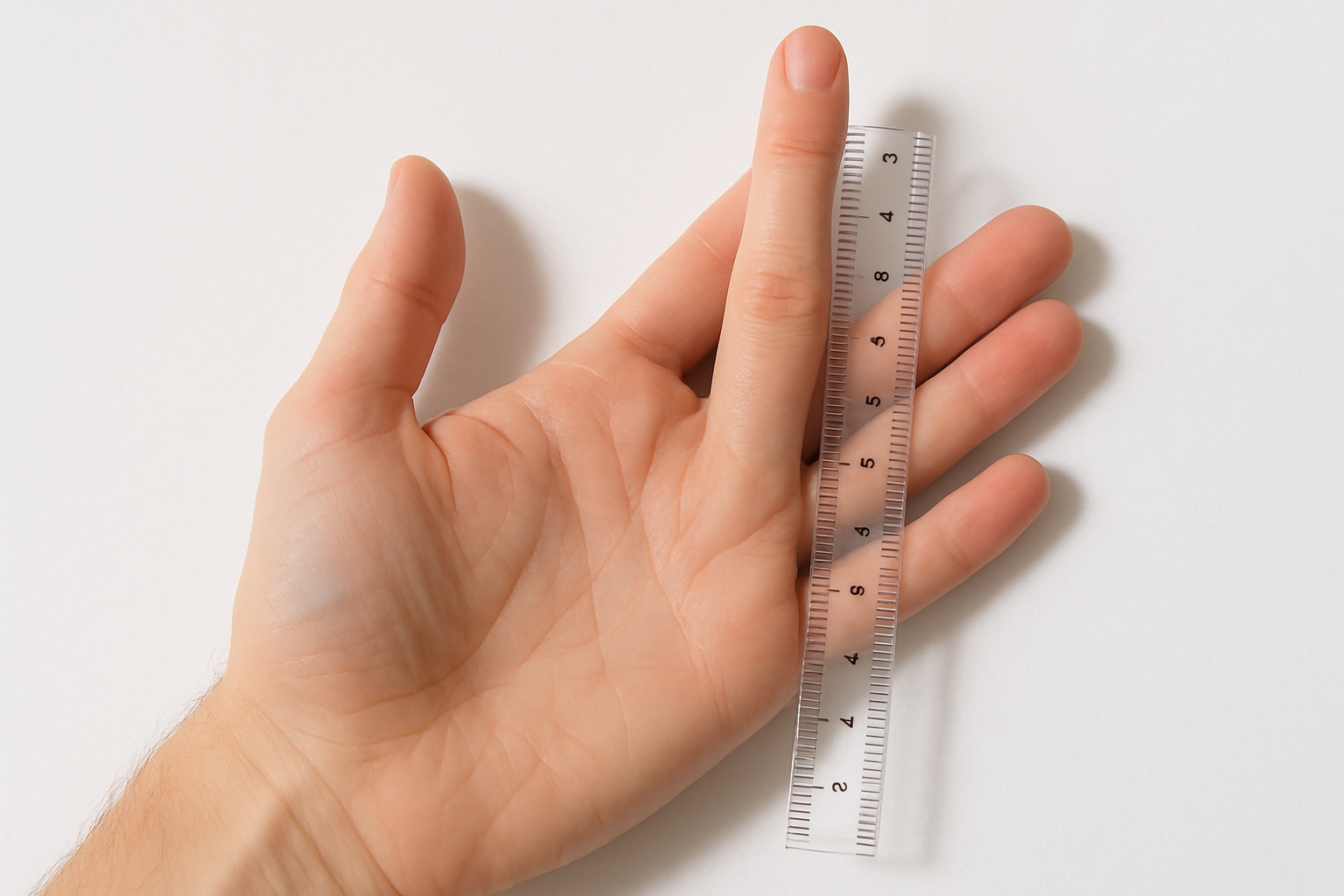
The most reliable method for determining your correct grip size is called the ruler test. It is straightforward and requires no special tools. Moreover, it takes less than a minute.
Here is how to do it:
- Open your dominant hand flat with your fingers together and extended.
- Align a ruler along the middle crease of your palm. This is the horizontal line just below your fingers.
- Measure from that crease to the tip of your ring finger.
- That measurement in inches is your recommended grip size.
Most adults land between 4.0 and 4.5 inches using this method. If your measurement puts you exactly between two sizes, always choose the smaller size. You can always build up a smaller grip using overgrip tape. However, you cannot shrink a grip that is already too large.
Overgrips are a practical and inexpensive solution for fine-tuning your fit. Each layer of standard overgrip tape typically adds about one-sixteenth of an inch to your grip circumference. That might not sound like much. However, for many players it makes a noticeable difference in how secure the paddle feels in their hand without sacrificing wrist mobility.
How Playing Style Should Influence Your Pickleball Paddle Grip Size Choice
Your grip size preference is not purely about your hand dimensions. Your playing style plays a significant role in what feels right during a match.
Power hitters tend to prefer a slightly larger grip. This preference provides more stability on aggressive swings and reduces the risk of the paddle rotating on impact. When you are driving the ball hard from the baseline, a firmer grip purchase helps keep your shots on target.
Control-oriented players and those who rely heavily on spin tend to prefer smaller grips. A smaller grip allows more wrist articulation. This translates directly into your ability to impart topspin, slice, and apply precise touch on drop shots.
Additionally, consider this if you are the type of player who likes to change grip styles mid-point. Switching from a continental to an eastern grip quickly is much easier with a smaller handle. Players who struggle with this during fast kitchen battles often find that downsizing their grip by one increment resolves the issue.
It is also worth considering what the paddle you are using is already doing for you. If you are debating whether your current paddle is actually helping your game, articles that cover whats the most overrated pickleball paddle can help you separate marketing claims from real performance data.
Building Up or Replacing Your Pickleball Paddle Grip Size
One of the most practical aspects of grip sizing is that you have options even after you have already purchased a paddle. You are not permanently locked into the grip that shipped with it.
The two main approaches are overgrips and replacement grips.
Overgrips are thin tape-like wraps that go over your existing grip. They are inexpensive, typically $2 to $5 each. Additionally, they are the quickest way to add slight thickness, absorb sweat, or refresh the feel of an older grip. Each overgrip adds roughly one-sixteenth of an inch to your circumference.
Replacement grips are thicker and go directly on the handle after you have removed the original grip. These add more substantial size, typically one-eighth of an inch or more. They also change the overall feel of the handle surface. They cost anywhere from $8 to $20 and work well if you want a more significant change. They also suit situations where the factory grip has worn down.
A few practical tips for grip customization:
- Always start with the smaller paddle size if you are between sizes, since adding thickness is easy but removing it is not.
- Replace overgrips every four to six weeks if you play two or more times per week.
- Sweaty hands benefit from tacky or cushioned overgrips that improve traction without adding excessive bulk.
- If you play outdoors regularly, UV and heat exposure will degrade grip materials faster than indoor play.
Common Mistakes Players Make With Pickleball Paddle Grip Size
Even players who have been on the court for years make grip-related mistakes. Here are the most common ones to watch for:
- Assuming that your tennis grip size translates directly to pickleball. The grips are measured the same way. However, pickleball paddles generally run smaller than tennis rackets.
- Ignoring grip size when upgrading paddles. Many players focus entirely on paddle weight and face material and then wonder why the new paddle does not feel right.
- Over-wrapping to compensate for poor technique. If you are squeezing the paddle too hard because of anxiety or poor footwork, adding more grip thickness will not fix the root problem.
- Letting a worn-out grip slide. A slippery grip that has lost its texture leads to overgripping. This tightens your forearm and raises your injury risk significantly.
If you have ever found yourself gripping the paddle too tightly during competitive moments, that tension might also show up in other behavioral patterns on the court. Furthermore, understanding what kinds of whats the most annoying habit in pickleball the behaviors killing the vibe on every court looks like can give you a better picture of how physical discomfort and poor equipment choices affect your overall court presence.
Things to Know
- Grip size is measured as the circumference of the handle, not its diameter, so even small changes in number feel significant in your hand.
- If you measure between two sizes, always go smaller. You can always add an overgrip layer, but you cannot remove built-in thickness.
- Most pickleball paddles ship in the 4.0 to 4.25 inch range because that covers the majority of adult hand sizes.
- Overgrip tape typically adds one-sixteenth of an inch per layer, so two layers brings you up about one-eighth of an inch.
- Heat, sweat, and frequent use degrade grip materials faster than most players realize. Replace overgrips regularly.
- Your grip preference may shift as your playing style evolves. Beginners often start with larger grips for stability, then move smaller as their touch improves.
Frequently Asked Questions
Q: How do I know if my pickleball paddle grip size is too small?
If your hand cramps up quickly, you find yourself squeezing the paddle tightly, or you notice forearm fatigue during longer sessions, your grip may be too small. A smaller grip requires more muscular effort to hold securely. This creates tension up your arm over time. Try wrapping the grip with one or two overgrip layers and see if the discomfort decreases.
Q: Can I use my tennis grip size for pickleball?
Your measurement method is the same. However, pickleball paddles generally run smaller than tennis rackets, so your sizes may not match exactly. Use the ruler test specifically for your pickleball paddle selection rather than assuming your tennis size carries over. Pickleball grip sizes top out at 4.5 inches, which is smaller than most standard tennis racket grips.
Q: Does grip size affect how much spin I can generate?
Yes, smaller grips allow more wrist movement. This directly improves your ability to apply topspin, slice, and create paddle-angle variation on contact. Players who rely on heavy spin often find that dropping down one grip size gives them noticeably more wrist freedom. The trade-off is slightly less stability on power shots.
Q: How often should I replace my pickleball grip?
Replace overgrips every four to six weeks if you play two or more times per week. Replace them sooner if you notice slipping or fraying. A degraded grip leads to overgripping, which strains your forearm and can contribute to repetitive stress injuries. Replacement grips under the overgrip can last significantly longer, often six months to a year depending on usage.
Q: Is 4.25 inches the right pickleball paddle grip size for everyone?
Not for everyone. However, 4.25 inches is the most widely used grip size because it suits a broad range of adult hand sizes. It offers a balanced mix of control and stability. Players with smaller hands often prefer 4.0 or 4.125 inches for more wrist freedom. Meanwhile, players with larger hands or a power-first approach may find 4.375 or 4.5 inches more comfortable.
The Bottom Line on Pickleball Paddle Grip Size
Pickleball paddle grip size is a small detail with a large impact on your health, comfort, and performance. Choosing the right circumference for your hand makes a real difference. Measuring carefully and customizing with overgrips as needed puts you in a much stronger position to play consistently without injury. The ruler test takes under a minute and gives you a reliable starting point. Additionally, remembering to size down when in doubt keeps your options open.
Start by measuring your dominant hand. Compare that number to your current paddle’s grip size. Consider whether discomfort or fatigue during play might be pointing toward a sizing issue. Even a one-eighth inch adjustment can noticeably change how the paddle feels after a two-hour session.