What’s Your Most Unpopular Pickleball Opinion?
- The most genuinely unpopular pickleball opinions tend to cluster around three things: power paddles ruining the soft game, self-rating dishonesty being far more widespread than anyone admits, and singles being a better test of skill than the doubles format that dominates the sport.
- Pickleball is not losing popularity, US participation hit 24.3 million players in 2025, up 22.8% from the year before, even as facility closures and noise disputes make headlines.
- Pickleball’s slang vocabulary, “kitchen,” “dink,” “banger,” “Erne,” “nasty Nelson”, is part of what makes an unpopular opinion fun to argue about; half the debate is just disagreeing on what the terms even mean.
- The 5 P’s of pickleball, Patience, Placement, Positioning, Poaching, and Power, are a useful enough framework that “power should be ranked higher” is itself a popular unpopular opinion among power-style players.
- A 70-year-old’s daily activity target is roughly 30 minutes of moderate movement most days, and pickleball, played two to three times a week, comfortably covers that recommendation while adding the balance and strength training seniors specifically need.
What’s Your Most Unpopular Pickleball Opinion?
Ask around any club and the same handful of genuinely contrarian takes keep surfacing. The most common: power paddles have made the sport worse, not better, by rewarding raw spin and pace over the touch and patience that used to separate good players from great ones. It’s unpopular specifically because most players have personally benefited from the equipment upgrade and don’t love hearing it framed as a loss for the sport.
A close second: most self-rated players are lying to themselves, not the system. The widespread assumption is that sandbagging is intentional cheating, but the more honest, less popular take is that most rating inflation and deflation comes from genuine poor self-assessment rather than deliberate manipulation, which makes the fix education, not enforcement. A third common hot take, singles is the better, more honest test of skill, tends to draw pushback simply because doubles dominates the sport’s culture and most players have never seriously tried the alternative.
Is Pickleball Losing Its Popularity?
No, and this is one area where the data settles the debate cleanly. The Sports & Fitness Industry Association’s 2026 participation report put US players at 24.3 million in 2025, a 22.8% increase over 2024 and 171.8% growth over three years, keeping pickleball the fastest-growing sport in the country for multiple consecutive years.
The “declining popularity” narrative mostly traces back to a separate, real story: a wave of indoor facility closures tied to overbuilt, overpriced business models from the height of the boom. Those closures are a real estate and pricing problem, not a participation problem, the actual number of people picking up a paddle kept climbing through the exact same period several of those facilities shut down.
What Are the Catchy, Funny Pickleball Terms?
Pickleball’s vocabulary is part of why the sport stays fun to argue about. The kitchen is the non-volley zone near the net, dinking is the soft, controlled shot played there, and a banger is a player who relies almost entirely on hard drives over finesse, usually said with a mix of respect and gentle mockery.
The Erne is a flashy move where a player jumps around the kitchen entirely to volley a ball without technically entering the zone, while a nasty Nelson is a serve aimed directly at the receiver’s body to create confusion about who should return it. ATP, “around the post,” describes sending the ball around the outside of the net post rather than over it, one of the most crowd-pleasing shots in the sport whenever it actually lands.
What Are the 5 P’s of Pickleball?
The most commonly taught version is Patience, Placement, Positioning, Poaching, and Power, used as a strategy framework where power is deliberately ranked last as the least important of the five. That ranking itself is exactly where the unpopular-opinion debate lives, plenty of power-style players genuinely believe Power deserves a much higher spot on the list than traditional coaching gives it credit for, especially at the recreational level where opponents often can’t handle pace yet.
Patience and Placement get the most consistent praise across coaching philosophies, since building a rally and hitting away from an opponent wins far more points than raw force ever does. Positioning, working toward the kitchen line quickly, and Poaching, intercepting a partner’s shot when better positioned, round out the framework as more advanced, situational skills.
Is Pickleball Good for Osteoporosis?
Generally yes. Pickleball is a low-impact, weight-bearing activity, and weight-bearing exercise specifically supports bone density in a way many lower-impact activities don’t, which is part of why physical therapists frequently recommend it for people managing or preventing osteoporosis. It also strengthens the muscles around the hips and knees that directly support the balance needed to prevent falls in the first place.
The real caveat, consistent across nearly every clinical source, is that a fall causing only minor bruising for someone with healthy bone density can cause a serious fracture for someone with osteoporosis. The responsible approach is medical clearance first, supportive non-slip footwear, and avoiding aggressive lunges for wide shots, rather than avoiding the sport entirely.
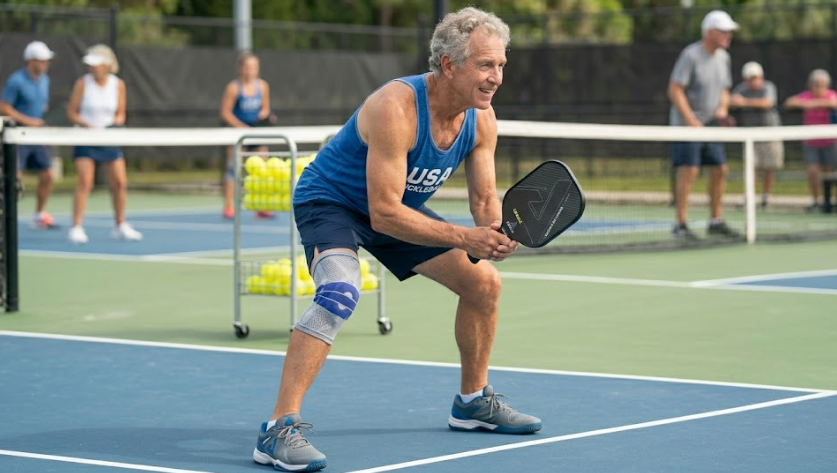
What Should a 70-Year-Old Be Doing Every Day?
Standard health guidelines, from the NHS, WHO, and major US health systems, consistently recommend roughly 30 minutes of moderate-intensity activity most days of the week, totaling about 150 minutes weekly, alongside regular balance work and muscle-strengthening exercise at least twice a week. The emphasis for this age group isn’t intensity, it’s consistency and a mix of aerobic movement, strength, and balance training specifically aimed at preserving independence.
Pickleball fits this recommendation unusually well in a single activity. A single hour-long session covers a meaningful chunk of the weekly aerobic target while simultaneously delivering the balance and lower-body strength work that’s normally a separate, harder-to-maintain habit, which is part of why health experts increasingly point to it as one of the more efficient activities available to people in their 70s.
Common Mistakes and Misconceptions
- Treating an unpopular opinion as an attack rather than a discussion starter. Most genuinely useful hot takes, power paddle critiques, rating honesty, singles versus doubles, are meant to spark debate, not declare a verdict.
- Assuming pickleball’s popularity is fading because of headline-grabbing facility closures. Participation numbers and business closures are two separate stories that get conflated constantly.
- Citing the 5 P’s as a fixed, unchangeable hierarchy. Coaches genuinely disagree about where Power belongs on the list, and that disagreement is part of what makes it a useful debate framework rather than dogma.
- Assuming a senior with osteoporosis should avoid activity rather than modify it. The clinical consensus consistently favors supervised, modified activity over inactivity for nearly every aging-related condition.
Final Take
The best unpopular pickleball opinions aren’t really about being contrarian for its own sake, they’re about pointing at something the broader community quietly avoids discussing, whether that’s equipment changing the soft game, self-rating honesty, or which format actually tests skill better. The sport’s real growth numbers and senior-friendly health benefits, meanwhile, are settled enough that they’re not really debatable anymore, just underreported next to the louder headlines.
So next time someone asks for your hot take, skip the vague complaint and bring the specific one, that’s the version worth actually arguing about.
Want to back your next hot take with real court time? The drills, strategy guides, and club finders at the Pickleball Archive can help you put theory into practice.
FAQs About Pickleball Opinions and Senior Fitness
Is pickleball losing its popularity?
No, US participation reached 24.3 million players in 2025, a 22.8% increase over 2024, keeping pickleball the fastest-growing sport in the country for multiple consecutive years. The “decline” narrative mostly comes from a separate story about overbuilt indoor facilities closing, not from fewer people wanting to play.
What are the catchy pickleball terms funny enough to know?
The most useful fun terms are “the kitchen” (the non-volley zone), “dinking” (soft controlled shots), “banger” (a power-reliant player), “Erne” (jumping around the kitchen to volley), and “ATP” (hitting the ball around the net post). Knowing them makes both playing and trash-talking significantly easier.
What are the 5 P’s of pickleball?
The most commonly taught version is Patience, Placement, Positioning, Poaching, and Power, with Power deliberately ranked last as the least important for winning points. That exact ranking is also one of the sport’s more popular unpopular-opinion debates, since power-style players often argue it deserves a higher spot.
Is pickleball good for osteoporosis?
Generally yes, since it’s a low-impact, weight-bearing activity that supports bone density and builds the balance-related strength tied to fall prevention. The main caveat is that a fall poses a higher fracture risk for someone with osteoporosis, so medical clearance and supportive footwear matter more here than in most sports.
What should a 70-year-old be doing every day?
Standard guidelines recommend roughly 30 minutes of moderate activity most days, totaling about 150 minutes a week, along with regular balance and strength work. A single pickleball session efficiently covers a meaningful chunk of that target while also delivering the balance training seniors specifically need.