What Is Open Play in Pickleball: How It Works, Who It’s For, and What to Expect
(Character count: 137)
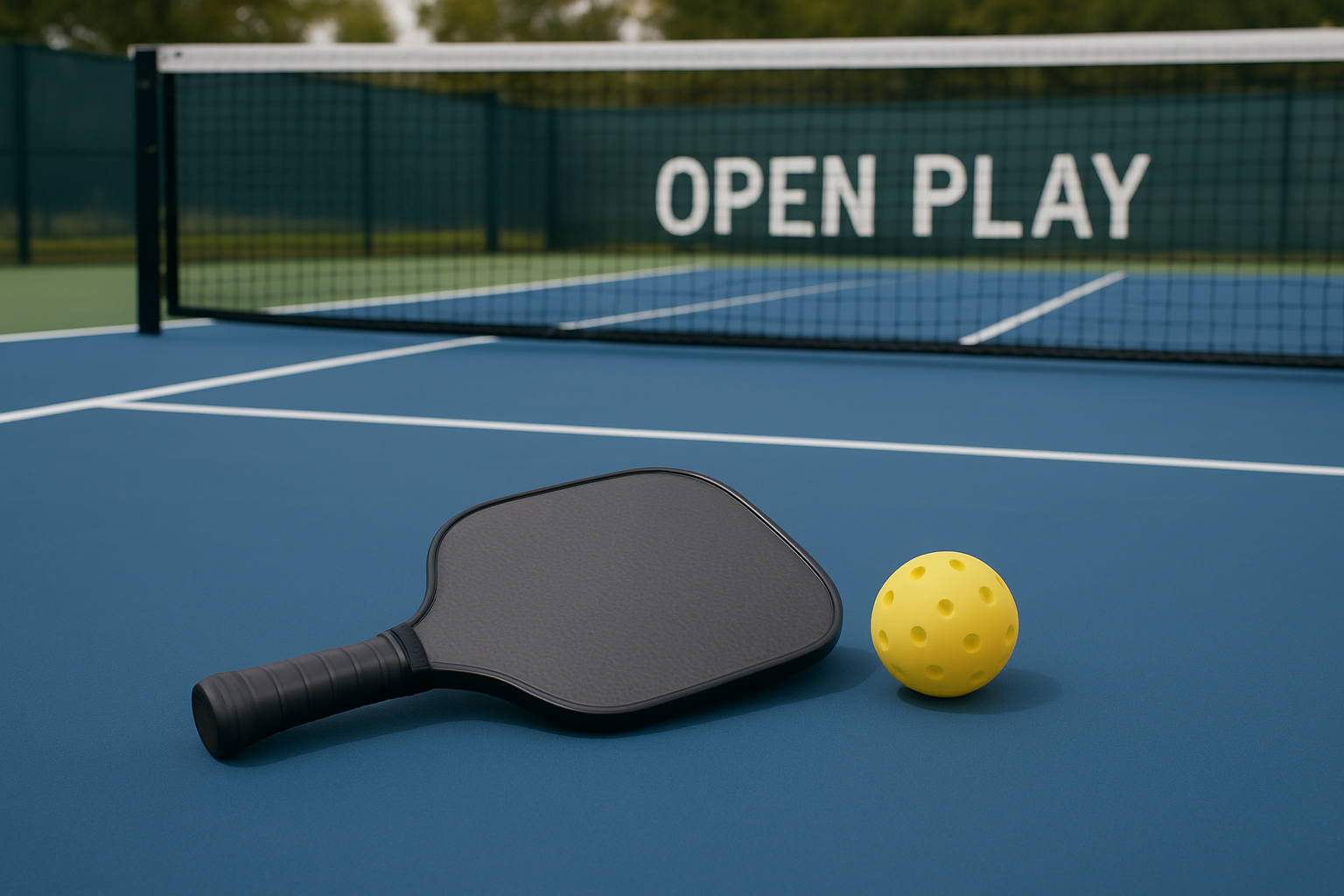
What is open play in pickleball? It’s a drop-in format where players of any skill level show up to a court without a prior reservation and rotate in to play against whoever is available. It’s one of the most accessible ways to get court time, meet other players, and improve your game without committing to a league or a private lesson.
Key Takeaways
- Open play in pickleball is a drop-in format with no registration, no fixed partner, and no set schedule beyond the session window.
- Rotation systems keep games fair and ensure every player gets court time. You need to understand the local rules before you show up.
- Skill mismatches are common at open play, especially at busy community courts. Managing expectations matters.
- Most open play sessions are free or low cost, typically $3 to $10 per person at recreation centers.
- Etiquette and court culture vary by location. Observing before jumping in is always a smart move.
- Open play works best when combined with structured drills or lessons. This leads to real skill progression.
Why Open Play in Pickleball Has Become the Default Entry Point
Pickleball has grown faster than almost any other recreational sport in the United States over the past decade. According to the Sports and Fitness Industry Association, pickleball participation surged past 36 million players in 2023. With that kind of growth, the demand for accessible, low-commitment court time has exploded. Open play in pickleball has filled that gap perfectly.
Unlike tennis or golf, pickleball doesn’t require a booked court. You don’t need a dedicated partner either. Most venues don’t require your own equipment. You show up during a designated time window. Pay a small fee or show your rec center membership card. You’re in.
This low barrier to entry is exactly why open play has become the social backbone of pickleball communities across the country. You’ll find it from YMCA gyms in suburban Ohio to dedicated pickleball clubs in Arizona and Florida.
For new players specifically, open play removes the awkwardness of cold-calling strangers. You just show up and the format does the social work for you.
How the Rotation System Works in Open Play in Pickleball
Understanding the rotation is the most important practical skill you need before attending your first open play session. There is no single universal system. However, most venues use one of three formats.
The Paddle Stack
This is the most common system in casual open play. Players place their paddles in a stack or line near the court entrance. When a game finishes, the four players who have been waiting the longest (based on paddle position) take the court. The winning team typically stays on the court for one more game. The losing team goes to the back of the stack. Some venues have the entire court rotate after each game regardless of outcome.
The Designated Wait Area
Larger venues with multiple courts sometimes use a numbered waiting area or a sign-up board. You write your name on a whiteboard. You can use a posted number system. This works well when 30 or more players are present. Multiple games happen simultaneously.
Round Robin Draws
Some open play sessions, particularly those at dedicated pickleball clubs or on weekend mornings, run a structured round robin. A coordinator assigns partners and opponents in advance for each round. This format guarantees more even matchups. It gives every player a known number of games.
Here is a quick comparison of the three rotation systems:
| System | Best For | Typical Venue | Skill Matching | Wait Time |
|---|---|---|---|---|
| Paddle Stack | Casual drop-in | Rec centers, parks | None | Varies |
| Whiteboard/Number | High-traffic courts | Multi-court clubs | None | Predictable |
| Round Robin | Organized sessions | Dedicated clubs, leagues | Sometimes | Fixed |
Knowing which system a venue uses before you arrive saves you from standing at the sideline confused. Everyone else will know exactly what they’re doing.
The Real Cost of Open Play and Where to Find Sessions Near You
One of the biggest advantages of open play is the cost. Most public recreation centers in the U.S. charge between $3 and $10 per session. Many include equipment rentals. YMCA members in cities like Chicago, Denver, and Charlotte typically get open play access included in their membership at no additional charge.
Private pickleball clubs charge more. Dedicated facilities such as Chicken N Pickle, which operates locations across the Midwest and South, charge between $10 and $20 per person for drop-in sessions. Premium indoor clubs in metro areas like Los Angeles or New York can run $25 or higher per session.
To find open play near you:
- Check your local parks and recreation department website for scheduled pickleball times.
- Use the Places 2 Play app or the USA Pickleball Places2Play directory. It maps thousands of courts across the country.
- Search Facebook groups for your city name plus “pickleball.” Most local communities maintain active groups with weekly schedules posted.
- Ask at a sporting goods store like Dick’s Sporting Goods. These stores often have community bulletin boards with local club information.
Many outdoor municipal courts offer free open play with no organization at all. Players simply show up. They follow informal paddle stack rules. Games happen organically. This is especially common in retirement-heavy communities in Florida, Arizona, and Southern California.
Skill Levels at Open Play in Pickleball: What to Expect and How to Handle Mismatches
This is the part nobody warns you about clearly enough. What is open play in pickleball if not a place where a 2.5-rated beginner might find themselves across the net from a 4.5-rated competitive player? Skill mismatches happen extremely commonly. How you handle them defines your experience.
Skill ratings in pickleball run from 1.0 (complete beginner) to 5.5+ (national-level competitor). The DUPR (Dynamic Universal Pickleball Rating) system has become the most widely adopted rating tool in the U.S. Many players now have verified DUPR scores. They track these scores through the app.
At most open play sessions, especially at community rec centers, you will encounter a wide spread of abilities. A few strategies help manage this reality:
- Communicate openly. If you’re a beginner, tell your opponents. Most experienced players will adjust their game. They use the opportunity to practice placement over power.
- Avoid sandbagging. Playing well below your skill level to dominate beginners is widely considered bad etiquette. This will get you a poor reputation fast in a tight-knit local community.
- Look for skill-specific sessions. Many venues now post dedicated beginner, intermediate, and advanced open play windows. Showing up to the right one makes your experience significantly better.
- Use mismatches as learning opportunities. Playing against stronger opponents is one of the fastest ways to improve your game. Focus on execution rather than outcome.
Some larger clubs have started using the DUPR app at check-in. They sort players into appropriate courts in real time. This has dramatically improved the experience at high-volume venues.
Open Play in Pickleball Etiquette: The Unwritten Rules That Matter
Every open play session runs on a mix of official rules and unwritten community norms. Violating the norms can get you frozen out of a group faster than any rule infraction.
Call your own lines honestly. In recreational open play, there are no referees. Players call the lines on their side of the court. Chronic bad calls are one of the fastest ways to build a negative reputation. When in doubt, call the ball in.
Don’t hog the court. If winning teams stay on indefinitely, the rotation stalls. People waiting 30 minutes never get to play. Most communities have an informal two-game maximum for staying on if there’s a wait.
Keep coaching to yourself unless asked. Nothing frustrates new players more than unsolicited tips after every point. Save the advice for when someone specifically asks for your feedback.
Be ready when it’s your turn. Watching your phone in the waiting area and missing your rotation puts the whole group on hold. Pay attention to when your paddle comes up.
Ball handling matters. Don’t send balls flying across courts mid-game. Wait for play to stop. Make eye contact with the adjacent court. Then roll or toss the ball back calmly.
These norms are remarkably consistent across states. You’ll find them from Massachusetts to Texas to Washington. The culture of pickleball tends to reward friendliness and self-regulation.
Things to Know
- Many beginners show up to open play without knowing the rotation system at that specific venue. They accidentally skip the line. Always ask a coordinator or regular player how the system works. Place your paddle down after you understand.
- Weather cancels outdoor open play with zero notice at most public parks. Always check the venue’s social media page. Call ahead before driving across town.
- Bringing your own ball is considered courteous at most sessions. Balls wear out quickly in high-rotation environments. Dura Fast 40 and Franklin X-40 are the most commonly used outdoor balls in the U.S.
- Open play attendance peaks on weekend mornings. This is typically 8 a.m. to 11 a.m. If you want shorter waits and more games, try weekday afternoons.
- Some venues require you to sign a liability waiver on your first visit. Bring a valid ID just in case.
- Open play alone is not enough to build competitive-level skills. Players who add one structured drilling session or clinic per week alongside open play improve noticeably faster.
Frequently Asked Questions
Q: Do you need to bring your own equipment to open play?
Most open play venues provide loaner paddles and balls. However, bringing your own paddle is recommended once you play more than a few times. Equipment quality at rec centers varies widely. Shared loaner paddles are often worn or low-quality. Playing with a well-fitted paddle makes a real difference in feel and control as you develop your game.
Q: Can complete beginners show up to open play without any experience?
Yes, and most venues actively welcome beginners. However, choosing a beginner-designated open play session makes the experience far more enjoyable than walking into an advanced group. Ask your local rec center if they offer separate beginner windows. Many facilities in the U.S. now post beginner open play sessions specifically on weekday mornings to separate skill groups.
Q: How long does each game take at open play?
Most open play games are played to 11 points, win by 2. This typically takes 10 to 20 minutes depending on skill level. Faster, more competitive players may finish games in under 10 minutes. Slower recreational games can stretch to 25 minutes. During busy sessions, the paddle stack rotation may add 15 to 30 minutes between games.
Q: Is open play the same as a league or tournament?
No, open play is unstructured and unofficial. Leagues and tournaments involve scheduled matches, standings, and often entry fees. Open play carries no commitment beyond showing up during a session window. Leagues typically require a multi-week registration and a consistent team. Tournaments involve formal brackets and sometimes skill-verified registration through systems like DUPR.
Q: Is open play free?
Open play costs vary widely, from completely free at public outdoor courts to $25 per session at premium indoor clubs. Most recreation center sessions in the U.S. fall between $3 and $10. YMCA members often pay nothing extra beyond membership dues. Private clubs and dedicated facilities charge more but typically offer better courts, lighting, and organized rotations.
The Bottom Line on What Is Open Play in Pickleball
What is open play in pickleball comes down to one simple idea: accessible, low-commitment court time built around community. It’s the format that has allowed millions of Americans to pick up a paddle for the first time. You avoid the pressure of a league schedule or the cost of private lessons. Whether you’re playing at a free outdoor court in Phoenix or paying $15 at a climate-controlled club in Minneapolis, the core experience is the same. Show up, wait your turn, play your games, and rotate out.
If you’re ready to try it, look up your city’s parks and recreation department online. Find a beginner session. Grab a loaner paddle. Put your name in the stack. Showing up is genuinely the hardest part. The pickleball community is widely known as one of the most welcoming in recreational sports.