7 Proven Ways to Practice Pickleball Alone and Actually Improve
(Character count: 138 — verified)
Practicing pickleball alone is entirely possible. In fact, many top recreational and competitive players do it regularly to build muscle memory and sharpen specific skills. Learning how to practice pickleball alone gives you the freedom to work on weaknesses at your own pace. You won’t depend on someone else’s schedule.
Key Takeaways
- Solo practice works best when you target one specific skill per session rather than randomly hitting balls.
- A rebounder or practice wall is the single best investment for solo pickleball training. Expect to spend between $50 and $200.
- Footwork and third-shot drops can be drilled solo with no equipment beyond a paddle and a few balls.
- Video recording your sessions reveals technique flaws that you simply cannot feel in the moment.
- Consistent 20-30 minute solo sessions three to four times per week will produce noticeable improvement within 30 days.
- Mental rehearsal and shadow drilling are underused tools that serious players at every level rely on.
Why Solo Practice Actually Works for Pickleball
A lot of players assume pickleball improvement only happens during live rallies. This assumption costs them months of progress. The reality is different. Isolated, repetitive skill work builds automatic movement patterns. You can only do this type of work alone.
Think about how a tennis player hits 500 serves before a match. Consider how a basketball player shoots free throws in an empty gym. The same principle applies to pickleball. When you remove the pressure of a rally and a live opponent, your brain has more bandwidth. You can process how your body is moving more effectively.
You can slow things down during solo practice. You can repeat a motion dozens of times in a row. This builds genuine consistency that transfers to match play.
Research in motor learning consistently shows something important. Blocked practice, which means repeating the same movement repeatedly in a structured session, accelerates skill acquisition in the early and intermediate stages of learning. Most recreational pickleball players sit squarely in that range. Solo drilling puts that research to work for you.
The Best Equipment for Training Solo
You don’t need a lot of gear to train effectively alone. However, the right tools make a significant difference in how productive your sessions are.
Practice Wall or Rebounder for Solo Drills
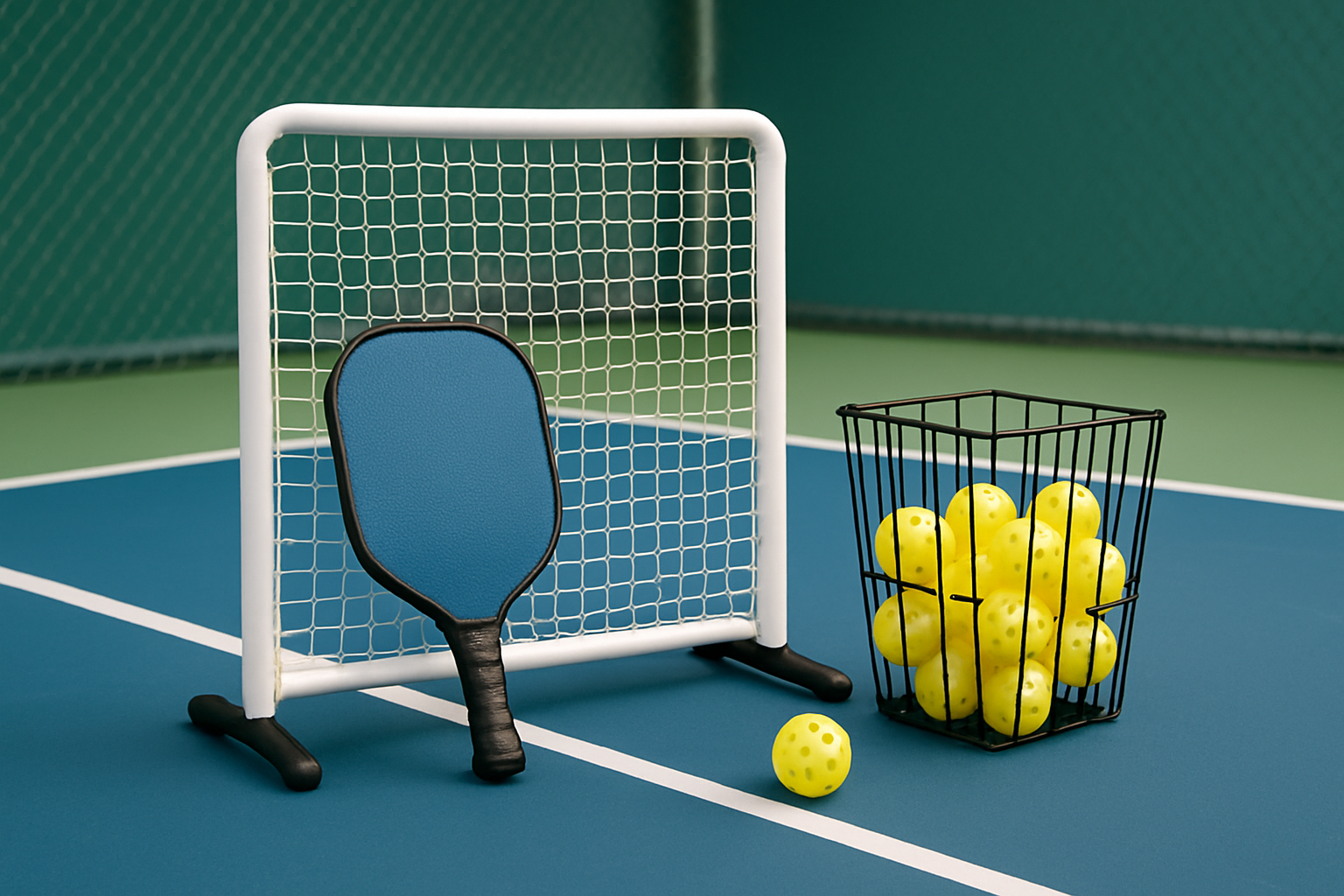
A portable pickleball rebounder is the most versatile piece of solo training equipment available. Products like the Oncourt Offcourt PickleNet Rebounder or the Gamma Sports Pickleball Machine Lite give you a surface that returns the ball at consistent angles. Prices range from $50 for a basic rebounder to $200 for more adjustable models.
If you have access to a gym or park with a solid concrete or brick wall, you already have a free version of this tool. Tape a strip of painter’s tape at net height (34 inches at center, 36 inches at posts). Use it as your target zone.
Ball Machine for Advanced Solo Practice
A ball machine removes the variable of self-feeding. This lets you focus entirely on your return mechanics. The Lobster Pickleball machine runs around $800 to $1,200. The Pickleball Tutor Basic starts at roughly $600. These are significant investments, but if you play four or more times per week, the ROI in skill improvement is real.
Extra Balls and Accessories
Stock up on at least 20 to 30 balls. This allows you to run through a full drill sequence without constantly stopping to collect. Dura Fast 40 and Franklin X-40 are the two most commonly used outdoor balls in the U.S.
| Equipment | Estimated Cost | Best For |
|---|---|---|
| Portable rebounder | $50-$200 | Volleys, dinks, consistency |
| Concrete wall (free) | $0 | Any groundstroke or volley |
| Ball machine | $600-$1,200 | Footwork, return of serve drills |
| Extra ball bucket (30 balls) | $30-$60 | All solo drills |
| Painter’s tape | $5 | Net simulation on wall |
Six Core Drills to Run in a Solo Session
1. Wall Dink Drill for Solo Practice
Stand 7 feet from the wall. This is roughly the non-volley zone distance. Dink continuously at a low target on the wall. Your goal is soft hands, a compact swing, and consistent upward contact. Keep the ball low and controlled. Work in sets of 50 consecutive hits. This single drill builds the touch that separates intermediate players from beginners faster than almost anything else.
2. Third-Shot Drop Self-Feed When Practicing Alone
The third shot drop is one of the hardest shots to master in pickleball. It’s also one of the most important. From your baseline, drop a ball slightly in front of you. Practice hitting soft, arcing shots that would clear the net. These shots should land in the kitchen if aimed at a real court. Focus on a smooth, pendulum-like swing. Keep your wrist locked. Do this in sets of 20. Walk forward after every five shots to simulate approaching the net.
3. Serve Consistency Drill for Solo Sessions
Set up targets in specific zones of the service box. Use court tape or a cone. Serve 50 balls in a row. Track how many land within each target zone. Aim for 80% accuracy within your target zone before moving on. Work on both a drive serve and a high, deep lob serve. You’ll have two reliable options in a match.
4. Volley Wall Drill When Practicing Pickleball Alone
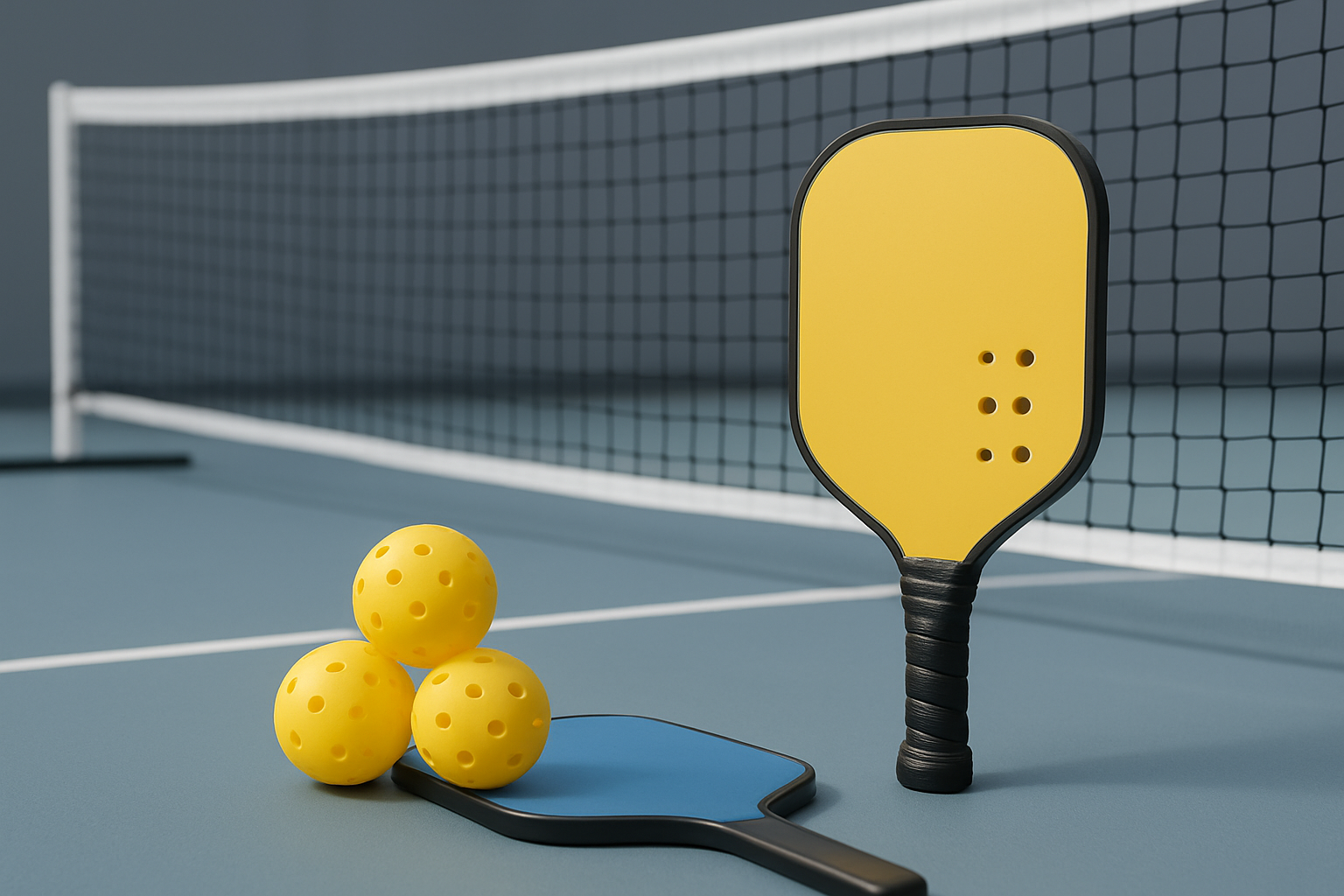
Stand at the kitchen line distance from the wall. Punch volleys continuously without letting the ball bounce. This builds hand speed, reflexes, and the punching motion that proper volleys require. Start slow and controlled. As you get comfortable, deliberately aim to keep the ball low against the wall. Progress from forehand only to backhand only to alternating.
5. Footwork Shadow Drill for Pickleball Solo Training
No ball is needed for this one. Starting at the center of the baseline, shuffle quickly to the right corner. Simulate a backhand groundstroke. Shuffle back to center. Then move to the left corner. Simulate a forehand. Return to center. Run this pattern for 60 seconds straight. Then practice the transition movement from baseline to kitchen line. Work on the split step and the ready position. Poor footwork is the hidden reason most recreational players miss shots they should make.
6. Drop and Drive Decision Drill When Training Solo
This drill sharpens your third-shot decision-making. Using cones or tape, divide your side of the court into two zones: deep and mid-court. Drop and self-feed from random positions. From the baseline, attempt a drop. From mid-court, attempt a drive. Recording yourself doing this drill for 10 minutes will reveal patterns in your mechanics. You would otherwise miss these patterns entirely.
How to Structure a 30-Minute Solo Session
One of the biggest mistakes solo players make is showing up without a plan. Here is a practical structure that covers the full range of skills in 30 minutes:
Minutes 0-5: Warm up with wall dinks. Work both forehand and backhand. Keep it easy and focused on rhythm.
Minutes 5-12: Run your serve accuracy drill. Target both short angle and deep center zones. Aim for 50 serves total.
Minutes 12-18: Practice third-shot drop self-feed. Work through three positions: wide backhand, center, and wide forehand.
Minutes 18-24: Complete volley wall drill. Do two sets of forehand only, two sets of backhand only, and two sets alternating.
Minutes 24-28: Execute footwork shadow drill. Perform two 60-second rounds with 30 seconds rest between.
Minutes 28-30: Cool down and review mentally. Replay two or three specific moments in your mind. Focus on where you executed a drill well. This is called mental consolidation. It genuinely reinforces motor patterns.
Using Video to Accelerate Your Progress
Setting up your phone on a tripod is one of the highest-return things you can do. You can also prop it against your bag. You don’t need a coach watching you live to get useful feedback. A 10-minute review of your recorded footwork or serve mechanics will show you things you simply cannot feel.
Specifically, watch for these common flaws:
- Paddle face angle at contact (open vs. closed)
- Where your feet are positioned relative to the ball
- Whether your non-paddle arm is helping or hurting your balance
- How early or late you are making contact compared to your ideal strike zone
- Head movement before and during contact
Free apps like Hudl Technique (available on iOS and Android) let you watch footage in slow motion. This makes spotting technical issues much easier.
Things to Know
- Concrete walls return the ball faster than a soft rebounder. This can be beneficial for training faster hand speed. However, it’s harder for beginners starting out.
- Outdoor balls (Dura Fast 40, Franklin X-40) behave differently than indoor balls (Jugs Indoor) against a wall. Practice with whatever ball type your regular games use.
- Most community recreation centers across the U.S. have open gym time. You can access a wall and court lines for free or for a small daily fee, often under $5.
- Practicing without a partner doesn’t develop your communication or poach decisions in doubles. Solo work complements live play but doesn’t replace it entirely.
- Overtraining one shot in isolation can make it temporarily worse before it gets better. This is a normal phase called the “intermediate dip.” It passes with continued repetition.
- USA Pickleball (the national governing body in the U.S.) offers certified instructors. They can review your recorded solo sessions remotely if you want professional feedback.
Frequently Asked Questions
Q: Can you really improve at pickleball by practicing alone, or do you need a partner?
Yes, solo practice produces measurable improvement. You’ll see the biggest gains for serve consistency, dinking touch, and third-shot drops. These are all strokes where repetition under controlled conditions is more valuable than live play. Many 4.0 and above players dedicate specific solo sessions to technique work. Live games don’t isolate mechanics in the same way.
Q: How long should a solo pickleball practice session be to see results?
20 to 30 focused minutes three to four times per week is enough to see noticeable improvement within four weeks. Session length matters less than consistency and focus. A 30-minute session where you drill with intent beats a 90-minute session where you mindlessly hit balls every single time.
Q: What is the best solo drill for beginners just starting out?
The wall dink drill is the best starting point. It builds soft hands and consistency, which are the foundation of every other skill in pickleball. Start at 7 feet from the wall. Work toward 50 consecutive controlled hits before adding speed or difficulty. Beginners should spend the first two weeks focused almost entirely on this one drill.
Q: Do I need a ball machine to practice pickleball alone effectively?
No. A rebounder or a wall is sufficient for most solo training goals. A bucket of balls covers the rest. A ball machine is a useful upgrade if you are serious about improving your return of serve and directional control. However, it’s not necessary for beginner or intermediate solo training.
Q: How do I track progress when practicing pickleball alone without a coach?
Record video of your sessions. Set measurable drill targets like serve accuracy percentage. Review footage weekly to spot trends. Keeping a simple training log in your phone’s notes app is helpful too. Record what drills you ran and how many successful reps you hit. This gives you objective data to measure against over time.
The Bottom Line on How to Practice Pickleball Alone
Knowing how to practice pickleball alone is one of the best skills you can develop as a player. Your improvement isn’t dependent on other people’s availability. You gain targeted control over the specific weaknesses holding your game back. Solo sessions aren’t a consolation prize for when you can’t find a partner. They’re a deliberate, high-value training method used at every level of the sport.
Your action step is simple. Pick one drill from the list above. Grab a bucket of 20 balls. Find a wall. Run one focused 20-minute session this week. Track how many consecutive reps you complete successfully. Build from there.