What’s the Biggest Lie People Tell About Their Pickleball Rating?
- The biggest lie isn’t usually deliberate sandbagging, it’s honest overconfidence: most self-rated players genuinely believe they’re a level higher than their actual consistency supports, often basing their number on their best occasional shot rather than their average reliable one.
- The average recreational pickleball player rates between 2.5 and 3.5, even though most people guess themselves higher once they’ve played for more than a few months.
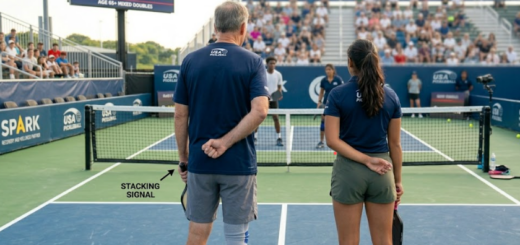
- A 4.0 player can consistently execute forehand and backhand drives with pace, maintains a strong dink and volley game, and understands strategic concepts like stacking and attacking an opponent’s weaknesses.
- A 5.0 player represents the top tier of non-professional play, someone who has mastered the game’s full shot vocabulary and rarely makes unforced errors.
- A 3.0 player understands the fundamentals and court positioning but lacks consistency, the gap between “knowing the right shot” and “executing it reliably” is exactly what separates 3.0 from 3.5 and beyond.
What’s the Biggest Lie People Tell About Their Pickleball Rating?
The most common and honestly told “lie” about pickleball ratings isn’t really deception, it’s overconfidence based on best-case performance rather than consistent baseline play. Most people think they’re rated higher than they really are, and the honest truth from someone who’s played thousands of games with players at every level is that this overconfidence is the norm, not the exception. Pickleheads
The mechanism behind this is simple: players remember their best rally, their cleanest third-shot drop, their one perfect Erne, and anchor their self-rating to that occasional peak rather than their actual average performance under pressure. The better approach is rating yourself based on your lowest consistent skill, not your highest occasional one, since a single great shot doesn’t represent the level you’ll actually play at across a full match against unfamiliar opponents. Pickleheads
What Is the Average Pickleball Player Rating?
Most recreational players fall between 2.5 and 3.5 as they build fundamentals and consistency. This range represents players who understand the rules, can sustain a rally, and have developed basic shot variety, but haven’t yet built the consistency and strategic depth that defines the intermediate-to-advanced tiers. JustPaddles
This matters directly for the “biggest lie” discussion: if the honest average sits at 2.5-3.5, but a meaningful share of self-rated players claim 4.0 or higher, the gap between perception and reality becomes obvious the moment two mismatched players actually share a court. Rating systems built on verified match data, like DUPR, exist specifically because self-assessment alone consistently skews upward.
What Makes You a 4.0 Pickleball Player?
A 4.0 player demonstrates strong consistency, strategy, and the ability to execute advanced shots. More specifically, a 4.0 player can hit forehand and backhand drives with pace, maintain a strong dink and volley game, and understand strategy such as stacking to attack opponent weaknesses. JustPaddlesJustPaddles
The difference between a 3.5 and a 4.0 pickleball player is that a 4.0 has improved consistency, control of shots, and strategic ability, more consistently landing serves, returns, and dinks with control of pace and placement, while also being acutely aware of an opponent’s strengths and weaknesses. This is exactly the threshold where most inflated self-ratings tend to break down, plenty of players can occasionally hit a 4.0-level shot, but consistently executing the full package under real match pressure is a different bar entirely. Paddletek
What Makes You a 5.0 Pickleball Player?
A 5.0 rating represents the best non-professional players who have mastered the game and rarely make mistakes. At this level, shots come naturally, the backhand is no longer a weak point, and the player has nearly mastered pickleball strategy with footwork that allows them to adjust their game according to their opponents’ strengths and weaknesses in real time. JustPaddlesPickleBallRush
This level is genuinely rare among recreational players. A pickleball 5.5 rating goes only to those who have mastered all the shots, win consistently, and are considered by those around them to be “top-quality players,” frequently winning tournaments outright. The gap between someone confidently claiming a 5.0 self-rating and actually playing at that level tends to be the largest, and most visible, mismatch in the entire rating debate. PickleBallRush
What Does a 3.0 Pickleball Player Mean?
A 3.0 player understands fundamentals and court positioning. More specifically, a player at this rating can hit forehands, knows where to hit serves, can return serves as long as they don’t exceed medium speed, and can hit dinks, though the control of these shots isn’t quite there yet. PickleballMAXPickleBallRush
This is the level where most honest self-ratings should actually land for players a few months into the sport, and it’s also where the “biggest lie” tends to start forming: a 3.0 player who has one great session against a weaker opponent often starts describing themselves as a 3.5 or 4.0 before their consistency genuinely supports that jump.

What Does a 4.0 Pickleball Player Look Like?
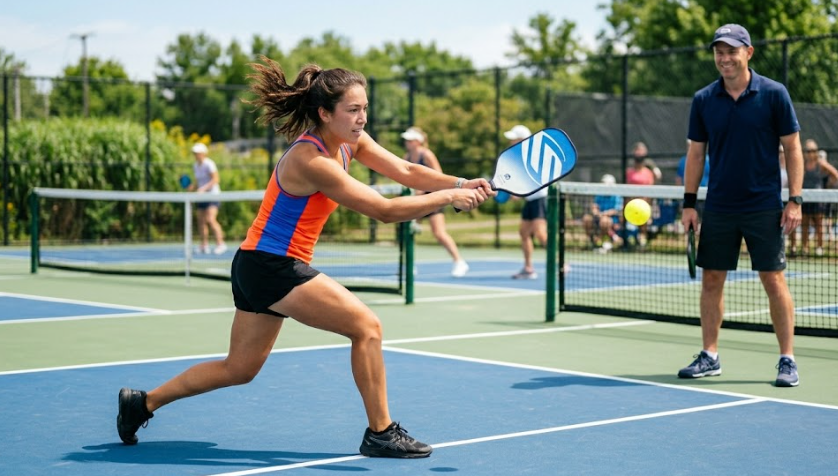
Visually and tactically, a 4.0 player looks notably different from a 3.0 or 3.5 player in a few specific ways: they move to the kitchen line quickly and with purpose after the third shot, they vary pace deliberately between hard drives and soft dinks rather than defaulting to one style, and they show visible court awareness, positioning themselves based on where their partner is and where an opponent’s weakness lies rather than just reacting to the ball.
Level 4 players have a strong grasp of both the soft and hard game, see the whole court, anticipate play, and make smarter decisions to gain an advantage over opponents. The clearest visual tell, watching for unforced errors, is also the most reliable: a true 4.0 rarely sails an easy shot out of bounds or nets an uncontested dink, while players who’ve inflated their own rating tend to show exactly that kind of inconsistency under real pressure. USA Pickleball
Common Mistakes and Misconceptions
- Assuming rating inflation is always intentional sandbagging. Self-rating is how most rec players get started, and it’s a good first step, but most overconfidence comes from genuine miscalibration, not deliberate manipulation. Pickleheads
- Rating yourself based on your best shot instead of your consistent baseline. A more accurate approach is to rate yourself based on your lowest consistent skill, not your highest occasional one. Pickleheads
- Treating self-rating as a fixed, permanent number. Skill ratings are meant to evolve, and a realistic rating won’t limit you, it will open the door to better reps with the right players at the right pace. Pickleheads
- Assuming a 4.0 or 5.0 self-rating is about ego rather than practical impact. Inflated ratings directly affect bracket fairness in organized play and create frustrating, lopsided rec games for everyone involved.
A Quick Framework for Honest Self-Rating
- Rate based on your weakest consistent shot, not your best occasional one. This single mindset shift eliminates most accidental rating inflation.
- Use a verified system like DUPR alongside self-assessment. Match-based data corrects for the natural overconfidence built into pure self-rating.
- Ask an experienced player or coach for an outside read. A second, less emotionally invested opinion catches blind spots self-assessment misses.
- Re-evaluate every few months, not just once. Ratings should move as your consistency genuinely improves, not stay fixed at an aspirational number.
- Remember a lower honest rating gets you better reps, not worse ones. Playing at your real level builds skill faster than constantly being outmatched.
If you’re working on getting an honest read on your own level, the rating guides and skill assessment resources at the Pickleball Archive can help you calibrate more accurately before your next tournament or league signup.
Final Take
The biggest lie about pickleball ratings usually isn’t a calculated one, it’s the natural human tendency to anchor self-assessment to a best-case moment rather than an honest average. Understanding what actually separates a 3.0 from a 4.0 or 5.0, consistency and decision-making under pressure rather than occasional flashes of skill, is the fastest way to rate yourself accurately and actually enjoy the level of play you end up in.
A realistic rating isn’t a limitation, it’s the fastest path to rallies that actually build your game instead of just reminding you how far you have to go.
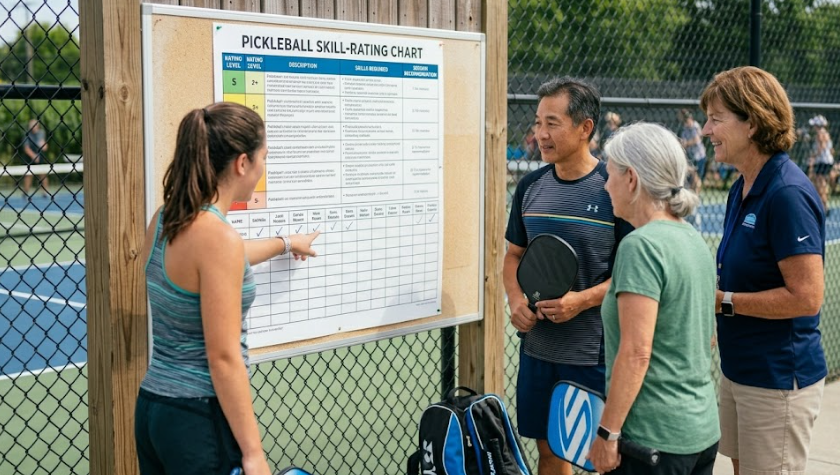
Want help finding your honest rating before your next tournament? The skill assessment guides at the Pickleball Archive can help you calibrate accurately and find the right level of competition.
FAQs About Pickleball Skill Ratings
What is the average pickleball player rating?
Most recreational players fall between 2.5 and 3.5, representing players who understand the rules and can sustain rallies but haven’t yet built full consistency and strategic depth. This is also the range many honest self-assessments should land in, even though a meaningful share of players claim higher.
What makes you a 4.0 pickleball player?
A 4.0 player consistently hits forehand and backhand drives with pace, maintains a strong dink and volley game, and understands strategic concepts like stacking to attack an opponent’s weaknesses. The key differentiator from 3.5 is consistency and shot control under real match pressure, not just occasional flashes of advanced play.
What makes you a 5.0 pickleball player?
A 5.0 player represents the top tier of non-professional play, someone who has mastered the game’s full shot vocabulary, rarely makes unforced errors, and can adjust their strategy in real time based on an opponent’s strengths and weaknesses. This level is genuinely rare among recreational players, which makes it one of the most commonly overclaimed self-ratings.
What does a 3.0 pickleball player mean?
A 3.0 player understands the fundamentals and court positioning, can hit forehands and medium-paced returns, and is developing dinks, but lacks full consistency in executing these shots reliably. This is the realistic starting point for most honest self-ratings a few months into the sport.
What does a 4.0 pickleball player look like?
A 4.0 player moves to the kitchen line with purpose, deliberately varies pace between hard drives and soft dinks, and shows clear court awareness based on opponent weaknesses rather than just reacting to the ball. The clearest tell is a low rate of unforced errors, since true 4.0 consistency rarely breaks down under normal match pressure.