At What Age Is It Too Late to Start Pickleball?
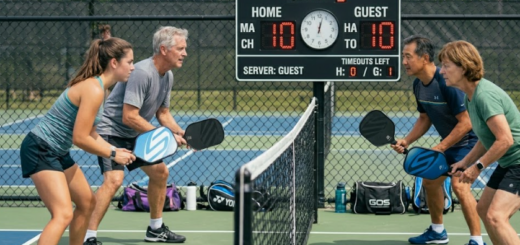
- There is no age at which it’s too late to start pickleball, players regularly take up the sport for the first time in their 70s and 80s, and many go on to compete in age-bracketed tournaments at 70+, 75+, and even 80+ divisions.
- 70-year-olds are not just suited to pickleball, they’re often winning the tournaments, thanks to the sport’s low-impact court size, underhand serve, and strategy-over-power style of play.
- Most pickleball injuries actually cluster in players over 50, not because the sport is unsafe, but because age-related changes in balance, reaction time, and bone density raise fall and fracture risk, which is manageable with the right preparation.
- People with Parkinson’s disease and osteoporosis are both increasingly encouraged to play, with real documented benefits for balance, coordination, and bone density, provided they get cleared and modify their approach with a doctor or physical therapist first.
- No sport has “replaced” pickleball; padel is the closest contender internationally, but pickleball remains dominant in the US with 24.3 million players in 2025, and Carmel-by-the-Sea, California is one of the more notable cities to have temporarily banned it over noise complaints.
At What Age Is It Too Late to Start Pickleball?
There genuinely isn’t one. Pickleball’s largest player demographic skews older, with 55- to 64-year-olds historically representing the biggest single age group, and instructors and club directors consistently report brand-new players starting in their 70s and even 80s who go on to play competitively. Age-bracketed tournaments exist specifically because so many people are still actively starting and competing well past the age most other sports consider “too late.”
The sport’s design is exactly why this works. A smaller court means less running, an underhand serve removes the steep mechanical learning curve tennis demands, and the game rewards strategy and placement over raw power, all of which let someone start from zero in their 70s and reach competent, enjoyable play within weeks rather than years.
Is Pickleball Suitable for 70-Year-Olds?
Yes, unequivocally. Pickleball’s low-impact nature, smaller court, and social doubles format make it one of the most age-friendly sports available, and 70-year-olds are a normal, well-represented presence at nearly every public court and club in the country. Tournament organizers specifically build out 70+, 75+, and 80+ brackets because demand from that age group is strong enough to fill them.
The honest caveat is injury risk, not unsuitability. Studies show pickleball-related fractures have risen sharply among players in their 60s and beyond over the past two decades, driven mostly by falls during sudden lunges or direction changes rather than the sport’s general intensity. The fix isn’t avoiding the sport, it’s preparing for it: proper court shoes with lateral support, a real warm-up, and starting with shorter, less intense sessions before building up frequency.
Can People With Parkinson’s Play Pickleball?
Yes, and it’s increasingly recommended as a structured part of Parkinson’s symptom management. The Parkinson’s Foundation and multiple university-backed studies point to real benefits: pickleball’s large coordinated movements, directional changes, and footwork support balance and gait, while the social, competitive format provides a documented mood and motivation boost that’s harder to get from solo exercise.
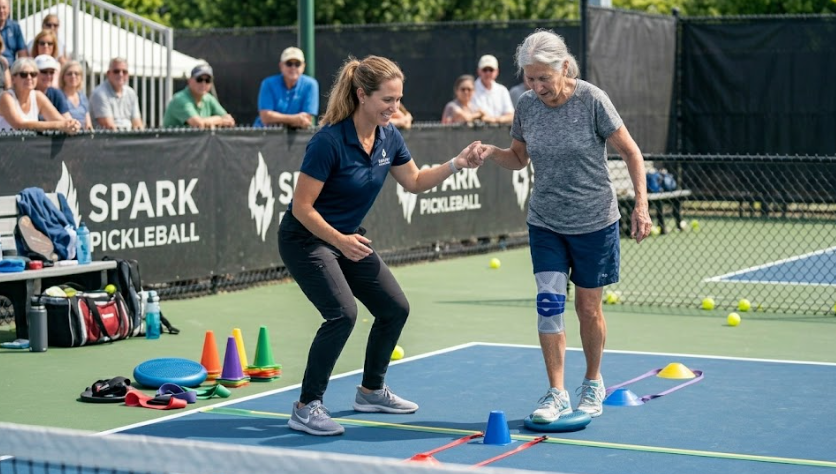
The standard guidance is to start under the supervision of a physical therapist or coach familiar with Parkinson’s-specific modifications, begin with shorter sessions, and prioritize doubles early on since it reduces the court coverage and fall risk that come with covering a full singles court alone.
Is Pickleball Good for Osteoporosis?
Generally yes. Pickleball is a low-impact, weight-bearing activity, and weight-bearing exercise specifically supports bone density in a way many lower-impact activities don’t, which is part of why it’s frequently recommended for people managing or trying to prevent osteoporosis. It also strengthens the muscles around the hips and knees that directly support balance and fall prevention.
The real caveat is the same one true for any older player: a fall that causes only minor bruising for someone with healthy bone density can cause a serious fracture for someone with osteoporosis. The responsible approach is getting cleared by a doctor first, choosing supportive, non-slip court shoes, and avoiding overreaching for wide shots rather than avoiding the sport altogether.
What Is the New Sport Replacing Pickleball?
No sport has actually replaced pickleball in the US, where it remains the dominant racket sport with 24.3 million players in 2025. Padel is the closest thing to a rival and is currently growing faster internationally, especially across Europe and Latin America, but in North America it’s expanding alongside pickleball rather than displacing it, largely because padel’s enclosed glass courts are far more expensive to build than pickleball’s simple, repurposable court footprint.
What City Banned Pickleball and Why?
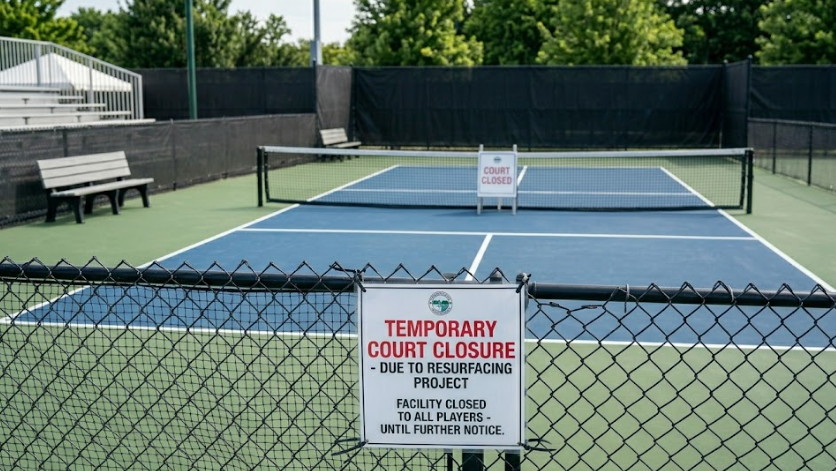
Carmel-by-the-Sea, California temporarily banned pickleball at Forest Hill Park, its only public courts, in October 2025 after years of escalating noise complaints from nearby residents, with city officials describing the situation as having “turned into a madhouse.” The city had already tried limiting play hours and considering quieter “librarian foam” balls before deciding a temporary ban was necessary while officials studied longer-term solutions.
Lake Oswego, Oregon took similar action, voting to ban pickleball entirely at George Rogers Park, a popular local destination, after nearby residents said the constant noise was disrupting daily life. Both decisions were narrow, court-specific actions driven by acoustics and proximity to homes, not a broader rejection of the sport itself.
Common Mistakes and Misconceptions
- Assuming older beginners can’t reach real competence. Plenty of players starting pickleball in their 70s reach solid, competitive play within weeks, the sport’s learning curve genuinely doesn’t require youth.
- Treating rising senior injury rates as proof the sport is dangerous for older adults. The injuries trace mostly to falls during sudden movement, a fixable risk through warm-ups and proper footwear, not a reason to avoid the sport.
- Believing a chronic condition like Parkinson’s or osteoporosis automatically disqualifies someone. Both conditions are increasingly managed in part through structured pickleball play, with the right medical clearance and modifications.
- Confusing localized noise bans with the sport’s overall reputation. A handful of cities restricting specific courts over acoustics doesn’t reflect any broader decline in pickleball’s popularity or acceptance.
A Starting Framework for Older or First-Time Beginners
- Get medical clearance first if you have a heart condition, osteoporosis, Parkinson’s, or significant balance concerns. This single step prevents the overwhelming majority of safety issues before they happen.
- Invest in real court shoes with lateral support, not running shoes. Most senior ankle and knee injuries trace directly back to inadequate footwear for side-to-side movement.
- Warm up for 10 minutes before every session, no exceptions. Dynamic stretching and light movement meaningfully reduce strain and fall risk in older joints and muscles.
- Start with 2 to 3 sessions a week at 30 to 60 minutes each, rather than jumping straight into long, frequent play, and build up gradually as conditioning improves.
- Play doubles before singles, since it cuts your court coverage roughly in half and reduces both fatigue and the sudden lunging that causes most fall-related injuries.
If you’re looking for a beginner-friendly, well-organized group to start with, the club directories and session finders at the Pickleball Archive make it easy to find courts and clinics suited to first-time players at any age.
Final Take
If you’re wondering whether you’ve missed your window to start pickleball, the honest answer is that the window doesn’t close. Players in their 70s and 80s aren’t just participating, they’re actively winning tournaments built specifically for their age bracket, and conditions like Parkinson’s or osteoporosis are increasingly treated as reasons to play with the right guidance rather than reasons to sit out.
The only real prerequisites are a doctor’s clearance if you have an underlying condition, proper court shoes, and a willingness to start slow. Everything else, the learning curve, the community, the fun, tends to take care of itself.
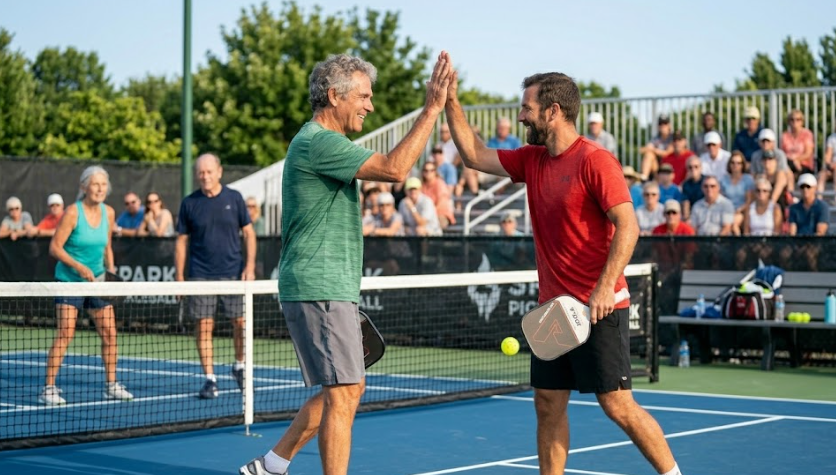
Ready to give pickleball a try at any age? The beginner clinics and local session finders at the Pickleball Archive can help you find the right starting point near you.
FAQs About Starting Pickleball Later in Life
Is pickleball suitable for 70-year-olds?
Yes, 70-year-olds are one of the sport’s most well-represented age groups, and dedicated 70+ tournament brackets exist because demand from that age range is strong. The main consideration is fall prevention, proper footwear, a thorough warm-up, and gradual conditioning, rather than any inherent unsuitability of the sport itself.
Can people with Parkinson’s play pickleball?
Yes, pickleball is increasingly used as a structured exercise option for Parkinson’s, since its large coordinated movements and footwork support balance and motor function, alongside real social and mood benefits. Starting with a physical therapist’s guidance and prioritizing doubles to reduce court coverage are the standard safety recommendations.
Is pickleball good for osteoporosis?
Generally yes, since it’s a low-impact, weight-bearing activity that supports bone density and builds the muscle strength tied to fall prevention. The added risk is that a fall can cause a more serious fracture for someone with osteoporosis than for someone with healthy bone density, so medical clearance and supportive footwear matter more here than in most sports.
What is the new sport replacing pickleball?
No sport has replaced pickleball in the US, where it remains the dominant racket sport with 24.3 million players in 2025. Padel is the closest contender and is growing faster internationally, but in North America it continues expanding alongside pickleball rather than taking its place.
What city banned pickleball and why?
Carmel-by-the-Sea, California temporarily banned pickleball at its only public courts in October 2025 after years of resident noise complaints, and Lake Oswego, Oregon similarly banned the sport at its George Rogers Park. Both bans were driven specifically by noise and proximity to homes rather than any broader issue with the sport.