Pickleball Smash Techniques That Actually Win Points
Pickleball smash techniques are overhead power shots used to end rallies by striking the ball downward at high speed. These shots force opponents into difficult or impossible returns. When executed correctly, the overhead smash is one of the most effective weapons in your pickleball arsenal. However, it requires precise footwork, timing, and grip mechanics to be truly effective.
Key Takeaways
- The overhead smash is a rally-ending shot, not a show-of-force move. Use it when the ball floats above your shoulder height.
- Your non-paddle arm is your aiming tool. Raise it to track the ball and improve contact accuracy.
- Footwork sets up everything. A poor position before the swing guarantees a poor shot.
- The kitchen line is not always the best position to smash from. Mid-court smashes often give you better angle and power.
- Soft hands and a relaxed grip before contact, then a firm snap at the moment of impact, generate the most controlled power.
- Even experienced players miss smashes because of late preparation. Start your backswing early.
Why Pickleball Smash Techniques Differ From Other Shots
Unlike tennis, pickleball is played on a smaller court (20 feet wide by 44 feet long). The non-volley zone (the kitchen) restricts aggressive net play. Therefore, the overhead smash becomes a calculated, often decisive shot rather than something you fire off constantly. You get opportunities when opponents lob the ball too short or pop it up high. In those moments, your ability to finish cleanly determines whether you win the rally or set up an uncomfortable counter.
Additionally, the smash behaves differently here than in racket sports because of the pickleball itself. The plastic ball with its holes travels at a different trajectory than a tennis ball. It can slow down unpredictably in outdoor wind conditions. Conversely, it speeds up off a warm paddle on a summer afternoon in Phoenix or Miami. Understanding these variables helps you calibrate your swings for the conditions you are actually playing in.
The shot demands:
- Quick backward movement to get behind the ball
- Early racket preparation with the paddle raised before the ball reaches its peak
- Solid weight transfer from back foot to front foot during the swing
- A continental or eastern grip for wrist snap and directional control
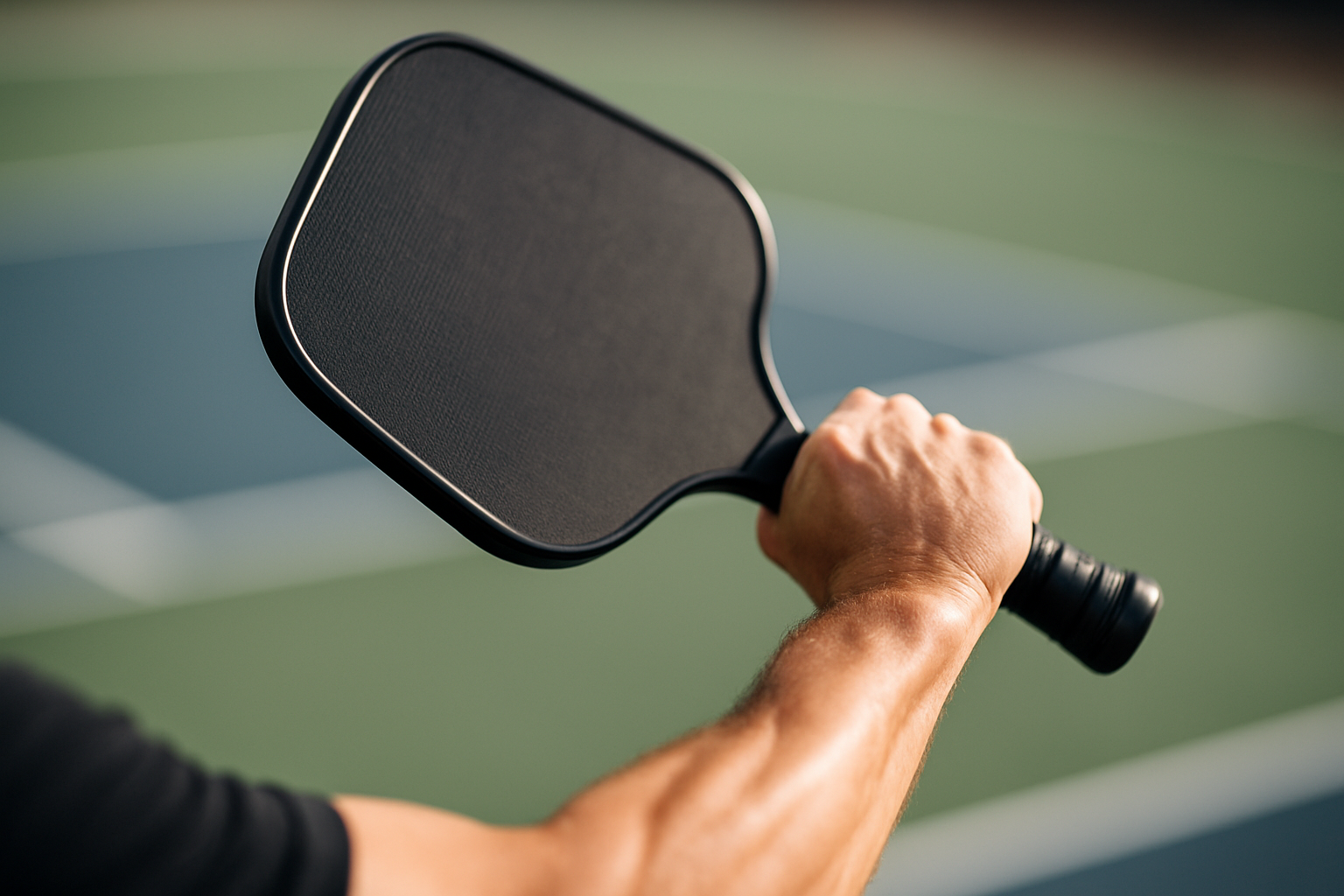
Breaking Down Pickleball Smash Techniques Step by Step
Getting the mechanics right is a layered process. You cannot just swing hard and hope for a winner. Each phase of the shot builds on the previous one.
Step 1: Recognize the Setup Early With Pickleball Smash Techniques
The biggest mistake recreational players make is waiting too long to react. As soon as you see your opponent’s lob going up, move immediately. Do not stand at the kitchen line watching the ball arc. Turn your shoulder, shuffle back, and position yourself so the ball will descend slightly in front of your hitting shoulder.
Step 2: Establish the Right Footwork Position for Smashes
For right-handed players, your left foot should be forward and your right foot back when you contact the ball. This staggered stance loads your body’s rotation. Think of throwing a baseball: you step into it. The pickleball smash works the same way. Your hips rotate first, then your torso, then your shoulder, then your arm. That kinetic chain is where real power originates.
If you are caught flat-footed with both feet parallel, your power source collapses. You end up muscling the shot with your arm alone, which is weak and inaccurate.
Step 3: Use Your Non-Paddle Arm as a Guide
Raise your non-paddle hand and point toward the ball as it climbs. This is not a decorative gesture. It actively stabilizes your shoulders, aligns your body, and helps your eyes track the ball more precisely. Watch any touring pro at a Pickleball Pro Association (PPA) event. You will see this every single time on overhead shots.
Step 4: Generate Power Through Snap, Not Muscle
The swing starts with the elbow leading forward. As your arm extends, your wrist snaps through the ball at contact. This pronation motion (rotating the forearm outward) is the same mechanics used in a tennis serve. At contact, your grip should be firm but not white-knuckled. A death grip kills wrist snap and reduces paddle speed significantly.
Contact point should be slightly in front of your body and above your head. Hitting behind your body sends the ball long. Hitting too far in front causes you to roll it into the net.
Step 5: Follow Through Across Your Body
After contact, let your paddle continue across your body toward your opposite hip. This follow-through is not optional. Stopping your swing early kills pace and direction. The full arc through the shot guarantees you are swinging with intention, not jabbing.
Placement Strategies for Pickleball Smash Techniques
Raw power is not always the winning formula. Here is where smart players separate themselves from recreational bashers.
| Target Zone | When to Use It | Why It Works |
|---|---|---|
| Down the middle | When opponents are split wide | Creates confusion over who covers the shot |
| Sharp angle crosscourt | When opponent is out of position | Forces a sprint to retrieve at low percentage |
| At the body | Against opponents with quick hands | Restricts their swing and reaction time |
| Deep corner | Against defensive lobbers | Pushes them back and takes time away |
Against experienced players, hitting hard at the middle of the court often works better than trying a sharp angle. Sharp angles on a narrow pickleball court can go out of bounds if your timing is even slightly off. At the recreational level (2.5 to 3.5 players), power down the middle wins a lot of points cleanly.
Adjusting for a Moving Ball During Smashes
Not every lob is a stationary target. Wind, spin, and ball depth change what you need to do. A deep lob that is still traveling as you attempt to smash requires you to back up further and wait for it to drop. Rather than chasing it and swinging off-balance, patience pays dividends here. A short lob gives you more time and a better angle.
If a lob has heavy backspin (common in recreational play as a defensive trick), the ball will die faster than expected. You may swing early. Track the spin on the ball during its flight and adjust your contact timing accordingly.
Common Mistakes That Sabotage Your Pickleball Smash Techniques
Even players who understand the technique repeat the same errors under pressure. Knowing what to watch for accelerates your correction process.
Letting the ball drop too low: If you allow the ball to fall below shoulder height before swinging, you lose your downward angle. The result is a shot that goes flat or sails long.
Over-rotating and losing balance: Trying to hit too hard causes players to spin out of their stance. After the shot, you should still be balanced and ready for a counter. If you are stumbling, you swung too hard.
Aiming for too much angle: On a 20-foot-wide court, extreme angle shots require perfect contact. New players trying sharp winners often find the ball landing wide. A simple, firm shot into open court wins just as many rallies.
Neglecting the return position: After your smash, get back to the kitchen line immediately if possible. Many players admire their winner and get caught out of position for the unexpected return.
Things to Know About Pickleball Smash Techniques
- Court surface affects pickleball smash techniques significantly. Indoor courts are faster and the ball bounces truer. Outdoor courts with concrete create a higher bounce that can affect your positioning.
- Outdoor wind is a real factor. In cities like Chicago or Denver, wind can push a ball several feet off your expected contact point. Watch the ball, not your opponent, in windy conditions.
- The overhead smash is illegal from inside the kitchen if the ball has not bounced. You must let a lob bounce if you are in the non-volley zone before smashing it.
- Playing partners and opponents at 4.0+ skill levels will rarely give you a clean, easy smash opportunity. Advanced players keep their lobs deep and precise intentionally.
- Paddle weight matters for smash success. A heavier paddle (8-9 oz) can add natural power to your smash but slows swing speed. A lighter paddle (6.5-7.5 oz) rewards technique over brawn.
- Training your smash in isolation (using a ball machine or a practice partner feeding lobs) builds muscle memory far faster than waiting for the shot to happen in live play.
How to Build Your Pickleball Smash Techniques Through Practice
Knowing the mechanics is the first step. Repeating them until they are automatic is the real work.
Shadow drills: Practice your footwork and swing motion without a ball. Focus on moving back, positioning your feet, raising your guide arm, and following through. Coaches at facilities like places affiliated with USA Pickleball’s ambassador network often use this as a starting drill.
Repetitive lob feeding: Have a partner or a ball machine send up consistent lobs while you focus on one element at a time: footwork only, then contact point, then follow-through. Isolating each component makes feedback easier to process.
Video review: Film your smash with your phone. Players are almost always shocked at how different their actual form looks compared to how it feels. Even one short session of self-review can identify a flat elbow, early contact, or poor follow-through instantly.
Competitive practice games: Introduce the smash under light competitive pressure by playing practice games where any lob must be smashed. Even imperfect ones teach you real execution under pressure. This reveals what your technique actually looks like when adrenaline is involved.
Frequently Asked Questions
Q: Can you smash from inside the kitchen in pickleball?
A: No, you cannot hit a volley smash while standing inside the non-volley zone.
If a lob lands in the kitchen and bounces, you may smash it after the bounce while standing inside. However, if you are in the kitchen and intercept a lob before it bounces, that is a fault. You must let it bounce or step out of the kitchen first.
Q: What grip should I use for a pickleball overhead smash?
A: The continental grip is generally recommended for overhead smashes because it allows natural wrist pronation at contact.
Some players use an eastern forehand grip, particularly if they come from a tennis background. Experiment with both during practice and stick with whichever lets you maintain consistent contact and direction. Avoid using a full western grip on overheads since it restricts the snap mechanics significantly.
Q: How do I stop shanking pickleball smashes into the net or out of bounds?
A: Most shanked smashes come from poor body positioning and late preparation, not from the swing itself.
Focus on getting your body fully behind and under the ball before initiating your swing. If you are reaching forward or sideways for the ball, the contact point is already compromised. Fixing your footwork usually fixes your contact accuracy within a few practice sessions.
Q: Should I always smash a short lob, or are there times to let it bounce?
A: Letting a short lob bounce is sometimes the smarter choice, especially if you are off-balance or positioned poorly.
A rushed overhead smash from a bad position gives opponents a chance to reset the rally with a counter. A controlled groundstroke after the bounce from a stable stance wins more points than a panicked overhead from a compromised position.
Q: How does pickleball smash technique differ for singles vs. doubles?
A: In singles, you have more court to cover solo, so conserving energy and targeting open space matters more than raw power.
In doubles, placement becomes even more strategic because two opponents cover the court. Targeting the middle seam between doubles partners or attacking a weaker player’s backhand side tends to produce more errors than pure pace alone. Communicate with your partner when to call for the smash versus let the other player take it.
The Bottom Line on Pickleball Smash Techniques
Pickleball smash techniques reward preparation and patience more than raw athletic ability. Every component matters: recognizing the lob early, moving your feet efficiently, raising your guide arm, snapping through contact, and following through completely. Miss any of these steps and the shot becomes unpredictable regardless of how hard you swing.
Start working these mechanics into your next practice session deliberately. Pick one element to isolate each time you step on the court. Within a few weeks your overhead shot will move from a weak link into a reliable, rally-ending weapon. If you have access to a certified USA Pickleball coach in your area, even a single 60-minute session focused entirely on your smash can compress months of self-taught progress into one afternoon.