What’s the Most Annoying Habit in Pickleball? The Behaviors Killing the Vibe on Every Court
By Jake Merritt | Certified Pickleball Coach & Competitive Player | Last updated: June 18, 2026
KEY TAKEAWAYS
- The single most universally cited annoying habit in pickleball is disputing line calls without evidence, especially at the recreational level.
- Poaching without communication, unsolicited coaching, and slow-play stalling are close runners-up that regularly derail games.
- Bad habits often stem from competitive instinct gone unchecked, not intentional poor sportsmanship.
- Most courts and sanctioned events follow USAPA rules, which have clear answers to the most common fault and etiquette disputes.
- The golden rule of pickleball: call only what you can clearly see on your side of the net, and give your opponent the benefit of the doubt on everything else.
What Is the Most Annoying Habit in Pickleball?
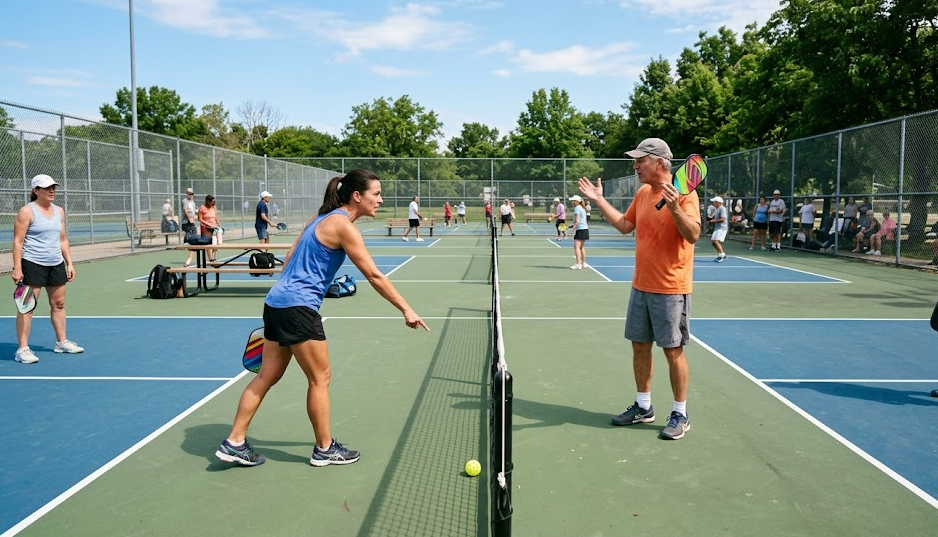
The single most annoying habit in pickleball — based on conversations across every level from open play to tournament brackets — is making bad line calls. Specifically, calling a ball 201cout201d that landed in, or worse, hesitating just long enough to see the result before making the call.
It poisons a rally, it breaks trust between players, and it happens on nearly every public court in America every single weekend.
This is not a fringe complaint. It comes up in Reddit threads, Facebook groups, local club meetings, and post-game debrief conversations more than any other issue. Pickleball’s explosive growth — the Sport & Fitness Industry Association tracked it as the fastest-growing sport in the U.S. for three consecutive years — means millions of new players arrived without ever learning a formal etiquette framework.
Why This Matters Right Now
Pickleball crossed 36 million players in 2023. Courts that used to hold four regulars now rotate 40. That density turns minor irritations into genuine social friction.
When a sport scales this fast, culture gaps open up. Tennis has decades of etiquette norms baked into how the game is taught. Golf has an entire rules culture. Pickleball got to scale before it had time to pass those norms along, and the result is visible on any busy public court on a Saturday morning.
Understanding what behaviors actually bother people — and why — is the first step to fixing them. The second step is knowing the actual rules, because most arguments on the court stem from players who are confident and wrong at the same time.
The Most Common Bad Habits in Pickleball, Ranked by How Much They Annoy People
1. Bad Line Calls
This is the undisputed number one. Under official USAPA rules, each player is responsible for calling lines on their own side of the net. The honor system only works when players genuinely give the benefit of the doubt to their opponent on any ball they are not 100 percent certain about.
What actually happens: a player watches a ball land, processes whether it helps or hurts their score, then makes the call. That half-second delay is visible to everyone on the court, and it destroys goodwill fast.
The fix is mechanical: if you did not see it clearly, the ball is in. Full stop.
2. Unsolicited Coaching Mid-Game
Nothing shuts down the fun of recreational play faster than the player who turns every lost point into a coaching session — for their own partner, for the opponents, or worst of all, for a stranger watching from the sideline.
“You need to stay back.” “Stop going for that angle.” “Your grip is wrong.”
Nobody asked. This habit shows up most often from players who crossed over from tennis or other racket sports where coaching culture is more embedded. On a rec court, it reads as condescension, even when the intent is genuinely helpful. Save the feedback for after the game, and only give it if someone asks.
3. Poaching Without Communication
In doubles — which is how most pickleball is played — poaching means crossing to your partner’s side to take a ball they were positioned to hit. Done with communication, it is smart doubles strategy. Done silently and repeatedly, it is one of the fastest ways to end a partnership mid-rotation.
The players who do this most aggressively are usually the stronger player in a mixed-skill pairing. They mean well. The weaker partner still loses their touch time, their confidence, and eventually their enjoyment of the game. A simple “mine!” or “switch!” changes the entire dynamic.
4. Slow-Playing and Stalling
Tournament players know this one well. A server who bounces the ball seven times, adjusts their paddle grip twice, and checks the wind before every single serve creates a rhythm problem that compounds over a full game.
At the recreational level it looks different: the player who argues every point before accepting the score, who needs a water break every three games, or who restarts the serve count incorrectly and forces a group negotiation. Games that run 40 minutes when they should run 15 back up the entire court rotation system.
5. Kitchen Foot Faults (and Refusing to Acknowledge Them)
The non-volley zone — the kitchen — is pickleball’s defining rule. Volleying from inside it, or letting your momentum carry you in after a volley, is a fault. It is also one of the most commonly committed and most commonly disputed violations in recreational play.
The frustrating part is not the fault itself. Players at every skill level step in occasionally. The frustration is the flat denial when someone else sees it and calls it. A foot fault is not a character accusation. Acknowledge it, replay the point, move on.
Why Are People So Crazy About Pickleball?
The honest answer is that pickleball is engineered, almost accidentally, to be addictive.
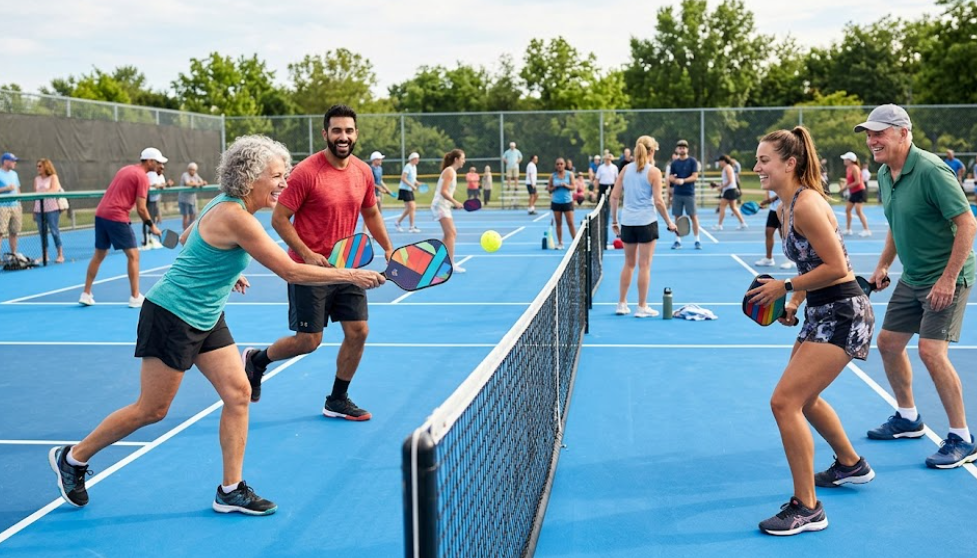
The court is small enough that most players feel competitive immediately. Tennis takes years to develop the hand-eye coordination for a satisfying rally. In pickleball, most beginners are rallying within an hour. That early reward loop is powerful.
The social structure reinforces it. Open play formats rotate partners constantly, which means every session is also a networking event. Players report making more genuine friendships through pickleball than almost any other adult activity they have tried.
There is also the physical reality. Pickleball delivers cardiovascular exercise, hand-eye training, and strategic thinking at a joint-impact level that aging tennis and basketball players can sustain. For the 50-plus demographic especially, it fills a gap that no other competitive sport comes close to.
The obsession makes complete sense: low barrier to entry, fast skill feedback, built-in social rotation, and sustainable physical demand. That combination does not exist at scale anywhere else in recreational sports.
Why Do Tennis Players Dislike Pickleball?
This is more nuanced than the culture-war framing it usually gets online.
Many tennis players who dislike pickleball have a legitimate grievance that has nothing to do with the sport itself: their courts got converted. Municipalities facing pressure to serve growing pickleball communities have relined, resurfaced, and reassigned tennis courts in ways that left longtime players without venues. That is a resource dispute, not a sport dispute.
The sound issue is separate. Pickleball’s hard polymer ball striking a composite paddle produces a distinctive sharp crack that carries across residential areas in ways that tennis’s softer thwack does not. Noise complaints near converted courts have triggered zoning disputes in dozens of cities.
At the player level, the tension often comes from identity. Tennis carries a cultural weight built over a century. Some tennis players view pickleball’s casual etiquette standards and faster path to competence as a kind of disrespect toward a more demanding craft. That perception is not entirely fair, but it is understandable as a cultural reflex.
For deeper coverage of player culture, strategy breakdowns, and news from both sides of the net, Pickleball Archive covers the full landscape.
The Most Common Faults in Pickleball
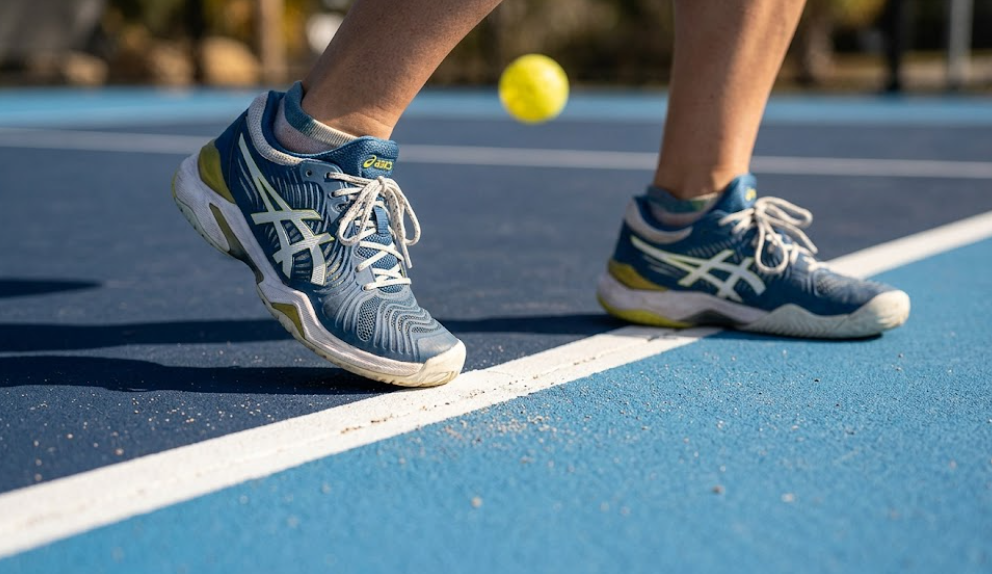
Under official rules, the most commonly committed faults are:
- Non-Volley Zone violations. Stepping into the kitchen during a volley, or stepping in after the swing due to forward momentum. This is the fault players argue about most because it requires someone to be watching feet rather than the ball.
- Service faults. The serve must be hit underhand, below the waist, with an upward arc, and land in the correct diagonal service box. The “waist level” and “upward arc” requirements are the most frequently violated and least frequently called.
- Double-bounce violations. The two-bounce rule requires both the serve and the return to bounce before a volley is legal. New players breach this constantly, and experienced partners often let it go rather than create conflict, which reinforces the mistake.
- Out-of-bounds shots called in (or vice versa). The most disputed fault in the game, and the one most reliant on the honor system functioning correctly.
- Carry or double-hit. Catching the ball on the paddle rather than striking it cleanly. Rare at intermediate and above, but common for newer players who have not yet developed clean contact.
The Golden Rule in Pickleball
The golden rule in pickleball, stated plainly: call only the lines on your side of the net, and when in doubt, call the ball in.
This one principle resolves the majority of on-court disputes before they start. It is codified in USAPA rules, endorsed by every serious pickleball organization, and violated constantly in recreational play because competitive instinct overrides it.
A practical extension of the golden rule that experienced players follow:
- Never call a ball out unless you saw it clearly and can mentally place where it landed.
- If your partner wants to make a call you disagree with, discuss it quietly and quickly — do not openly contradict them mid-point.
- Acknowledge close calls on your own side even when they do not go in your favor. It builds the kind of court reputation that makes people want to play with you again.
- Do not question your opponent’s call unless the discrepancy is dramatic. You can ask “are you sure?” once. Pushing further turns a game into an argument.
For regular updates on rules changes, etiquette discussions, and competitive play insights, visit Pickleball Archive — the reference point worth bookmarking.
Common Misconceptions About Pickleball Etiquette
- “The louder you call it, the more it counts.” Volume is not authority. A confident “OUT!” delivered at full volume does not make a questionable ball more out. The call is valid only if the player making it genuinely saw where the ball landed.
- “Poaching is always aggressive or rude.” Strategic poaching with communication is smart doubles play, not bad sportsmanship. The problem is silent poaching done habitually, not the movement itself.
- “The kitchen rule only applies to volleys.” Correct — you can stand in the kitchen any time except when volleying. But momentum matters: if your follow-through carries you into the kitchen after a volley, that is still a fault.
- “Open play has no rules.” Open play follows the same official rules as tournament play unless the hosting facility explicitly modifies them. “It’s just casual” is not a justification for waist-high serves or ignoring foot faults.
- “Calling a fault on a friend is a personal attack.” Calling a legitimate fault is how the game is supposed to work. Letting bad habits go uncalled reinforces them and spreads them to every new player that person plays with next.
FAQ: Questions Real Pickleball Players Actually Ask
What are some common bad habits in pickleball?
The most common bad habits are questionable line calls, unsolicited mid-game coaching, poaching without communicating with your partner, slow-playing between serves, and refusing to acknowledge kitchen foot faults. Most stem from competitive instinct rather than deliberate poor sportsmanship. The fastest fix is learning the USAPA rulebook and applying its honor-system framework consistently — not just when it favors you.
Why are people so crazy about pickleball?
Because the sport is almost uniquely designed to feel rewarding quickly. New players rally within an hour, courts rotate partners constantly so every session is social, and the physical demand is sustainable across a wide age range. Tennis rewards years of investment before feeling competitive. Pickleball delivers that feeling in a first session. That early reinforcement loop combined with the built-in community structure creates the kind of attachment that turns a Tuesday morning game into a four-day-a-week lifestyle faster than most people expect.
Why do tennis players dislike pickleball?
The friction is usually about courts and sound, not the sport itself. Tennis courts have been converted to pickleball use at scale, cutting into limited public court availability for players who have used those facilities for years. The sound — a hard polymer ball on a composite paddle — carries differently than tennis and has generated legitimate noise complaints near residential courts. At the identity level, some tennis players view pickleball’s lower barrier to entry as undermining a more technically demanding sport.
What are the most common faults in pickleball?
A: Non-volley zone (kitchen) violations are the most frequently committed fault at the recreational level, followed by service faults involving illegal swing mechanics, double-bounce violations from new players, and disputed out-of-bounds calls. In tournament play, foot faults on the serve become more prominent because line judges are watching. Most recreational faults go uncalled not because players are dishonest but because everyone is watching the ball rather than feet and lines.
What is the golden rule in pickleball?
Call only the lines on your side of the net, and call the ball in whenever you are not certain. This principle is the foundation of pickleball’s honor system and is endorsed by the USAPA as the correct approach to line call disputes. Its practical extension: give your opponent the benefit of the doubt on every close call, never question a call you did not have a clear angle on, and acknowledge your own foot faults before someone else has to call them.
Conclusion
The most annoying habit in pickleball is bad line calls — but it is worth understanding why it tops the list. It is not just about one disputed shot. It is about the entire social contract of a sport that runs on the honor system at every level below professional play. When that contract breaks down, everything else follows: arguments, resentment, partners who stop wanting to play together, and courts that feel more like courtrooms.
The good news is that every habit on this list is correctable with awareness and a willingness to prioritize the integrity of the game over the result of a single point. Know the golden rule. Apply it to yourself before you apply it to anyone else. Call your own foot faults. Let the close ones go.
Pickleball is worth playing well — and playing well means more than just winning.
Stay in the game. Stay in the know.
For rules breakdowns, player culture, gear reviews, and everything else happening in the sport, visit Pickleball Archive — the resource worth keeping open in another tab.