Is Pickleball Like Ping Pong? Similarities, Differences, and Which One Is Right for You
Many people wonder if pickleball is like ping pong. Both sports use paddles and involve hitting a ball over a net, rewarding quick reflexes. However, the two sports are fundamentally different in court size, equipment, physical demand, and competitive depth. Understanding these distinctions helps you choose the right sport for your fitness level and interests.
Key Takeaways
- Both pickleball and ping pong require hand-eye coordination and sharp reflexes, yet they are not the same sport.
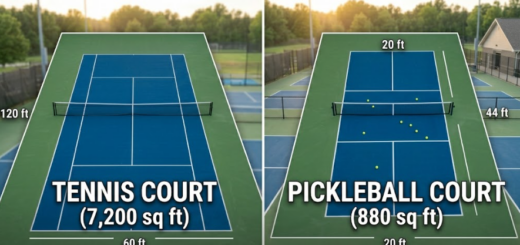
- The court size difference is dramatic: a ping pong table is 9 feet long, while a pickleball court stretches 44 feet.
- Ping pong skills like shot placement transfer reasonably well to pickleball.
- Pickleball demands more physical movement and endurance; ping pong emphasizes reaction speed at close range.
- Pickleball has grown by 158.6% in participation over three years, making it one of the fastest-growing sports in the United States.
- Beginners generally find pickleball easier to pick up than table tennis, but both sports offer significant competitive depth.
How Is Pickleball Like Ping Pong? Surface-Level Comparisons
When someone asks “is pickleball like ping pong,” the honest answer is: somewhat, but not nearly as much as it appears. The confusion makes sense. Both sports use paddles instead of rackets with strings. Both send a lightweight ball sailing over a net toward an opponent. In both games, a sharp eye and fast hands will serve you well. However, the obvious overlap ends there.
Think of it this way: checkers and chess both use a board and pieces. Yet no experienced player would call them the same game. Similarly, pickleball and ping pong sit in a comparable relationship. They draw from the same conceptual pool but deliver genuinely distinct athletic and strategic experiences.
One reason the comparison keeps appearing is historical context. Pickleball was invented in 1965 on Bainbridge Island, Washington, by Joel Pritchard, Bill Bell, and Barney McCallum. The story goes that they improvised the game using ping pong paddles, a perforated plastic ball, and a badminton court. Therefore, ping pong’s DNA is literally baked into pickleball’s origin story. That said, decades of rule development and equipment evolution have created a sport with its own distinct identity.
Is Pickleball Like Ping Pong in Court Size? A Massive Gap
The single biggest difference between the two sports is scale, and it affects everything from fitness requirements to tactics.
A standard ping pong table measures 9 feet long by 5 feet wide. You can fit one in a garage or a college dorm common room. The entire playing surface sits within arm’s reach at all times. This means the sport focuses almost entirely on reaction speed, wrist mechanics, and ball spin at very short distances.
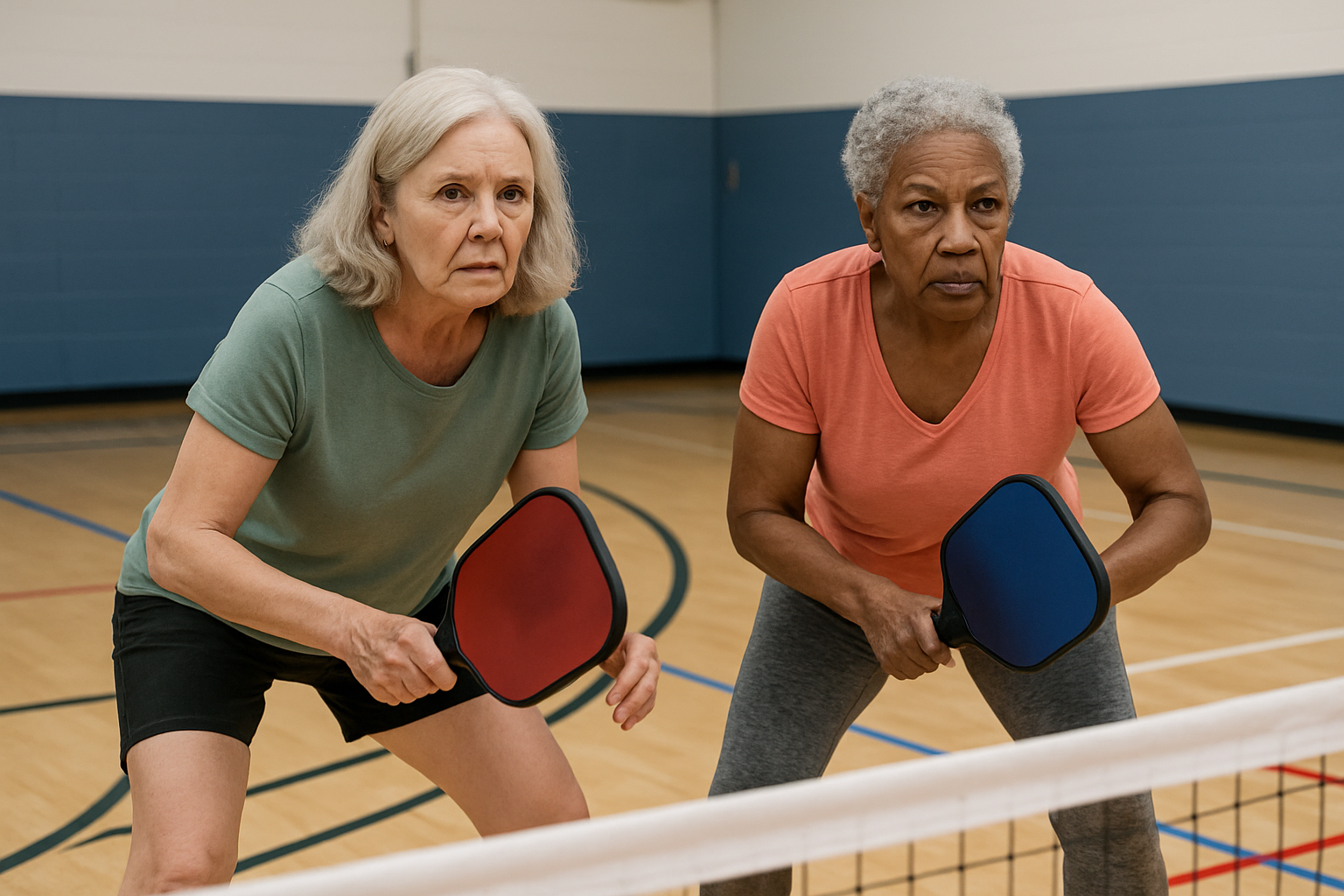
A pickleball court, by contrast, measures 44 feet long by 20 feet wide. That’s nearly five times the length and four times the width of a ping pong table. You are moving your feet constantly, covering ground, and managing a playing field that requires real physical stamina, especially during competitive doubles matches.
This physical gap matters significantly when you’re thinking about who each sport suits best. Moreover, pickleball is often recommended for older adults who want a social, moderately active game. If you’ve ever wondered at what age is it too late to start pickleball, the short answer is that it’s almost never too late. The sport’s court size and pace are demanding, but not in the relentless, explosive way that tennis or basketball demand.
Ping pong, on the other hand, places extreme demands on fine motor control and split-second reaction time. Players manage these demands with very little lower-body movement involved. Elite table tennis players manage ball speeds exceeding 60 mph at close range, which represents a different kind of athleticism altogether.
Is Pickleball Like Ping Pong in Equipment? Key Differences
The paddles and balls used in each sport are not interchangeable. Those differences shape the entire feel of gameplay in important ways.
| Feature | Pickleball | Ping Pong |
|---|---|---|
| Paddle size | Larger (roughly 15-17 inches total length) | Smaller (standard blade about 6 x 6 inches) |
| Paddle materials | Graphite, carbon fiber, composite, wood | Wood core with rubber surface layers |
| Ball diameter | Approx. 2.9 inches (similar to a wiffle ball) | 40 millimeters (about 1.57 inches) |
| Ball material | Hard composite plastic with holes | Lightweight celluloid or plastic, no holes |
| Ball weight | Heavier | Very light |
| Net height | 34 inches at center | 6 inches |
In pickleball, the paddle has no rubber surface layer. Therefore, spin generation works differently than in ping pong. You can still create spin, but the physics differ from table tennis, where rubber textures and sponge thickness are central to advanced play. Pickleball rewards placement, dinking near the kitchen (the non-volley zone), and smart positioning over raw power or spin manipulation.
If you’re shopping for equipment, doing your homework matters rather than defaulting to popular names. For instance, when considering whats the most overrated pickleball paddle on the market, knowing the answer can save you real money. Some heavily marketed options don’t always deliver the best performance for beginners.
Is Pickleball Like Ping Pong in Scoring and Rules?
Both sports typically play to 11 points per game, but you earn those points differently.
In ping pong, either player or team can score on any given rally. Lose the point, your opponent earns it. Simple. You win a standard match reaching 11 points with at least a 2-point lead. Professional matches are often played best-of-seven.
Pickleball uses a side-out scoring system, at least in traditional play. Therefore, understanding what does side out mean in pickleball helps you grasp how the sport actually works. This system means only the serving team can score. If the receiving team wins a rally, they earn the serve, not a point. This side-out rule creates significant tactical impact, because holding serve becomes extremely valuable. In contrast, ping pong allows either side to score, creating a distinctly different strategic environment.
It’s also worth noting that rally scoring, where any team scores on any rally, is increasingly used in recreational and competitive pickleball to speed up games. However, the traditional format remains standard in most organized play.
Strategically, pickleball places heavy emphasis on the non-volley zone, known as the kitchen. The kitchen rule prohibits players from volleying the ball while standing inside that 7-foot zone near the net. This rule forces players into a patient, precise short game rather than simply rushing the net and smashing everything. It’s one of the elements that makes pickleball genuinely strategic rather than just reactive.
Do Ping Pong Skills Transfer to Pickleball?
This is one of the most practical questions for anyone who plays table tennis and is considering trying pickleball. The answer is a qualified yes.
Your hand-eye coordination, developed from years of reading fast ball trajectories at close range, absolutely carries over. Pattern recognition you’ve built in table tennis, anticipating where a ball will land, is useful in pickleball despite the much greater distances. Shot placement instincts also transfer reasonably well to the pickleball court.
Where things become more complicated is spin control. In ping pong, generating heavy topspin or backspin and reading your opponent’s spin represents a central skill. At advanced levels, it’s almost the defining skill. In pickleball, the hard plastic ball with holes doesn’t respond to spin in the same way. You can still use spin, but it’s less dominant as a tactic. Moreover, relying heavily on spin mechanics from table tennis can actually throw off your pickleball development early on.
Footwork is another area where the skills differ quite significantly. Ping pong players train to take small, quick adjustment steps while staying relatively rooted near the table. In contrast, pickleball requires broader court coverage, including moving back for lobs, sprinting to the kitchen line, and lateral recovery that covers 20 feet of width. The movement vocabulary is substantially larger in pickleball.
Growth and Accessibility: Why Is Pickleball Like Ping Pong in Popularity?
Pickleball participation in the United States grew by 158.6% in just three years, according to the Sports and Fitness Industry Association. That kind of growth doesn’t happen by accident. The sport sits in a genuinely accessible sweet spot: lower barrier to entry than tennis, more social than ping pong, and playable across a wide age range.
Ping pong, of course, has its own massive global following, particularly in Asia. It remains an Olympic sport with tremendous prestige. In the United States, recreational ping pong is extremely common, found in offices, bars, and community centers everywhere. However, competitive table tennis has a much smaller community footprint domestically compared to the pickleball scene that has emerged over the last decade.
For someone trying to decide which sport to invest time in, pickleball’s current infrastructure is a genuine advantage. Courts are being built in parks, gyms, and retirement communities across the country. Finding a game is easier than it has ever been. Ping pong requires a table, which limits where you can play. However, the equipment cost is generally lower, and you can practice alone with a robot or a training wall.
Things to Know
- The kitchen rule in pickleball, which prohibits volleying inside the non-volley zone, has no equivalent in ping pong and is one of the first rules new players need to internalize.
- Pickleball paddles cannot have a rubber surface like ping pong paddles, which is specified in official USA Pickleball rules.
- Both sports can be played as singles or doubles. However, pickleball doubles is far more common at recreational levels in the United States.
- A pickleball is heavier than a ping pong ball and does not bounce as high. This affects how you approach overhead shots and drops.
- Weather matters in pickleball. Outdoor pickleball balls are designed differently from indoor balls, with smaller holes and harder plastic composition to handle wind.
- Beginners reach a functional, enjoyable game of pickleball much faster than they reach a similar functional level in competitive ping pong.
Frequently Asked Questions
Q: Can a ping pong player pick up pickleball quickly?
Yes, a ping pong player adapts to pickleball faster than most beginners because of existing hand-eye coordination and shot placement instincts. The reflexes and tactical thinking you develop in table tennis are genuine assets on a pickleball court. The main adjustments involve footwork, managing a larger court, and unlearning the heavy reliance on spin that defines advanced ping pong play.
Q: Is pickleball easier to learn than ping pong?
Pickleball is generally easier for a complete beginner to learn and enjoy quickly compared to table tennis. Ping pong at a competitive level requires mastery of spin mechanics that take years to develop. Pickleball’s rules are straightforward, the ball moves at a pace most adults can respond to, and social play becomes enjoyable from the first week.
Q: Can you use a ping pong paddle to play pickleball?
No, a ping pong paddle does not meet official pickleball equipment standards and cannot be used in sanctioned play. Even in recreational settings, using a ping pong paddle in pickleball would feel awkward. The paddle is too small for the larger pickleball court distances, and the rubber surface isn’t designed for the heavier, harder pickleball.
Q: What muscles does pickleball work that ping pong doesn’t?
Pickleball works your legs, hips, and core significantly more than ping pong because of the larger court and constant lateral movement. Ping pong primarily trains fine motor control in the wrist, forearm, and shoulder at close range. In addition, pickleball adds meaningful cardiovascular demand and lower-body conditioning, especially during competitive matches.
Q: Is the scoring in pickleball the same as in ping pong?
Both sports play to 11 points per game, but only the serving team can score in traditional pickleball. In contrast, ping pong allows either side to score on any rally. This side-out scoring system in pickleball creates a distinctly different strategic environment. Holding serve and converting breaks of serve carry more weight than in a straight rally-scoring format.
The Bottom Line on Is Pickleball Like Ping Pong
If you’re asking whether is pickleball like ping pong in any meaningful sense, the answer is: they share DNA but not identity. The paddle format, the net, and the competitive instincts required overlap in useful ways, especially if you’re a table tennis player considering a transition. However, the court, the equipment, the scoring structure, and the physical demands are different enough that you need to treat pickleball as its own sport worth learning on its own terms.
Your next move is straightforward: find a local pickleball court, borrow or rent a paddle, and play a few games. Most community recreation centers in the United States now host open play sessions, and the learning curve is gentle enough that you’ll be having fun long before you’ve mastered the strategy.