Is Tennis Harder Than Pickleball?
- Tennis is harder than pickleball in almost every measurable way: a bigger court, faster ball, more complex serve mechanics, and significantly greater cardiovascular and endurance demands.
- Learn pickleball first if you want quick enjoyment, but tennis first if you eventually want both sports, since tennis’s footwork, timing, and stroke mechanics transfer down to pickleball far more easily than the reverse.
- Pickleball is not as intense as tennis in terms of raw cardiovascular output, but its close-range “hands battles” at the net create a different, faster reflex-based intensity tennis doesn’t really replicate.
- Pickleball is generally safe for osteoporosis as a low-impact, weight-bearing activity, with the usual caveat that falls pose a higher fracture risk for this population.
- High-impact, contact, and repetitive-pivot sports like basketball, downhill skiing, and football rank hardest on joints; both pickleball and tennis sit well below them, with pickleball notably gentler than tennis due to its smaller court and lower running demand.
Is Tennis Harder Than Pickleball?
Yes, tennis is harder than pickleball by nearly every objective measure. The court is roughly four times larger, the ball moves significantly faster, the serve requires far more complex mechanics to execute legally and effectively, and matches demand sustained sprinting and directional changes over a much longer playing area than pickleball’s compact footprint ever requires.
Pickleball’s difficulty is real but differently distributed. The smaller court and underhand serve dramatically shorten the learning curve for actually playing the game, but the competitive ceiling at the net, fast “hands battles” where reflexes matter more than footwork, is genuinely demanding in its own right. Tennis is harder to learn and physically more taxing overall; pickleball is easier to start but rewards a different, more reflex-driven kind of skill once you’re competing seriously.
Is It Better to Learn Tennis or Pickleball First?
For most people, learning pickleball first makes more sense if the goal is quick enjoyment and a shorter path to feeling competent. The underhand serve, slower ball, and smaller court let beginners sustain real points almost immediately, which builds confidence and keeps people engaged long enough to actually stick with the sport.
If someone plans to eventually play both, tennis first is the stronger long-term choice. Tennis builds footwork, timing, and stroke mechanics from a much higher baseline of difficulty, skills that transfer down easily to pickleball’s smaller, slower format. Going the other direction is harder: pickleball doesn’t build the same depth of movement and timing needed to handle tennis’s faster pace and larger court, so players who start with pickleball often find the jump up to tennis surprisingly difficult later.
Is Pickleball as Intense as Tennis?
No, not in terms of overall cardiovascular output. Tennis demands sustained sprinting, longer rallies played across a much bigger court, and significantly higher overall calorie burn per hour for most players, making it the more physically taxing sport in raw endurance terms.
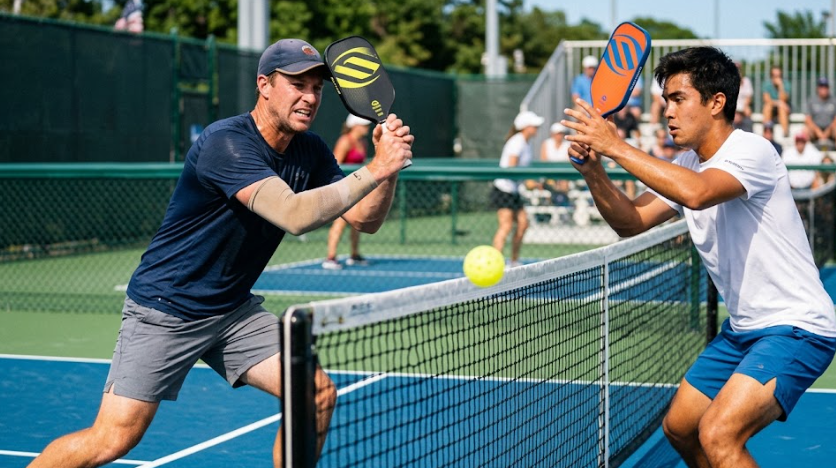
But pickleball creates a different, more concentrated kind of intensity at the net. Because players stand much closer together than in tennis, competitive pickleball exchanges happen at a speed where reflexes matter more than footwork, sometimes described as “a boxing match in a phone booth.” It’s a real form of intensity, just distributed differently: shorter bursts of extremely fast reaction time rather than tennis’s longer, more sustained physical grind.
Can I Play Pickleball With Osteoporosis?
Generally yes. Pickleball is a low-impact, weight-bearing activity, and weight-bearing exercise specifically supports bone density in a way many lower-impact activities don’t, which is part of why it’s frequently recommended for people managing or preventing osteoporosis. It also strengthens the hip and knee muscles that directly support the balance needed to prevent falls.
The real caveat, consistent across clinical sources, is that a fall causing only minor bruising for someone with healthy bone density can cause a serious fracture for someone with osteoporosis. The responsible approach is medical clearance first, supportive non-slip footwear, and avoiding aggressive lunges for wide shots, not avoiding the sport entirely.
What Sport Is Hardest on Your Joints?
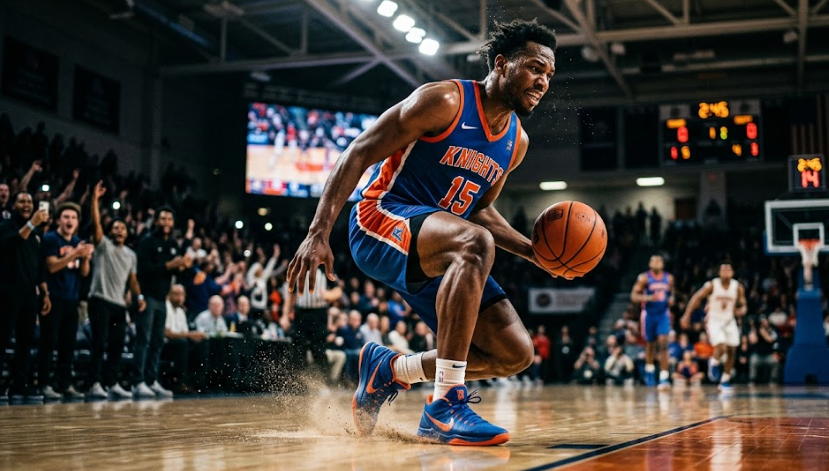
Among commonly played sports, basketball, downhill skiing, and high-contact sports like football and rugby consistently rank as the hardest on joints, particularly the knees and hips. The combination of sudden stops, pivots, jumping, and repeated high-impact landings places enormous repetitive stress on weight-bearing joints, and studies link regular high-intensity basketball play specifically to elevated long-term risk of osteoarthritis.
Tennis sits in the middle of this spectrum, harder on joints than pickleball due to its larger court and more sustained running, but well below true high-impact or contact sports. Pickleball lands toward the gentler end, its smaller court and slower ball mean significantly less cumulative joint stress than tennis, basketball, or skiing, though its quick stop-start movements still carry real fall and strain risk, especially for older or deconditioned players returning to activity after a long break.
Common Mistakes and Misconceptions
- Assuming “easier to learn” means “less physically demanding.” Pickleball is easier to start but tennis remains the more cardiovascularly intense sport overall once you account for court size and rally length.
- Believing pickleball skills transfer easily up to tennis. The relationship mostly runs the other direction, tennis fundamentals transfer down to pickleball far more smoothly than the reverse.
- Thinking low-impact automatically means low-risk for joint conditions. Pickleball’s quick stops and lunges still carry real fall and strain risk, particularly for older players, even though it ranks gentler than high-impact sports overall.
- Assuming pickleball’s reflex-based net intensity is “less real” than tennis’s endurance demands. Both represent genuine forms of athletic intensity, they’re just structured completely differently.
A Quick Framework for Choosing Between the Two
- Choose pickleball first if you want immediate enjoyment and a short learning curve. You’ll be playing real points within your first session.
- Choose tennis first if you eventually want to play both well. Its footwork and stroke mechanics transfer down to pickleball far more easily than the reverse.
- Choose pickleball if joint health, age, or limited mobility is a major factor. Its smaller court and slower pace create meaningfully less cumulative joint stress than tennis.
- Choose tennis if a high-endurance cardiovascular workout is the primary goal. Its larger court and faster pace demand significantly more sustained physical output per hour.
- Try both if you can, since many of the underlying skills, net awareness, soft hands, court positioning, genuinely overlap between the two.
If you’re leaning toward pickleball first, the beginner guides and local session finders at the Pickleball Archive are a solid way to get past the early learning curve faster.
Final Take
Tennis is the harder sport by almost every measure that matters, court size, ball speed, serve complexity, and overall physical demand, while pickleball trades that difficulty for a faster on-ramp and a different, more concentrated kind of net-play intensity. Neither sport is inherently “better,” they simply ask different things of the body, which is exactly why so many players end up enjoying both once they’ve tried each on its own terms.
If joint health or a quick start matters most, pickleball is the easier entry point. If long-term cross-sport versatility matters more, tennis is worth tackling first.
Ready to give pickleball a try first? The beginner-friendly guides and session finders at the Pickleball Archive can help you skip past the early learning curve.
FAQs About Tennis vs. Pickleball
Is it better to learn tennis or pickleball first?
Pickleball is the better starting point if quick enjoyment and a short learning curve matter most, since beginners can sustain real points almost immediately. Tennis is the better starting point if you eventually want to play both well, since its footwork and stroke mechanics transfer down to pickleball far more easily than the reverse.
Is pickleball as intense as tennis?
Not in terms of overall cardiovascular output, tennis demands more sustained sprinting and generally burns more calories per hour due to its larger court and longer rallies. Pickleball creates a different, more concentrated intensity at the net through fast reflex-based exchanges, which is real but structured differently than tennis’s endurance-driven intensity.
Can I play pickleball with osteoporosis?
Generally yes, since it’s a low-impact, weight-bearing activity that supports bone density and the balance-related strength tied to fall prevention. The main added risk is that a fall poses a higher fracture risk for someone with osteoporosis, so medical clearance and supportive footwear matter more here than in most sports.
What is the new sport replacing pickleball?
No sport has replaced pickleball in the US, where it remains dominant with 24.3 million players in 2025. Padel is the closest contender and is growing faster internationally, but in North America it’s expanding alongside pickleball rather than displacing it.
What sport is hardest on your joints?
High-impact and contact sports like basketball, downhill skiing, football, and rugby rank hardest on joints due to repeated jumping, pivoting, and collision forces, particularly affecting the knees and hips. Tennis ranks moderately harder on joints than pickleball due to its larger court and more sustained running, while pickleball sits toward the gentler end of the spectrum overall.