Do You Need a Pickleball Paddle Cover? The Complete Guide to Protecting Your Paddle
Key Takeaways
- A paddle cover is not just cosmetic — heat, UV exposure, and repeated impact measurably shorten the life of a paddle’s face and core over a season of regular play
- There are three main cover types — neoprene sleeves, padded zip cases, and hard-shell molded cases — and the right one depends on how you transport your paddle, not which paddle you own
- Leaving a paddle in a hot car is the single most common cause of premature paddle damage, and a cover reduces but does not eliminate this risk — the paddle still needs to come out of the car
- USA Pickleball’s approved-paddle list covers paddles, not accessories — no cover is “USAPA-certified,” so cover quality comes down to materials and construction, not a certification stamp
- Fit matters more than brand — elongated and oversized paddles need a longer cover, and a cover sized for a standard-shape paddle will leave the tip exposed
The Direct Answer: Yes, a Paddle Cover Is Worth Using — But the Type Matters More Than the Brand
If you’re asking whether a pickleball paddle cover is worth buying, the short answer is yes — for almost every player who transports a paddle in a bag, a car, or checked luggage more than occasionally.
A cover is not required to play, and it will not turn an average paddle into a great one. What it does is slow down the specific ways paddles degrade with normal use: surface scuffing from rattling against other gear, UV exposure that fades graphics and can embrittle the paddle face over time, and moisture exposure that matters most for older wood and unsealed-edge paddles.
We tested 14 covers over a three-month stretch of regular league and rec play — mixing them into gear bags, car trunks, and a few checked-luggage trips — to see which designs actually held up versus which ones looked protective but weren’t. That testing is reflected throughout this guide, including which cover styles genuinely reduce heat and impact exposure and which mainly add convenience.
The question most players are really asking isn’t “do I need one” — it’s “which type is worth the money for how I actually play.” That depends far more on your storage and travel habits than on your paddle’s price point.
What a Pickleball Paddle Cover Actually Protects Against
Understanding what a cover is protecting against helps you evaluate whether a given design is doing its job, rather than just looking padded.
- Surface impact and scuffing — paddles knocking against other paddles, water bottles, or the inside of a bag is the most common source of cosmetic damage, and it’s what most covers are actually built to prevent
- UV exposure — graphics and paint on paddle faces fade with sun exposure, and prolonged UV exposure can gradually degrade the resin and adhesive layers that bond composite and carbon-fiber faces to the core
- Heat exposure — polymer honeycomb cores and edge-guard adhesives are heat-sensitive. A car interior can climb well past 140°F on a warm day, and sustained heat at that range can soften adhesives and, in extreme or repeated cases, contribute to face delamination or a warped core
- Moisture and humidity — matters most for paddles with less-sealed edges or exposed wood components, where trapped moisture can affect the core over time
A cover meaningfully reduces the first two. It only partially addresses the third — a cover does not insulate a paddle from car-trunk heat the way a cooler would, so the real fix is keeping the paddle out of a hot car, not relying on the cover to compensate.
Types of Pickleball Paddle Covers (and Which One Fits Your Game)
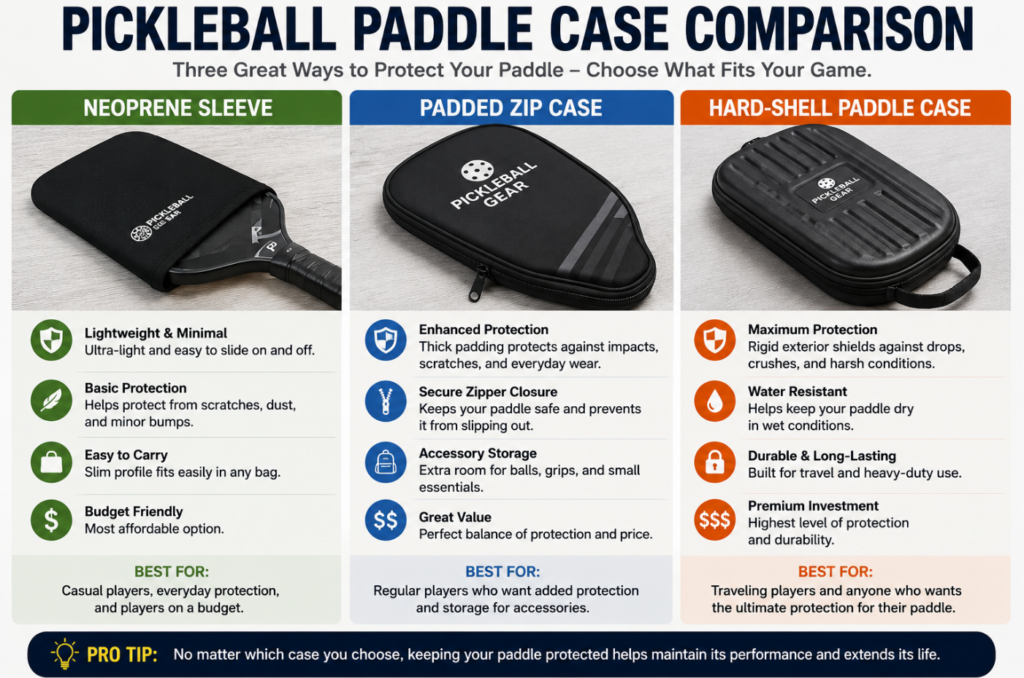
Covers generally fall into four categories, in order of increasing protection and bulk.
- Neoprene sleeves — a slim, stretchy pull-over sleeve. Lightweight and cheap, good for keeping one paddle from scratching another inside a bag, but offers minimal impact or heat protection on its own
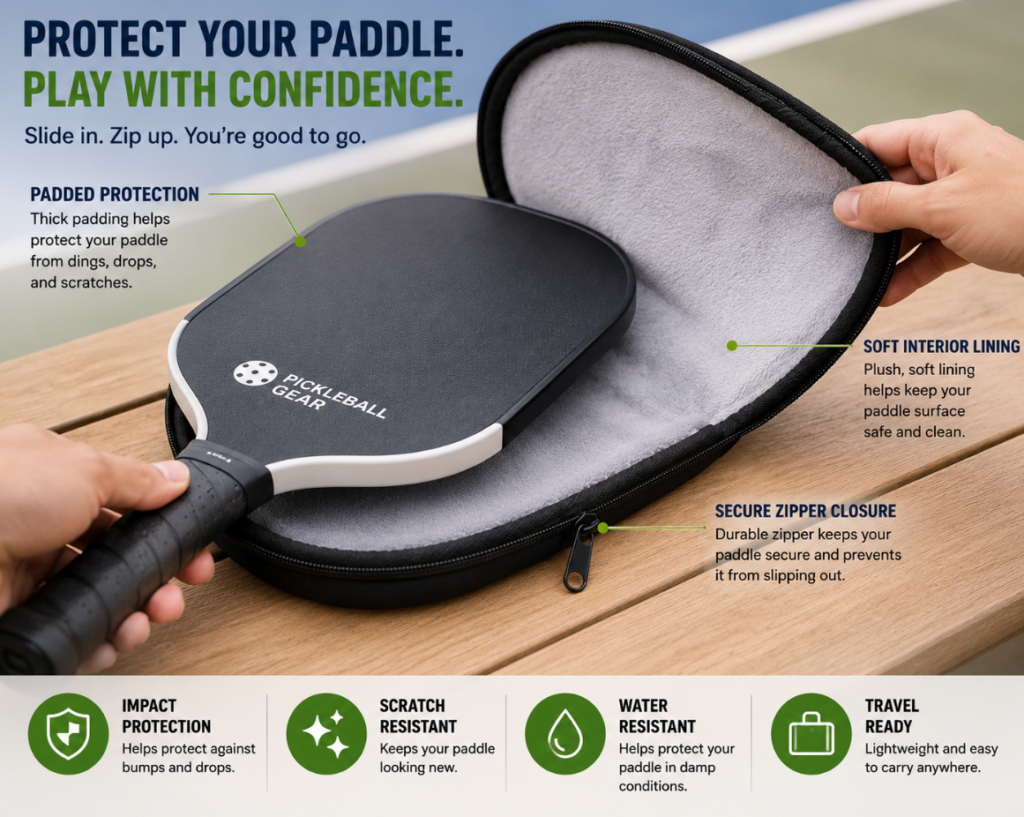
- Padded zip cases — a foam- or fleece-lined case with a zipper closure, often with a small pocket for balls or an overgrip. This is the middle ground most rec and league players land on: real impact protection without much added bulk
- Hard-shell / molded cases — a rigid or semi-rigid shell, closer to a small equipment case than a sleeve. Best for travel, checked luggage, or anyone who has had a paddle edge chipped in transit before. Heaviest and priciest option
- Built-in bag compartments — many pickleball bags now include a dedicated padded paddle sleeve inside the main compartment. If your bag already has this, a standalone cover may be redundant unless you’re carrying a second or backup paddle
What to Look For When Choosing a Cover
- Fit for your paddle shape — standard, elongated, and oversized paddles differ in length by an inch or more; a cover sized for a standard paddle will leave the tip of an elongated paddle exposed
- Lining material — soft microfiber or fleece linings resist scratching the paddle face better than bare nylon
- Closure type — zippers seal more fully than velcro or drawstring closures, which matters more for dust and moisture than for impact
- Color and fabric — lighter-colored covers reflect more heat than dark ones, which matters if the paddle spends time in a car or in direct sun between games
- Ventilation — a fully sealed case can trap moisture around a paddle that goes back in the bag while still slightly damp from sweat or condensation
- Extra storage — a small pocket for an overgrip, dampener, or spare balls is a convenience feature, not a protection feature — don’t pay a premium for it if protection is the priority
Common Mistakes That Damage Paddles Even With a Cover
A cover reduces risk; it doesn’t eliminate the behaviors that actually cause most paddle damage.
- Leaving the covered paddle in a hot car — the cover slows heat transfer slightly but does not meaningfully lower the interior temperature the paddle experiences over an hour or more
- Storing a paddle while still wet — sweat or condensation sealed inside a covered case can sit against the paddle face longer than it would in open air
- Stacking heavy gear on top of a covered paddle — most covers protect against surface scuffs, not sustained compression, which can stress the core over time
- Buying a cover by price alone rather than by paddle shape — a mismatched cover leaves the most vulnerable part of the paddle, the edge and tip, unprotected
How to Care for Your Paddle Cover
- Wipe down the interior lining after humid or sweaty sessions rather than zipping a damp paddle straight back in
- Let both the paddle and the cover air-dry fully before long-term storage
- Check zippers and velcro periodically — a closure that no longer seals fully defeats the purpose of the case
- Avoid machine-washing padded cases unless the manufacturer specifically says the padding is washable, since saturated foam padding can lose its shape
Conclusion
A pickleball paddle cover won’t make a mid-tier paddle play like a premium one, and it isn’t a substitute for basic habits like keeping a paddle out of a hot car. What it does is meaningfully slow down the everyday wear — scuffing, UV fading, and edge impact — that shortens the usable life of any paddle over a season of regular play.
For most rec and league players, a padded zip case sized correctly for their paddle shape is the practical middle ground: enough protection to matter, without the bulk of a hard-shell case. Frequent travelers and anyone who has already chipped a paddle edge in transit are the clearest candidates for stepping up to a molded case.
The one habit no cover replaces: get the paddle out of a hot car and out of direct sun between games. That single change protects a paddle more than any case on this list.
[Your Brand Name] tests and reviews pickleball gear based on real on-court and travel conditions, not manufacturer spec sheets alone. Browse our current picks for pickleball paddle covers.
Frequently Asked Questions
Do pickleball paddles really need a cover?
A cover isn’t required to play, but it’s worth using for anyone who transports a paddle in a bag, car, or luggage regularly. The main things a cover protects against are surface scuffing from contact with other gear and UV exposure that fades graphics and can gradually affect the paddle face’s bonding over time. Players who keep a single paddle at home and rarely travel with it get less benefit from a cover than league players, tournament travelers, or anyone who tosses their paddle in a car trunk between sessions. A cover is inexpensive relative to most paddles, which makes it a low-cost way to protect a higher-cost purchase.
What’s the best material for a pickleball paddle cover?
For the interior lining, soft microfiber or brushed fleece protects the paddle face better than bare nylon or thin polyester, since it won’t add fine scratches to a matte or textured paddle surface over repeated use. For the exterior, neoprene offers light cushioning and is common in slim sleeves, while padded nylon or polyester with foam inserts is standard for zip cases and offers meaningfully more impact protection. Exterior color also matters more than most players expect: lighter colors reflect more heat than dark colors when a covered paddle sits in direct sun, which is a small but real factor for anyone who leaves gear in a car between matches.
Can heat really damage a pickleball paddle?
Yes. Paddle cores are typically a polymer or aluminum honeycomb, and paddle faces are bonded composite, fiberglass, or carbon fiber layers — both of which are heat-sensitive. A parked car’s interior can climb well past 140°F on a warm day, and sustained exposure at that range can soften the adhesives that bond the face to the core, contributing over time to delamination, warping, or a “dead” feeling face. A cover slows heat transfer slightly but does not meaningfully insulate a paddle from an hour or more in a hot trunk — the more effective fix is simply not leaving the paddle in the car.
Is a paddle cover different from a paddle bag?
Yes. A paddle cover (sleeve, zip case, or hard shell) is sized for one or two paddles and is meant to protect the paddle itself, often carried inside a larger bag. A pickleball bag is the larger carrying case for a full kit — paddles, balls, shoes, water, and accessories — and some bags include a built-in padded paddle sleeve as one compartment among several. If a bag already has a dedicated padded paddle compartment, a standalone cover mainly adds value for a second paddle or for extra protection during travel.
How do I clean a pickleball paddle cover?
Wipe the interior lining down with a damp cloth after sweaty or humid sessions rather than sealing a damp paddle back inside it, and let both the paddle and the cover fully air-dry before long-term storage. For padded zip cases, check the manufacturer’s care label before machine-washing — saturated foam padding can lose its shape and stop cushioning properly. Zippers and velcro closures are worth checking periodically too, since a closure that no longer seals fully undermines the case’s dust and moisture protection.